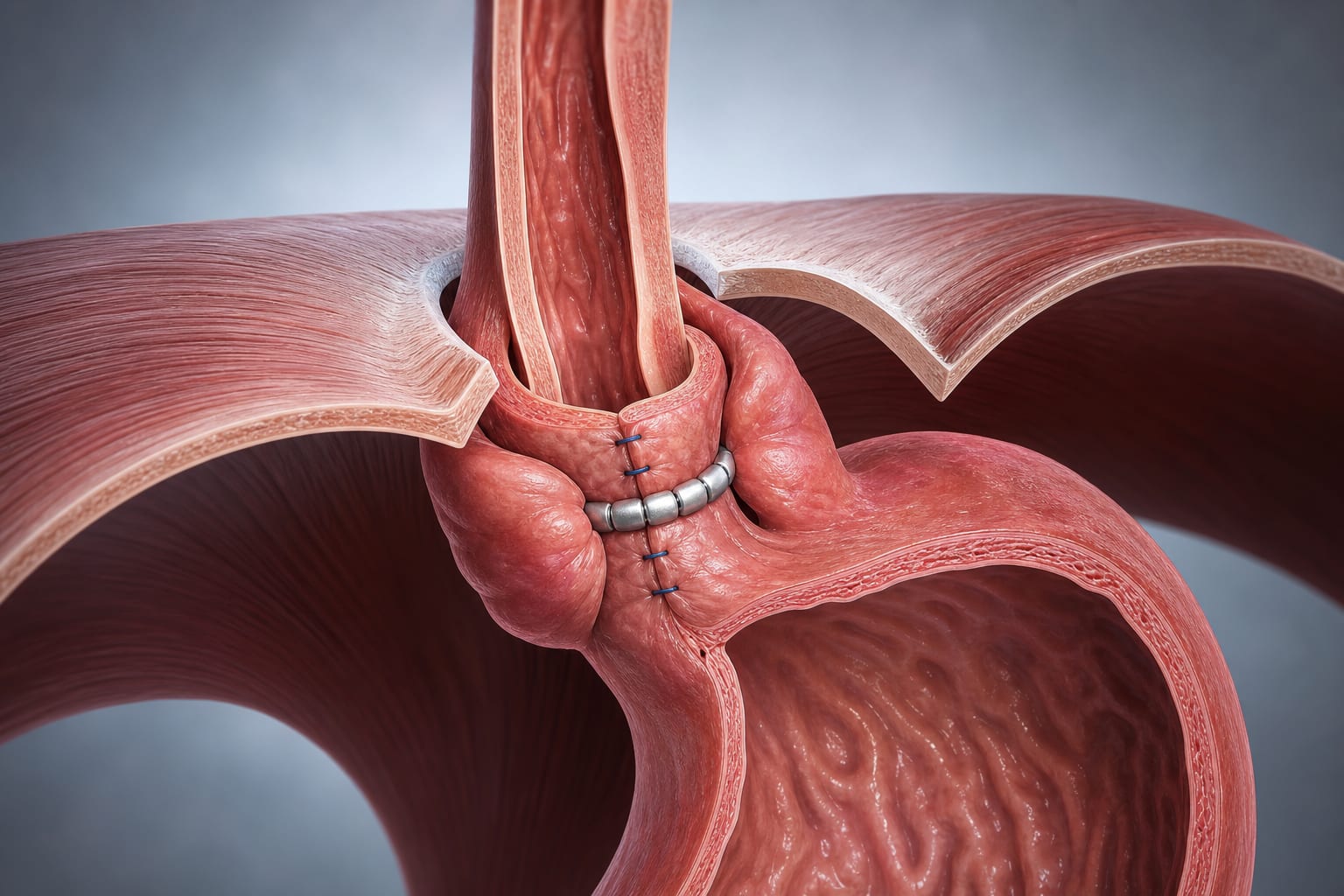
Clinical Scorecard: Advancements in Understanding the Pathogenesis and Surgical Interventions for Gastroesophageal Reflux Disease
At a Glance
Category
Detail
Condition
Key Mechanisms
Dysfunction of the lower esophageal sphincter, inadequate support of the crural diaphragm, disruption of the His angle, gastroesophageal flap valve, formation of a postprandial acid pocket, delayed gastric emptying.
Target Population
Care Setting
Key Highlights
GERD prevalence is approximately 14% globally, with significant regional variation.
Surgical options include traditional fundoplication and minimally invasive techniques.
Postoperative complications such as dysphagia and gas-bloat syndrome are concerns.
Guideline-Based Recommendations
Diagnosis
Diagnosis of GERD is based on clinical symptoms and may include endoscopy or pH monitoring.
Management
Pharmacological therapy is effective for most patients, with surgery indicated for refractory cases.
Monitoring & Follow-up
Long-term follow-up is necessary to evaluate surgical outcomes and manage complications.
Risks
Risks associated with surgery include postoperative dysphagia and gas-bloat syndrome.
Patient & Prescribing Data
Patients with severe GERD symptoms or complications requiring surgical intervention.
Surgical treatment aims to address the underlying causes of reflux.
The Allurion Gastric Balloon System is now authorized by the US Food and Drug Administration for short-term weight loss in adults aged 22 to 65 years with obesity and a body mass index of 30 to 40 kg/m2.