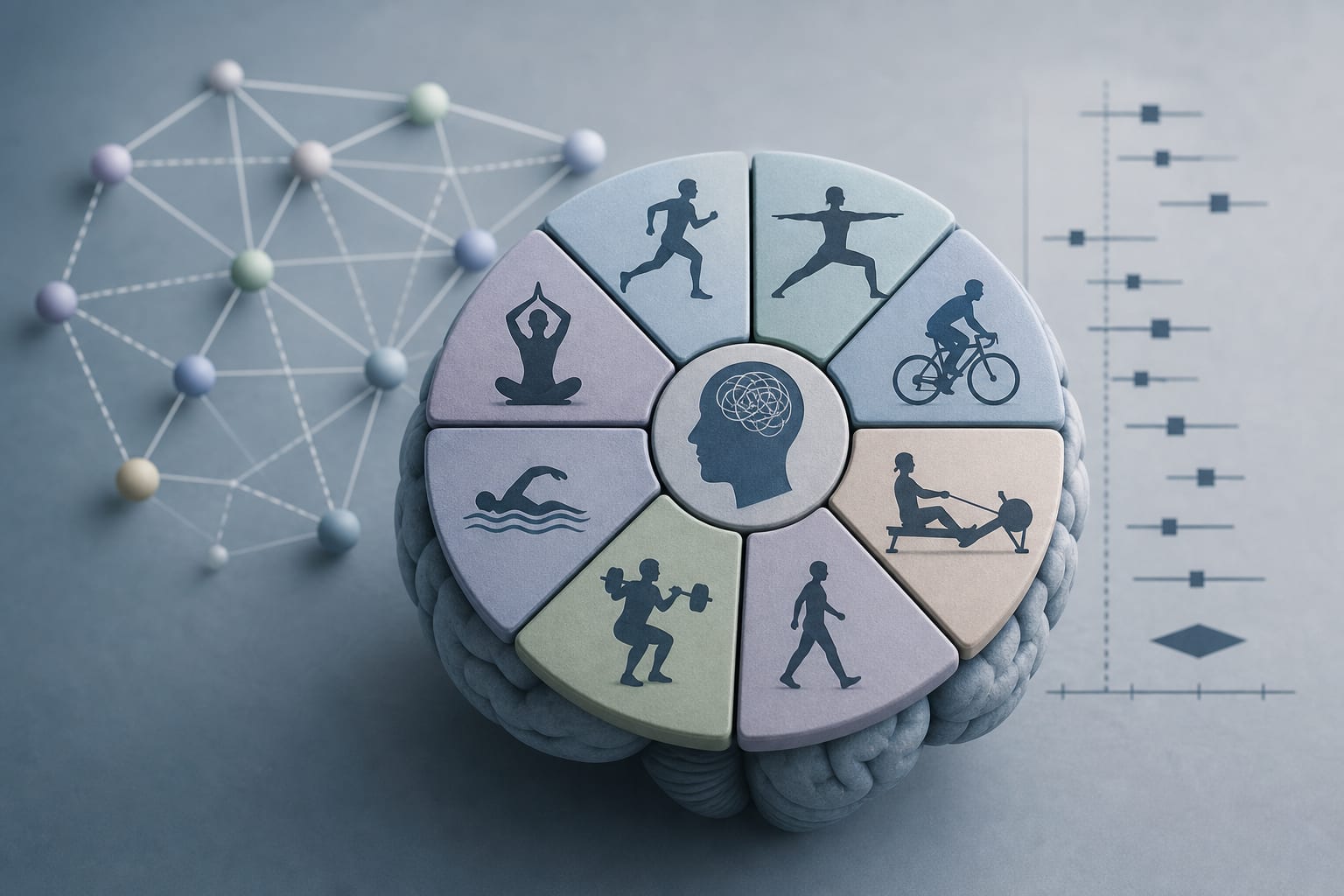
Clinical Scorecard: Evaluating the Impact of Various Structured Exercise Regimens on Symptoms of Depression and Anxiety: A Network Meta-Analysis
At a Glance
Category
Detail
Condition
Key Mechanisms
Exercise modalities improve mood disorders through distinct physiological and psychological mechanisms, including endorphin release and enhanced self-efficacy.
Target Population
Care Setting
Key Highlights
22 studies with 1,830 participants were included in the analysis, with yoga ranked first based on SUCRA scores for both depression and anxiety symptom improvement.
All exercise modalities demonstrated significant improvements in depressive and anxiety symptoms, with no statistically significant differences in efficacy among yoga, moderate-intensity continuous training, and high-intensity interval training.
Subgroup analyses indicated larger effect sizes in the elderly group (≥60 years).
Guideline-Based Recommendations
Diagnosis
Management
Incorporate structured exercise modalities such as yoga, HIIT, and MICT in treatment plans, as well as Tai Chi and Pilates.
Monitoring & Follow-up
Risks
Patient & Prescribing Data
Exercise interventions, including yoga, HIIT, and MICT, are safe, cost-effective, and can improve mood without pharmacological side effects.
Clinical Best Practices
Develop individualized exercise regimens based on patient symptom clusters, preferences, and safety profiles.