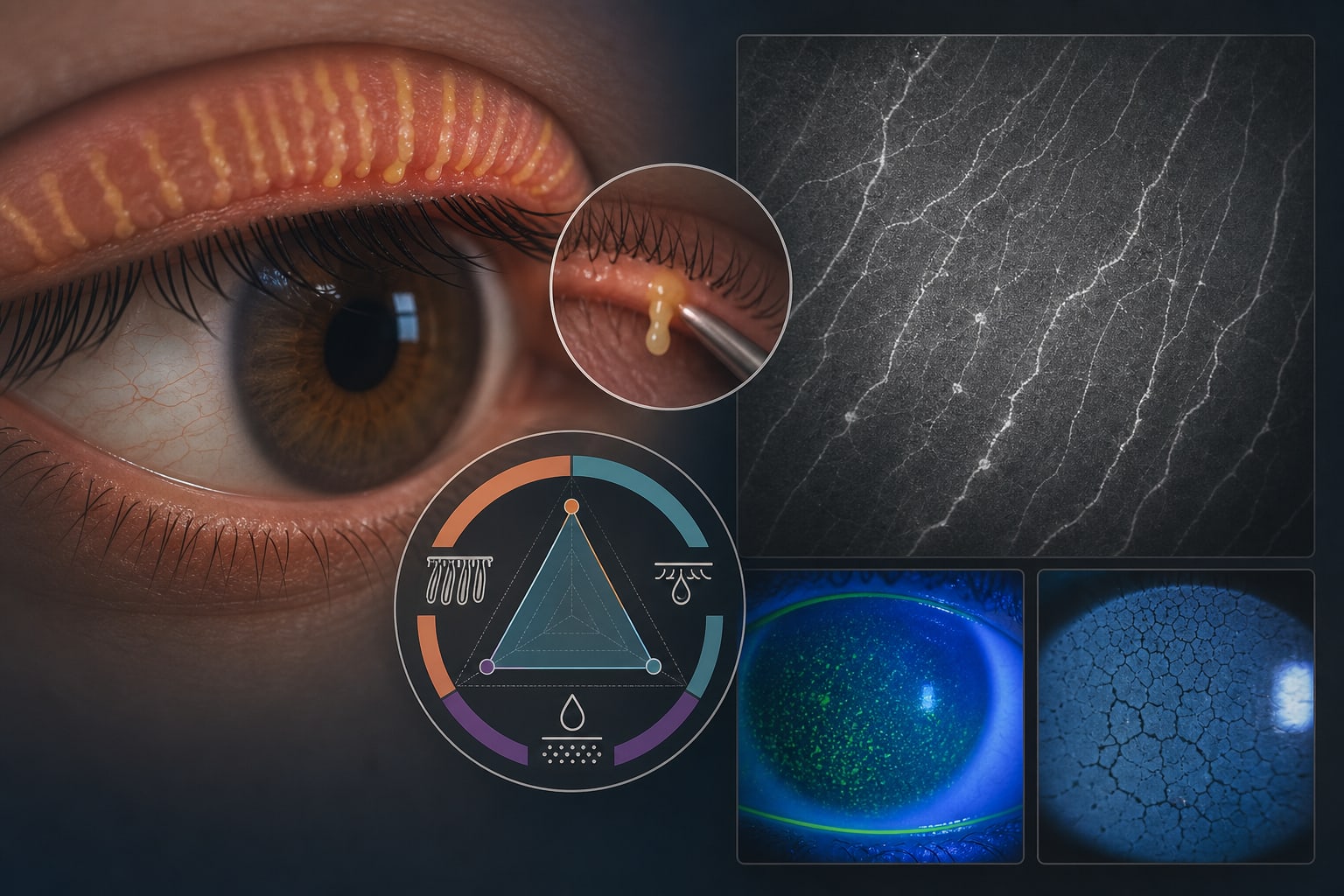
Dry Eye Best Practices Must Surpass Standards of Care
In many ways, we are living in a golden age when it comes to all things dry eye. Indeed, there are few areas in medicine with more active research. Many millions of dollars have been invested in the search for better ways to treat dry eye disease (DED).
By
Darrell E. White, MD
May 1, 2025
Clinical Scorecard: Dry Eye Best Practices Must Surpass Standards of Care
At a Glance
Category Detail
Condition Dry Eye Disease (DED) Key Mechanisms Involves tear film instability, inflammation, and damage to the ocular surface. Target Population Patients with symptoms or signs of dry eye, including those undergoing cataract or refractive surgery. Care Setting Comprehensive care, DED specialty care, and cataract/refractive care practices.
Key Highlights
Every eye examination should include a check for DED. Utilization of standardized questionnaires is essential for assessing DED severity. Tear osmolarity testing is critical for diagnosing covert DED. Imaging of meibomian glands is necessary for evaluating evaporative DED. Preoperative assessment of DED can prevent post-surgical complications. Guideline-Based Recommendations
Diagnosis
Use standardized questionnaires like SPEED, OSDI, SANDE, or VAS for initial assessment. Perform tear osmolarity testing to identify covert DED. Management
Treat all identified cases of DED, including mild cases, especially in preoperative settings. Monitoring & Follow-up
Regularly assess meibomian gland health and tear osmolarity to track disease progression. Risks
Untreated DED can lead to post-surgical refractive surprises and patient dissatisfaction. Patient & Prescribing Data
Patients with dry eye symptoms, particularly those undergoing cataract or refractive surgery.
Effective treatment requires understanding the type of DED present, with a focus on both evaporative and aqueous-deficient components.
Clinical Best Practices
Incorporate slit lamp examination with specific techniques to evaluate meibomian glands. Use vital dyes for ocular surface assessment. Ensure comprehensive preoperative evaluations for patients considering multifocal or extended depth of focus IOLs. Related Resources & Content