Clinical Scorecard: Investigating Patient-Centered Approaches in Technology-Enhanced Gait Rehabilitation for Stroke Survivors: A Framework Analysis through Scoping Review
At a Glance
Category
Detail
Condition
Gait impairments in stroke survivors
Key Mechanisms
Integration of technology-based interventions for personalized gait rehabilitation
Target Population
Stroke survivors with gait dysfunction
Care Setting
Rehabilitation settings utilizing technology
Key Highlights
Gait rehabilitation is a complex, person-dependent process influenced by individual goals and experiences.
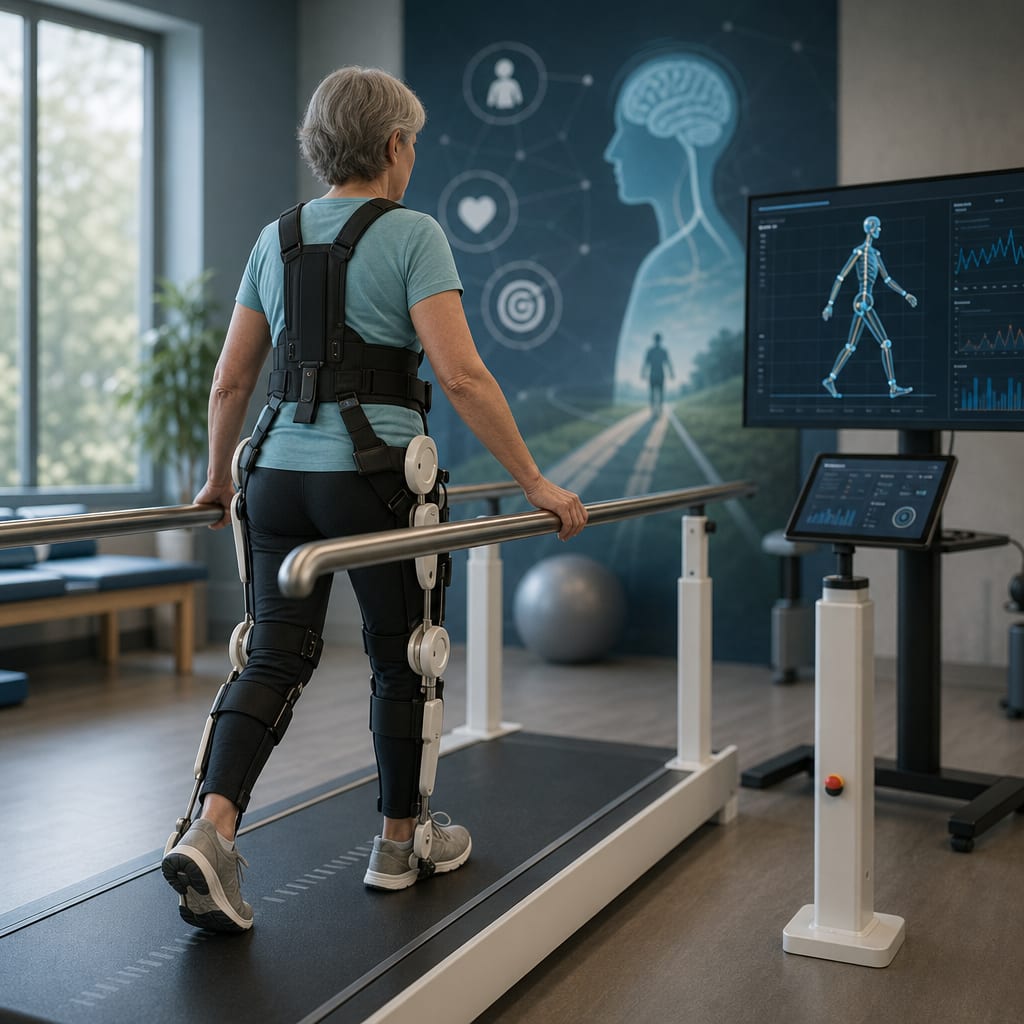
Technology-based interventions include robotic-assisted training, virtual reality, and wearable devices.
Person-centred rehabilitation emphasizes the active role of individuals in their care and recovery.
Adherence to rehabilitation programs is affected by emotional and motivational factors.
The Person-Centred Practice Framework (PCPF) guides the evaluation of person-centred care in rehabilitation.
Guideline-Based Recommendations
Diagnosis
Assess gait impairments through comprehensive evaluations considering both functional and personal factors.
Management
Implement technology-enhanced interventions that align with individual goals and preferences.
Monitoring & Follow-up
Utilize Patient-Reported Outcome Measures (PROMs) and Patient-Reported Experience Measures (PREMs) for ongoing assessment.
Risks
Avoid interventions that may be perceived as impersonal or burdensome, which can limit effectiveness.
Patient & Prescribing Data
Individuals recovering from stroke with varying degrees of gait impairment.
Focus on personalized rehabilitation strategies that incorporate patient preferences and experiences.
Clinical Best Practices
Engage patients in shared decision-making throughout the rehabilitation process.
Ensure interventions are adaptable to individual needs and contexts.
Foster a supportive therapeutic relationship to enhance motivation and adherence.