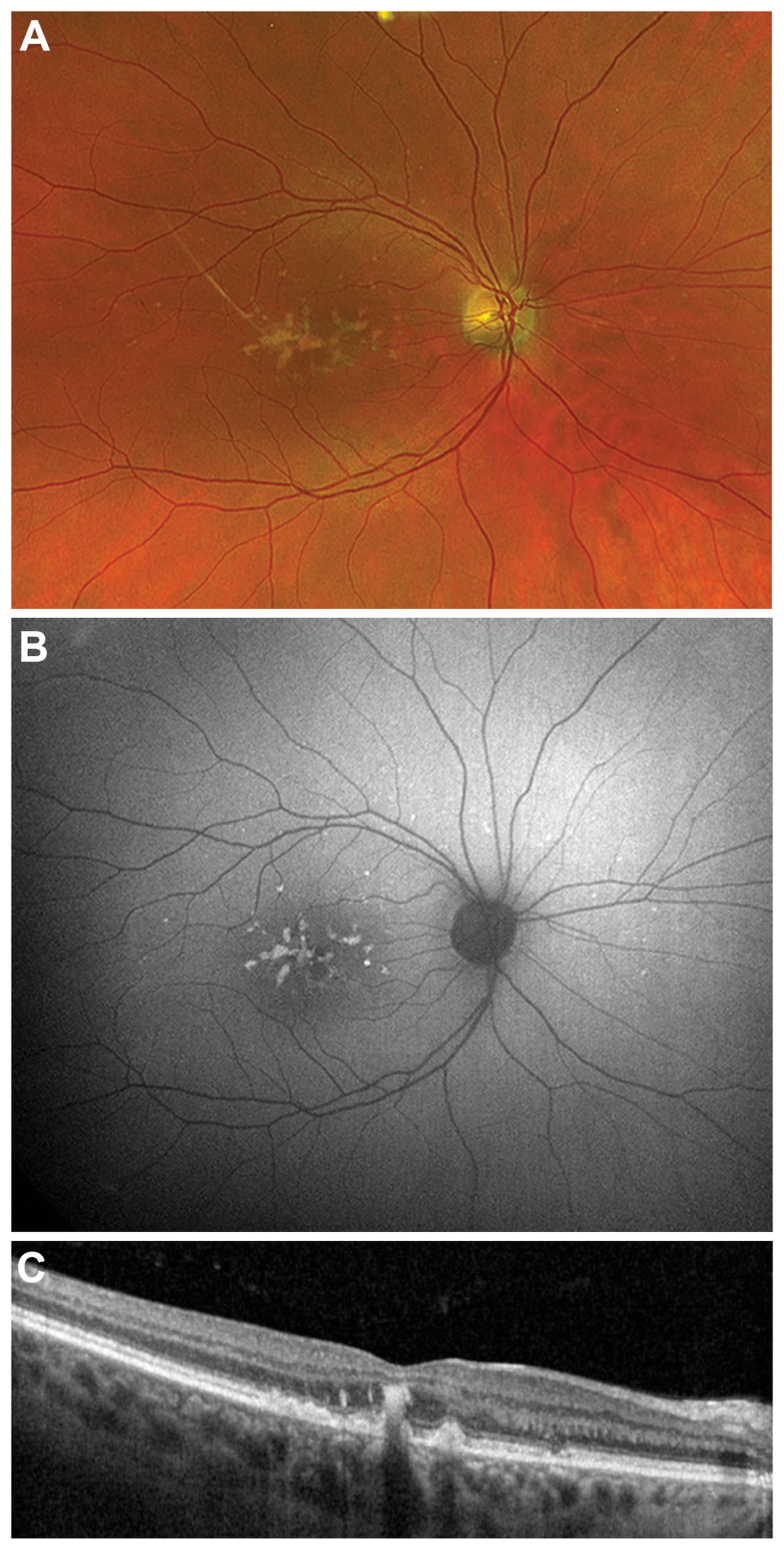
Multimodal Imaging in Inherited Retinal Disorders
As an increasing number of IRD patients are being identified and referred for genetic testing and counseling, clinicians would benefit from a practical and efficient framework for integrating multimodal imaging into their diagnoses and management. This review summarizes the utility of multimodal imaging across IRDs.
By
Jin Kyun (Luke) Oh, MD
Jesse D. Sengillo, MD
January 1, 2026
Clinical Scorecard: Multimodal Imaging in Inherited Retinal Disorders
At a Glance
Category Detail
Condition Inherited Retinal Disorders (IRDs) Key Mechanisms Multimodal imaging techniques including fundus photography, OCT, and autofluorescence are utilized for diagnosis, monitoring, and therapy guidance. Target Population Patients with inherited retinal disorders, including retinitis pigmentosa and Stargardt disease. Care Setting Ophthalmology clinics and genetic counseling centers.
Key Highlights
Multimodal imaging is essential for timely diagnosis of IRDs. FAF is particularly informative for detecting early disease manifestations. Ultrawidefield imaging captures extensive retinal areas, beneficial for rod-predominant diseases. AI advancements are enhancing the classification and prediction of IRDs. Serial FAF measurements are crucial for tracking disease progression. Guideline-Based Recommendations
Diagnosis
Utilize multimodal imaging for establishing clinical diagnosis of IRDs. Employ color fundus photography and FAF for early detection of conditions like Stargardt disease. Management
Integrate genetic testing and counseling for patients diagnosed with IRDs. Monitor disease progression using serial FAF measurements. Monitoring & Follow-up
Use FAF to track changes in hyperautofluorescent and hypoautofluorescent lesions over time. Assess the diameter of hyperautofluorescent rings in RP for monitoring visual prognosis. Risks
Variability in imaging results due to differences in exposure and lesion border definition may affect clinical use. Patient & Prescribing Data
Individuals diagnosed with inherited retinal disorders, particularly those undergoing genetic testing.
Emerging gene-based therapies necessitate precise identification of biomarkers through multimodal imaging.
Clinical Best Practices
Incorporate ultrawidefield imaging for comprehensive assessment of peripheral retinal abnormalities. Utilize NIR-AF as an adjunct to FAF for enhanced structural correlation in IRDs. Related Resources & Content