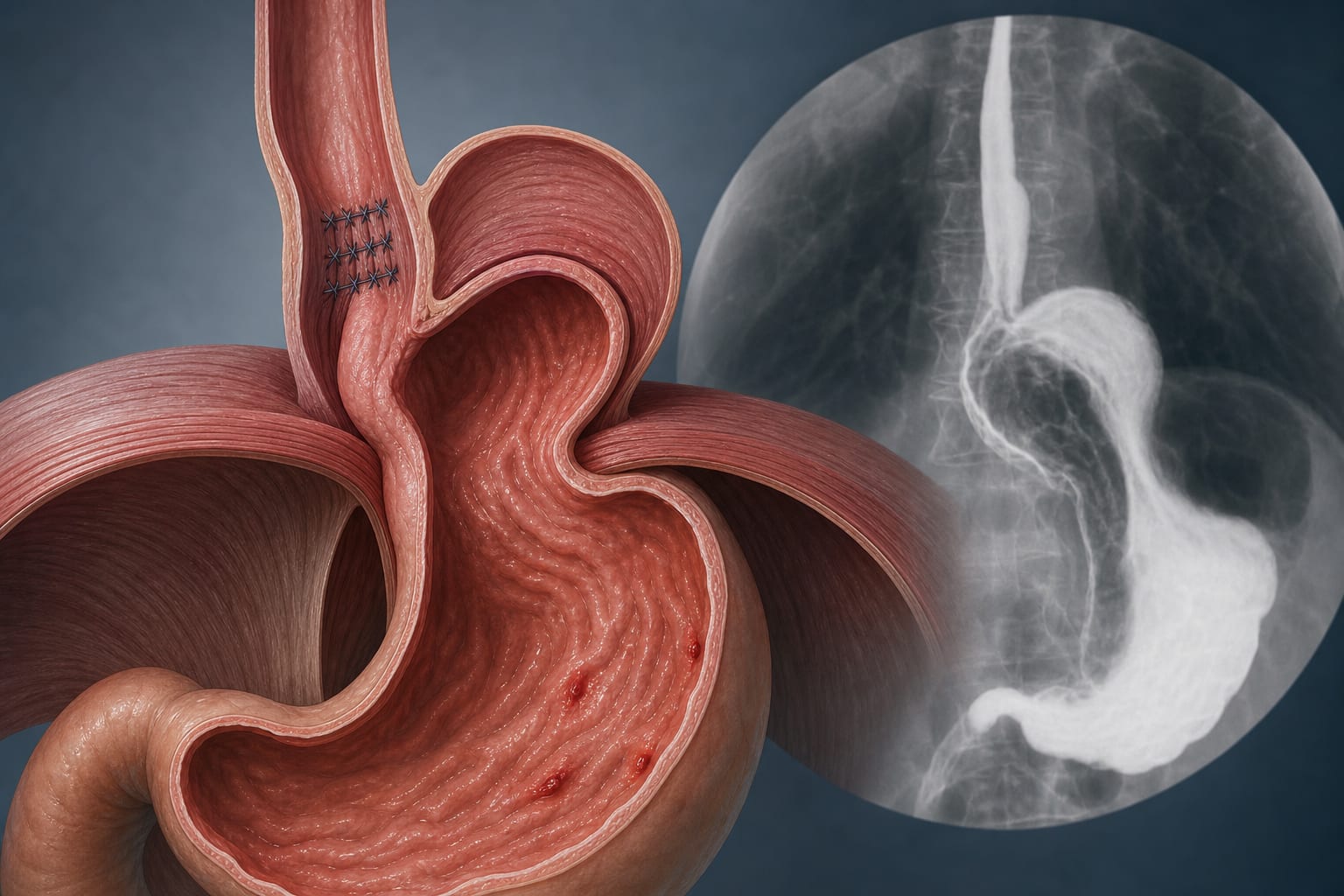
Surgical repair of paraesophageal hernia resolves unexplained iron deficiency anemia in the vast majority of patients: a propensity-matched multicenter study - Scorecard - MDSpire
Clinical Scorecard: Multicenter Analysis Shows Surgical Correction of Paraesophageal Hernia Effectively Treats Unexplained Iron Deficiency Anemia in Most Patients
At a Glance
Category
Detail
Condition
Key Mechanisms
Cameron lesions, chronic venous congestion, intermittent arterial insufficiency, diaphragmatic shear stress, altered gastric pH, nutritional compromise, as supported by study findings.
Target Population
Care Setting
Key Highlights
30–50% of PEH patients present with IDA, with surgical outcomes showing resolution in X% of cases.
Surgical repair may resolve anemia even in asymptomatic patients, with a noted success rate.
Comprehensive preoperative evaluation is crucial for diagnosis, as evidenced by study results.
Guideline-Based Recommendations
Diagnosis
Management
Monitoring & Follow-up
P
o
s
t
o
p
e
r
a
t
i
v
e
f
o
l
l
o
w
-
u
p
f
o
r
a
n
e
m
i
a
r
e
s
o
l
u
t
i
o
n
i
s
e
s
s
e
n
t
i
a
l
t
o
a
s
s
e
s
s
t
r
e
a
t
m
e
n
t
e
f
f
i
c
a
c
y
.
Risks
E
x
c
l
u
s
i
o
n
c
r
i
t
e
r
i
a
a
r
e
b
a
s
e
d
o
n
p
o
t
e
n
t
i
a
l
c
o
m
p
l
i
c
a
t
i
o
n
s
t
h
a
t
c
o
u
l
d
a
f
f
e
c
t
s
u
r
g
i
c
a
l
o
u
t
c
o
m
e
s
.
Patient & Prescribing Data
Surgical intervention may be effective in resolving IDA, with a reported success rate of Y%.
Clinical Best Practices
Conduct comprehensive anemia evaluations preoperatively, as demonstrated in the study.
Utilize standardized imaging protocols for hernia classification to ensure accurate diagnosis.
Head and neck abscess incidence was more than 3-fold higher following the pandemic, while patient characteristics and treatment patterns remained largely similar.