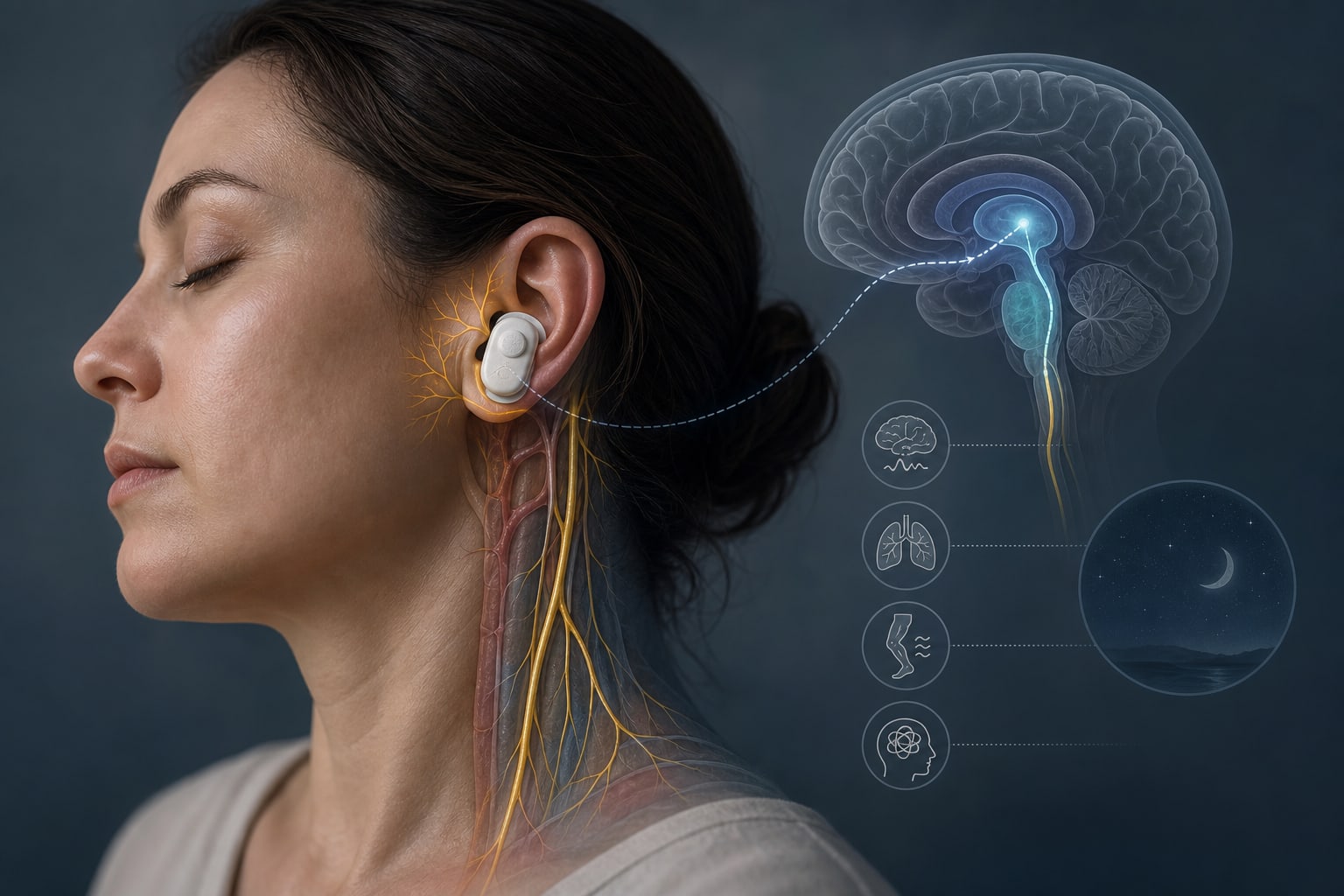
Transcutaneous Vagus Nerve Stimulation for Sleep Disorders: Current Insights and Future Perspectives
-
By
-
Frédéric Roche
-
Mathilde Monier
-
Lytissia Mouhli Gasmi
-
Vincent Pichot
-
July 16, 2026
Clinical Scorecard: Transcutaneous Vagus Nerve Stimulation for Sleep Disorders: Current Insights and Future Perspectives
At a Glance
| Category | Detail |
|---|
| Condition | Sleep Disorders |
| Key Mechanisms | Non-invasive neuromodulation via transcutaneous vagus nerve stimulation (tVNS) targeting autonomic nervous system regulation. |
| Target Population | Individuals with various sleep disorders including chronic insomnia, PTSD-related sleep disturbances, and obstructive sleep apnea. |
| Care Setting | Clinical settings focusing on neuropsychiatric conditions. |
Key Highlights
- tVNS shows promise in managing chronic insomnia with evidence from multiple randomized controlled trials.
- Pilot studies suggest potential benefits of tVNS for PTSD-related sleep disturbances, though findings are preliminary.
- No controlled trials have assessed tVNS effects on obstructive sleep apnea.
Guideline-Based Recommendations
Diagnosis
- Consider tVNS in patients with chronic insomnia based on available evidence.
Management
- Utilize tVNS as a non-invasive treatment option for sleep disorders, particularly chronic insomnia.
Monitoring & Follow-up
- Monitor patient responses to tVNS, especially in terms of sleep quality and related symptoms.
Risks
- Be aware of the limitations and lack of controlled trials for tVNS in conditions like obstructive sleep apnea.
Patient & Prescribing Data
Patients with chronic insomnia, PTSD, and other sleep disorders.
tVNS may lead to significant improvements in sleep quality metrics such as PSQI scores.
Clinical Best Practices
- Conduct thorough assessments of sleep disorders before considering tVNS.
- Incorporate tVNS as part of a multidisciplinary approach to managing sleep disorders.
Related Resources & Content