AI-driven precision diagnosis and treatment of prostate cancer: a narrative review
-
By
-
Tonghui Chu
-
Youzhao Zhang
-
Jianuo Du
-
Abudurexiti Mierxiati
-
July 16, 2026
Clinical Scorecard: Utilizing Artificial Intelligence for Tailored Diagnosis and Management of Prostate Cancer: A Comprehensive Review
At a Glance
| Category | Detail |
|---|
| Condition | Prostate Cancer |
| Key Mechanisms | Artificial intelligence (AI) enhances diagnostic accuracy and treatment personalization through multi-modal models integrating imaging, pathological, and clinical data. |
| Target Population | Men diagnosed with prostate cancer. |
| Care Setting | Clinical oncology and radiology. |
Key Highlights
- Prostate cancer is one of the most common cancers in men, with increasing incidence and mortality rates.
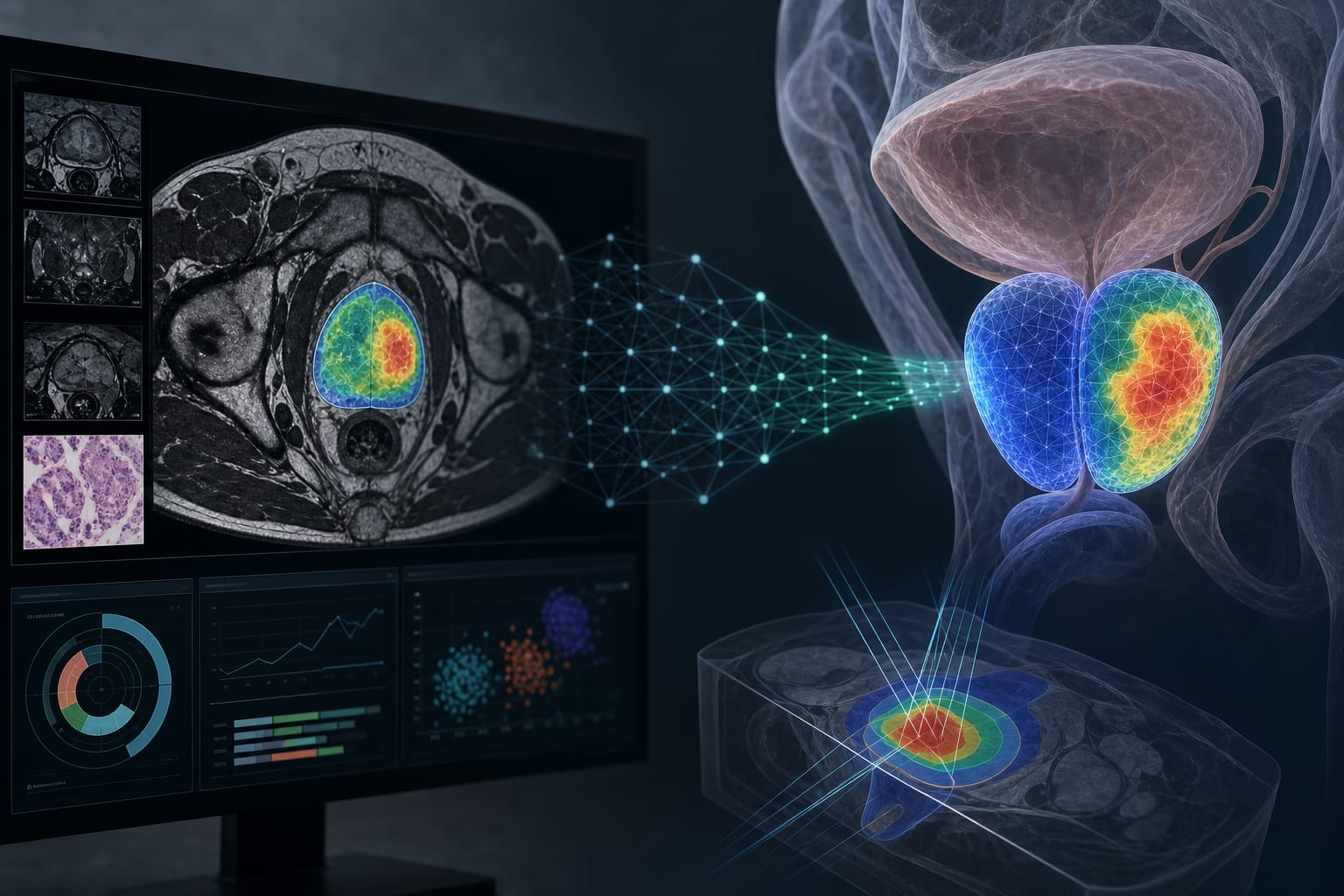
- AI-driven models improve diagnostic accuracy and efficiency in prostate cancer detection and treatment.
- AI applications include imaging evaluation, pathological examination, and optimization of treatment plans.
- AI can assist in identifying biomarkers and therapeutic targets for personalized treatment.
- Current AI models have not yet been widely implemented in clinical practice.
Guideline-Based Recommendations
Diagnosis
- Utilize AI-driven multi-modal models for precise segmentation and grading of prostate cancer.
Management
- Integrate AI into surgical procedures, radiation therapy, and targeted drug development.
Monitoring & Follow-up
- Employ AI to predict complications and survival outcomes post-treatment.
Risks
- Current limitations of AI technology may hinder practical clinical application.
Patient & Prescribing Data
Men with clinically significant prostate cancer.
AI can enhance personalized treatment planning and improve patient prognosis.
Clinical Best Practices
- Embrace the trend of intelligent medicine by integrating AI-assisted diagnostic and therapeutic technologies.
Related Resources & Content