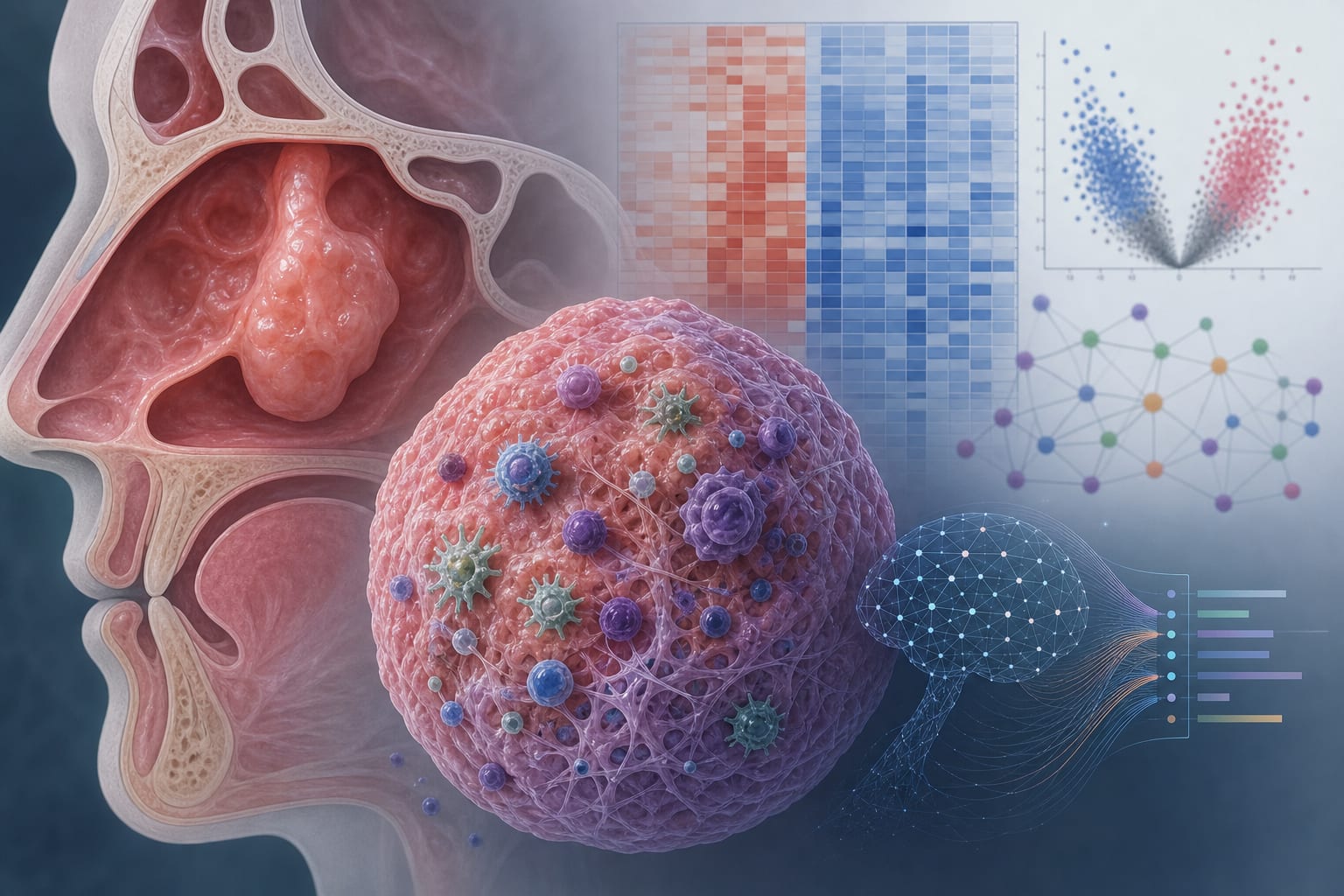
Diagnostic value and immune microenvironment regulatory network of metabolic reprogramming in chronic rhinosinusitis with nasal polyps identified by multidimensional transcriptome integration and machine learning - Scorecard - MDSpire
Advertisement
Evaluating the Diagnostic Potential and Immune Microenvironmental Interactions of Metabolic Reprogramming in Chronic Rhinosinusitis with Nasal Polyps through Multidimensional Transcriptomic Analysis and Machine Learning Techniques
Clinical Scorecard: Evaluating the Diagnostic Potential and Immune Microenvironmental Interactions of Metabolic Reprogramming in Chronic Rhinosinusitis with Nasal Polyps through Multidimensional Transcriptomic Analysis and Machine Learning Techniques
At a Glance
Category
Detail
Condition
Chronic Rhinosinusitis with Nasal Polyps (CRSwNP)
Key Mechanisms
Metabolic reprogramming and immune microenvironment interactions
Target Population
Patients with CRSwNP, often with comorbid asthma
Care Setting
Clinical and research settings focusing on chronic inflammatory diseases
Key Highlights
Identified 21 differentially expressed genes (DEGs) related to metabolic reprogramming in CRSwNP.
Eight hub genes (ERBB4, FBP1, HMGCS2, LYZ, NDRG2, PIP, PYCR1, SLC43A1) were identified with high diagnostic performance (AUC = 0.979).
Single-cell RNA sequencing revealed distinct expression patterns of hub genes across immune cell subsets.
Lower expression of FBP1, LYZ, and NDRG2 identified as potential risk factors for CRSwNP.
Study provides insights into metabolic mechanisms driving CRSwNP pathogenesis.
Guideline-Based Recommendations
Diagnosis
Current diagnostics rely on imaging, endoscopic evaluation, and symptom scoring.
Management
Standard treatments include corticosteroids and surgical approaches, though they have high recurrence rates.
Monitoring & Follow-up
No specific molecular tools currently exist for early diagnosis or subtyping of CRSwNP.
Risks
High rates of recurrence and poor long-term outcomes associated with standard treatments.
Patient & Prescribing Data
Patients diagnosed with CRSwNP, often with asthma and allergic rhinitis.
Biologic therapies are available but limited by cost and varied responses.
Clinical Best Practices
Utilize machine learning and bioinformatics for identifying potential biomarkers in CRSwNP.
Consider metabolic reprogramming as a therapeutic target in CRSwNP management.
The 2025 US Department of Veterans Affairs and US Department of Defense asthma guideline introduces 21 evidence-based recommendations for primary care, redefining stepwise treatment, comorbidity management, and reliever strategy.
Higher annual oral corticosteroid exposure was associated with greater odds of systemic adverse events, with avascular bone necrosis and pneumonia showing dose-dependent associations with cumulative dose and osteoporosis associated with longer annual exposure duration.