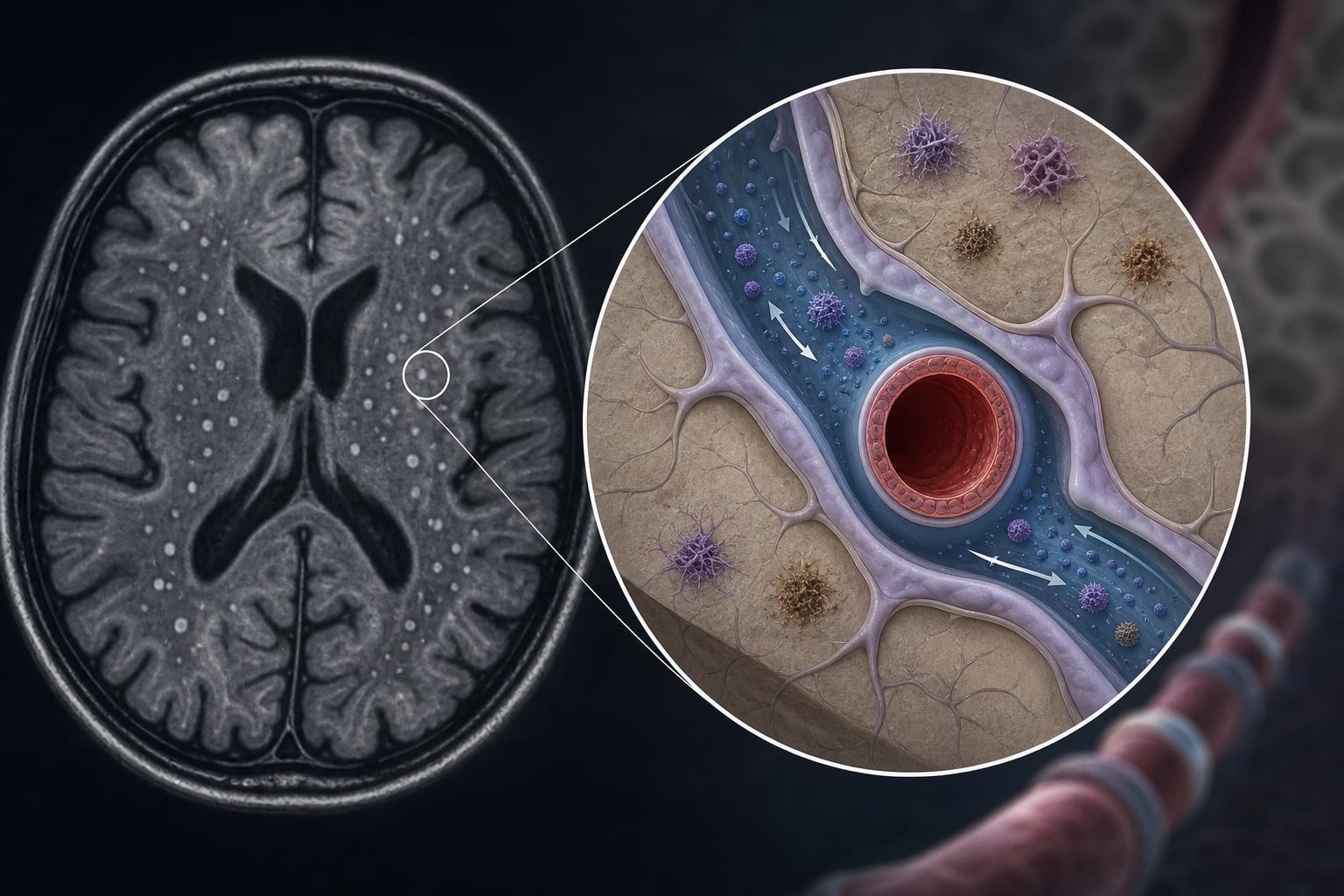
The Role of Perivascular Spaces in the Progression of Amyloid, Tau, and Vascular Biomarkers
By
Audrey Low
Jeffrey L. Gunter
Mingzhao Hu
Sheelakumari Raghavan
Scott A. Przybelski
Christopher G. Schwarz
Kejal Kantarci
Val J. Lowe
Ronald C. Petersen
Jonathan Graff-Radford
Clifford R. Jack
Prashanthi Vemuri
July 17, 2026
Clinical Scorecard: The Role of Perivascular Spaces in the Progression of Amyloid, Tau, and Vascular Biomarkers
At a Glance
Category Detail
Condition Alzheimer's Disease Key Mechanisms Cerebral small vessel disease and impaired perivascular clearance Target Population Individuals aged 30–100 with varying cognitive status including MCI and dementia Care Setting Longitudinal cohort studies
Key Highlights
Enlarged perivascular spaces (PVS) are linked to cognitive impairment and dementia. PVS can be detected on MRI earlier than other markers of small vessel disease. Cerebrovascular dysfunction may accelerate amyloid and tau pathology accumulation. Quantitative measures of PVS burden are emerging as a research priority. Longitudinal studies are needed to clarify PVS's role in neurodegeneration. Guideline-Based Recommendations
Diagnosis
Use MRI to assess perivascular spaces as a potential early biomarker. Management
Investigate the role of PVS in the progression of Alzheimer's disease pathologies. Monitoring & Follow-up
Longitudinal assessment of PVS burden in relation to cognitive decline. Risks
Elevated PVS burden is associated with increased risk of dementia. Patient & Prescribing Data
Participants from community-based and clinical cohorts with cognitive impairment.
No specific treatments are mentioned; focus is on understanding PVS as a biomarker.
Clinical Best Practices
Employ quantitative imaging techniques for assessing PVS burden. Conduct longitudinal studies to explore PVS's predictive value for cognitive decline. Related Resources & Content