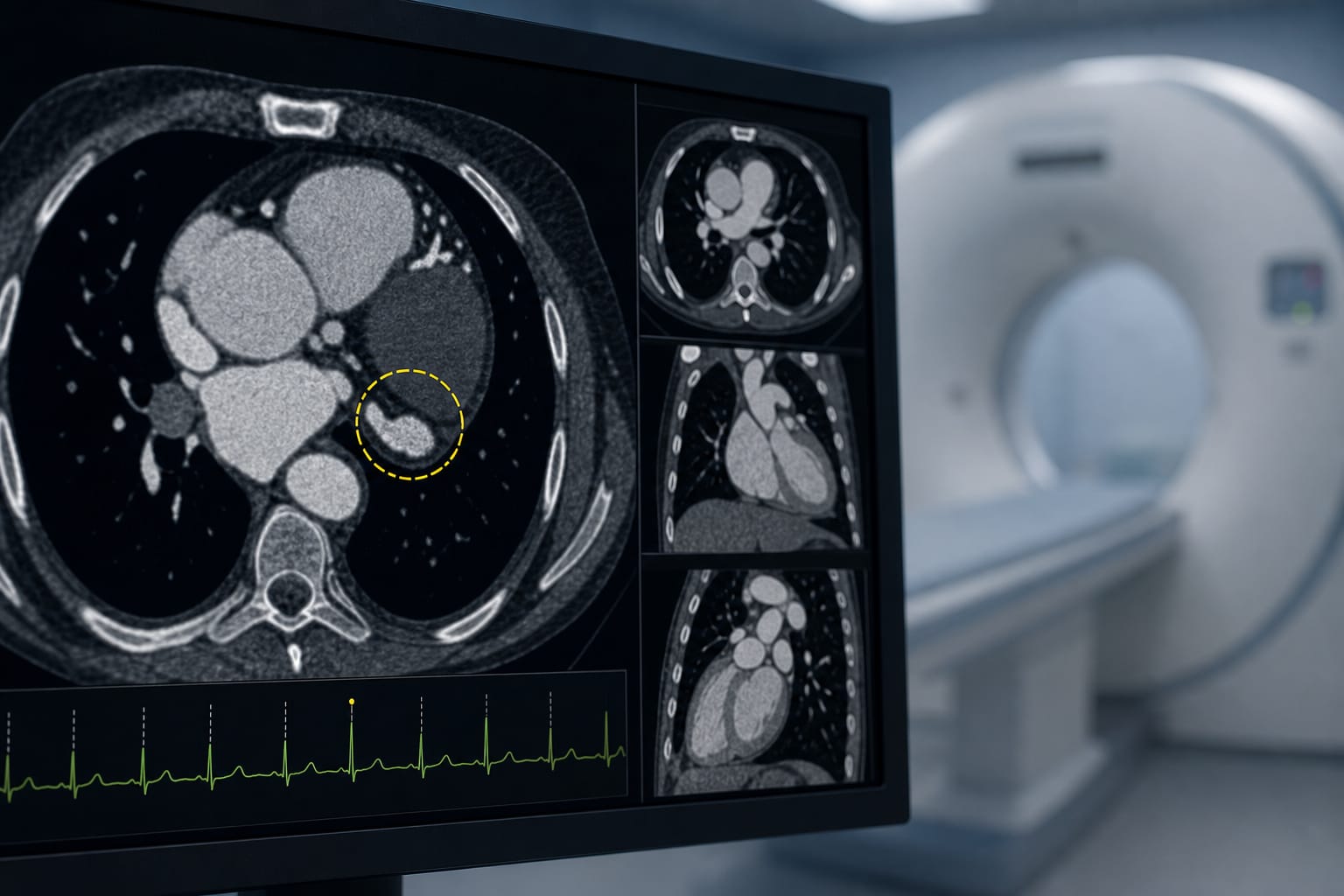
Detection of Intra-cardiac Thrombus in Hyperacute Ischemic Stroke Using Electrocardiogram-Gated Cardiac Computed Tomography
By
Daniel S. Green
Timmy Pham
Dennis J. Cordato
Longting Lin
Daniel Akrawi
Callan Gavaghan
Chilan Nguyen
Aaron Gaekwad
Alan McDougall
Carlos Garcia-Esperon
Anthony Kaplan
Christopher Blair
Melissa Leung
Mark W. Parsons
June 24, 2026
Clinical Scorecard: Detection of Intra-cardiac Thrombus in Hyperacute Ischemic Stroke Using Electrocardiogram-Gated Cardiac Computed Tomography
At a Glance
Category Detail
Condition Ischemic Stroke Key Mechanisms Detection of intra-cardiac thrombus using ECG-gated cardiac CT. Target Population Patients with suspected cardioembolic stroke. Care Setting Hyperacute stroke imaging protocol.
Key Highlights
ECG-gated cardiac CT identified intra-cardiac thrombus in 26% of ischemic stroke patients. Higher prevalence of premorbid hypertension, heart failure, and atrial fibrillation in patients with intra-cardiac thrombus. Cardiac CT had a significantly higher detection rate of intra-cardiac thrombus compared to TTE (29% vs. 2%). Poor functional outcomes at 3 months were more common in patients with intra-cardiac thrombus. Guideline-Based Recommendations
Diagnosis
Consider ECG-gated cardiac CT as part of hyperacute stroke imaging protocols. Management
Monitoring & Follow-up
Risks
Patient & Prescribing Data
Patients over 18 years with stroke syndrome potentially eligible for reperfusion therapy.
Further studies are required to explore benefits in different populations.
Clinical Best Practices
Utilize ECG-gated cardiac CT for early detection of intra-cardiac thrombus in hyperacute ischemic stroke. Related Resources & Content