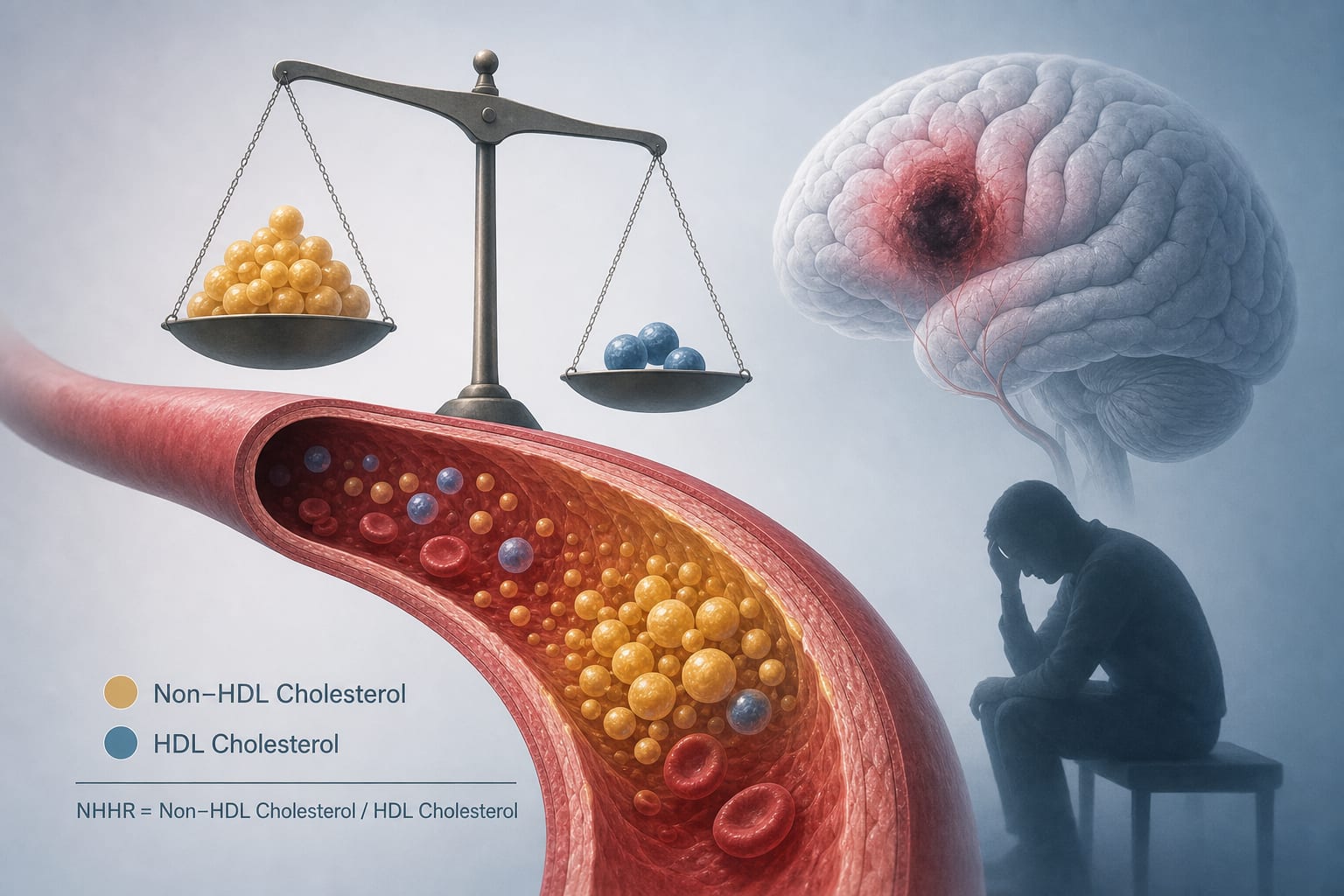
Elevated NHHR at admission is independently associated with elevated post-stroke depressive symptoms
-
By
-
Xiangqi Kong
-
Xinyue Yuan
-
Haobo Wang
-
Mina Zhao
-
Wei Jing
-
June 26, 2026
-
Clinical Scorecard: Increased NHHR at Hospital Admission Correlates with Higher Post-Stroke Depression Symptoms
At a Glance
| Category | Detail |
|---|
| Condition | Post-Stroke Depression |
| Key Mechanisms | Association between lipid metabolism disorders and inflammatory responses linked to mood disturbances. |
| Target Population | Chinese patients with acute ischemic stroke (AIS) |
| Care Setting | Neurology department in a hospital |
Key Highlights
- Elevated NHHR at admission is associated with increased odds of post-stroke depressive symptoms.
- 179 out of 518 patients exhibited elevated depressive symptoms at 90 days.
- NHHR serves as a simple and cost-effective biomarker for early risk stratification.
Guideline-Based Recommendations
Diagnosis
- Assess depressive symptoms using the Hamilton Depression Rating Scale (HAMD) at 90 days post-stroke.
Management
- Consider NHHR as a biomarker for identifying patients at risk for post-stroke depression.
Monitoring & Follow-up
- Monitor NHHR levels and depressive symptoms in AIS patients during the acute phase.
Risks
- Elevated post-stroke depressive symptoms are linked to poor functional recovery and increased mortality.
Patient & Prescribing Data
518 Chinese AIS patients analyzed for NHHR and depressive symptoms.
Higher NHHR levels correlate with increased depressive symptoms, suggesting a need for targeted interventions.
Clinical Best Practices
- Utilize NHHR as part of routine assessments in AIS patients to identify those at risk for depression.
- Implement early interventions for patients with elevated NHHR to improve outcomes.
Related Resources & Content