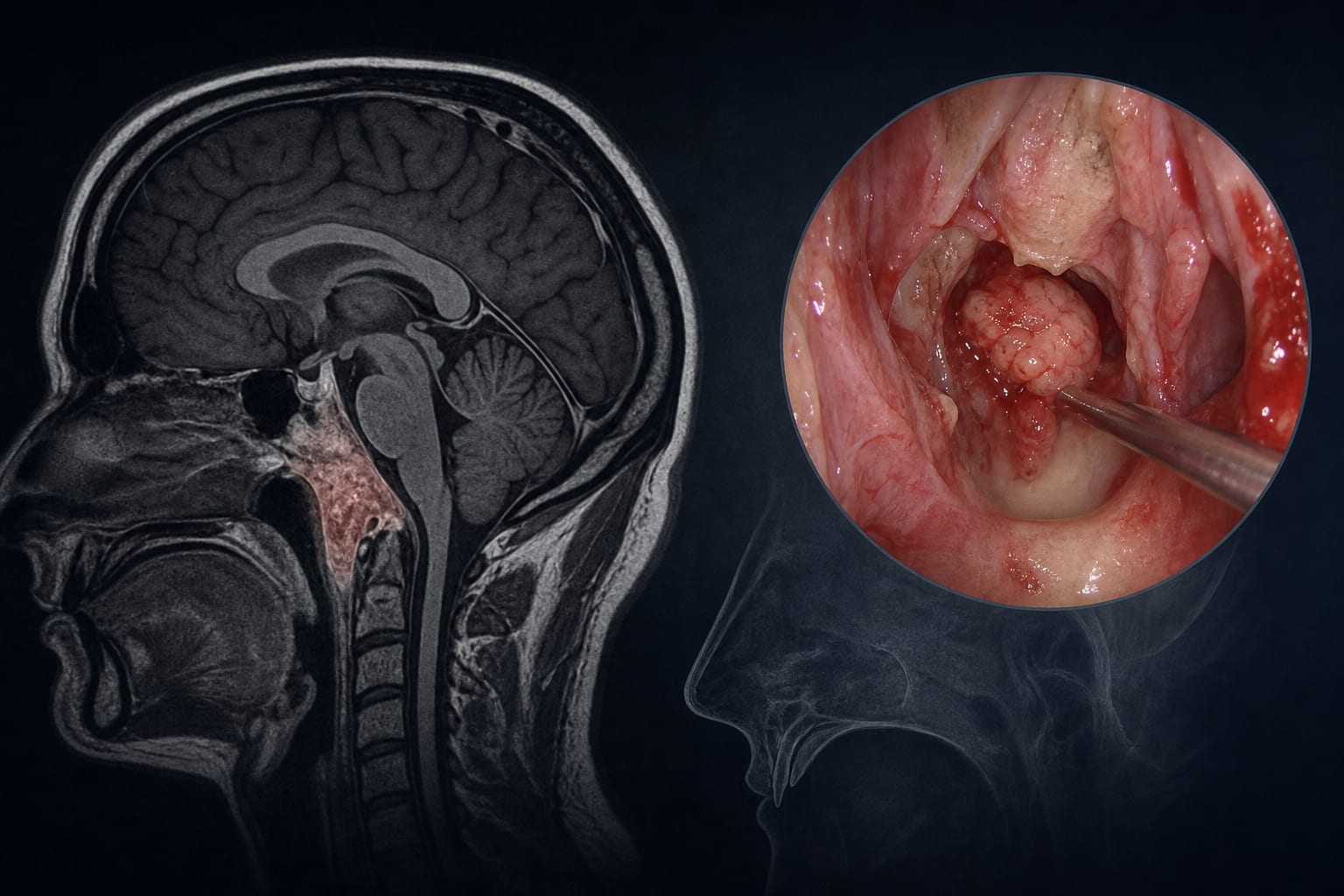
Occult clival chordoma initially unrecognized on MRI presenting with cerebrospinal fluid rhinorrhea: a case report
-
By
-
Sufen Huang
-
Yuzhang Bei
-
Lifeng Yuan
-
Ting Su
-
Shengqiang Zhou
-
July 1, 2026
-
Clinical Scorecard: Undetected Occult Clival Chordoma Revealed by Cerebrospinal Fluid Rhinorrhea: A Case Study
At a Glance
| Category | Detail |
|---|
| Condition | Chordoma |
| Key Mechanisms | Tumor-induced spontaneous cerebrospinal fluid leaks leading to purulent meningitis. |
| Target Population | Male patients, particularly those under 40 years of age. |
| Care Setting | Emergency department and surgical intervention for CSF leak. |
Key Highlights
- Persistent CSF rhinorrhea can indicate an occult skull-base tumor.
- Initial MRI may not reveal underlying tumors, leading to diagnostic delays.
- Management must prioritize infection control and thorough etiologic workup.
Guideline-Based Recommendations
Diagnosis
- Clinical presentation and imaging findings should guide diagnosis of CSF rhinorrhea.
Management
- Initiate empirical antibiotic therapy for purulent meningitis.
- Perform endoscopic repair of CSF fistula after infection control.
Monitoring & Follow-up
- Conduct close radiological surveillance post-surgery due to risk of late recurrence.
Risks
- Persistent CSF leakage is a risk factor for bacterial meningitis.
Patient & Prescribing Data
39-year-old male with acute headache and fever.
Antibiotics (meropenem and vancomycin) were used to manage infection.
Clinical Best Practices
- Consider underlying tumors in patients with spontaneous CSF leaks.
- Use multidisciplinary approaches for management of complex cases.
Related Resources & Content