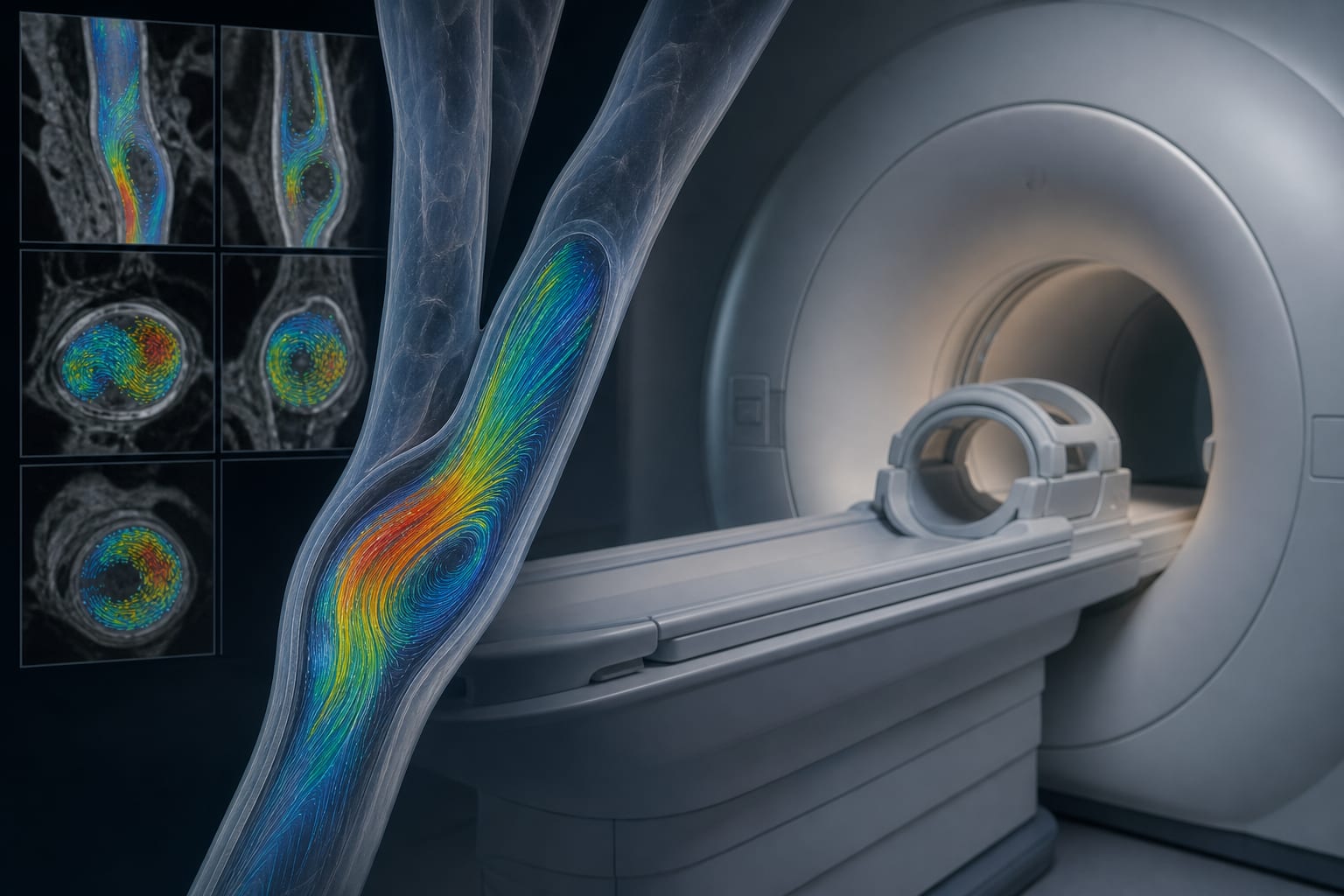
Investigating association of triglycerides with hemodynamic parameters in patients with Low cardiovascular risk using 4D flow MRI - Scorecard - MDSpire
Advertisement
Investigating association of triglycerides with hemodynamic parameters in patients with Low cardiovascular risk using 4D flow MRI
Clinical Scorecard: Examining the Relationship Between Triglyceride Levels and Hemodynamic Factors in Low Cardiovascular Risk Patients Using 4D Flow MRI
At a Glance
Category
Detail
Condition
Hypertriglyceridemia
Key Mechanisms
Association of triglyceride levels with carotid hemodynamics and wall shear stress parameters.
Target Population
Individuals aged 55 years or younger with low cardiovascular risk.
Care Setting
Clinical research using advanced imaging techniques.
Key Highlights
Study involved 180 participants categorized by triglyceride levels.
Significant differences in wall shear stress parameters observed across triglyceride groups.
4D Flow MRI used to assess hemodynamic changes in carotid arteries.
Independent association of triglyceride levels with WSSmax and WSSmean after covariate adjustment.
Urgent need for evidence-based guidelines for managing hypertriglyceridemia in low-risk populations.
Guideline-Based Recommendations
Diagnosis
Assessment of triglyceride levels in low cardiovascular risk populations.
Management
Current guidelines focus on cardiovascular disease risk but provide limited advice for hypertriglyceridemia management.
Monitoring & Follow-up
Use of 4D Flow MRI to detect hemodynamic changes in hypertriglyceridemic patients.
Risks
Hypertriglyceridemia linked to increased risk of ischemic stroke and vascular pathophysiological changes.
Patient & Prescribing Data
Low cardiovascular risk individuals with varying triglyceride levels.
Need for robust evidence to guide clinical management of hypertriglyceridemia.
Clinical Best Practices
Utilize 4D Flow MRI for comprehensive assessment of carotid hemodynamics.
Consider triglyceride levels as a significant factor in cardiovascular risk assessment.
Plasma proteomic models of more than 40 cell types were associated with incident Alzheimer's disease, amyotrophic lateral sclerosis, cancer, and mortality across three large cohorts.