Clinical Scorecard: Integration of Transcriptomic Data Across Multiple Cohorts to Develop and Validate a Diagnostic Model for Septic Shock in Peripheral Blood
At a Glance
Category
Detail
Condition
Septic Shock
Key Mechanisms
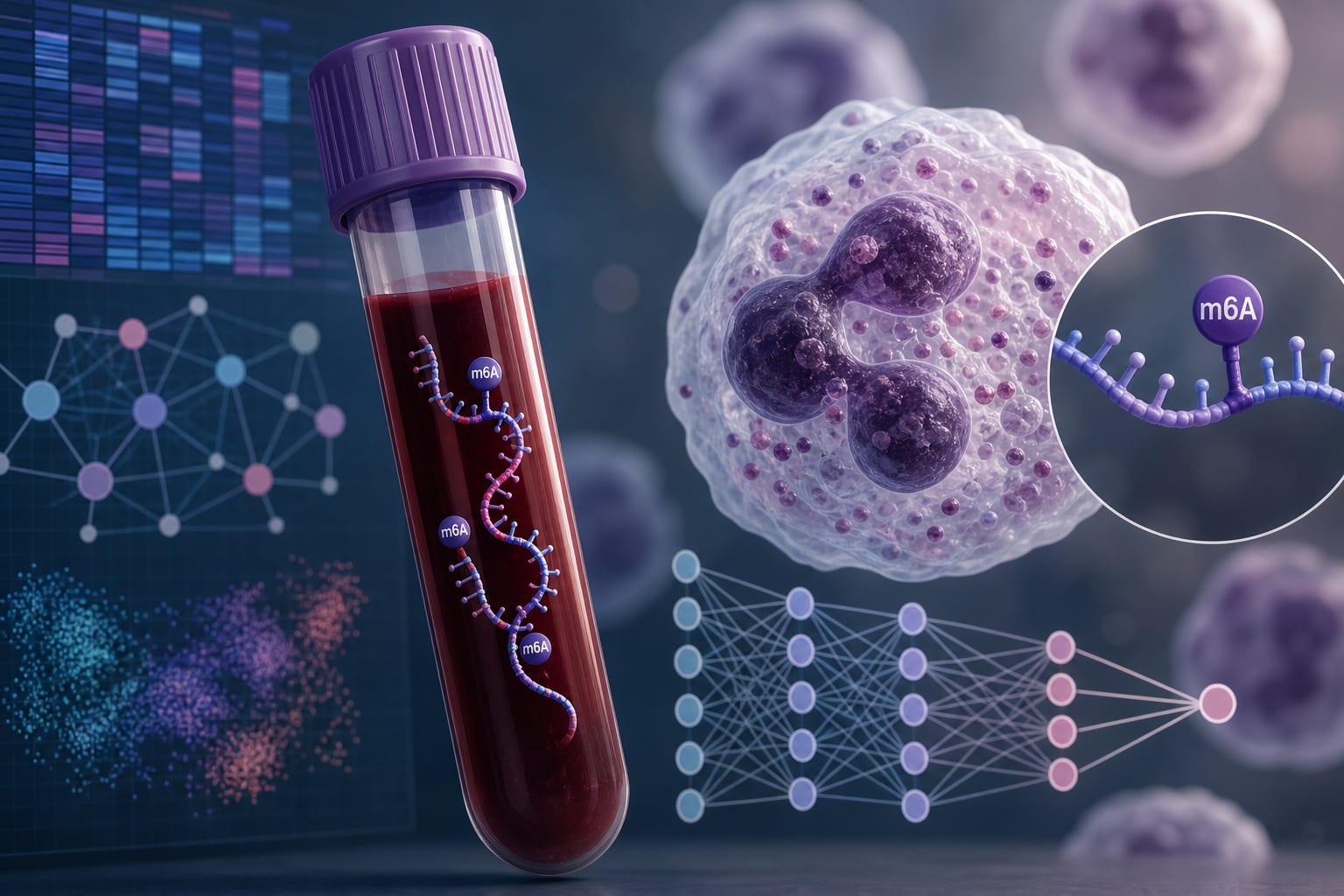
m6A regulatory mechanisms of key genes, particularly the METTL14/YTHDF1–S100A12 axis
Target Population
Patients with septic shock
Care Setting
Intensive Care Unit (ICU)
Key Highlights
Identification of 76 candidate genes associated with septic shock.
Development of a 5-gene ANN diagnostic model validated across multiple cohorts.
Significant elevation of mRNA and protein levels of key genes in clinical sepsis patients.
Neutrophil expansion correlated with disease severity and adverse outcomes.
Elucidation of the METTL14/YTHDF1-mediated m6A-S100A12 axis in neutrophils.
Guideline-Based Recommendations
Diagnosis
Utilize the 5-gene ANN model for diagnosing septic shock.
Management
Consider targeting the METTL14/m6A pathway for therapeutic interventions.
Monitoring & Follow-up
Monitor levels of S100A12, MMP8, PGLYRP1, CEACAM8, and MMP9 in peripheral blood.
Risks
High mortality rates associated with septic shock in ICU settings.
Patient & Prescribing Data
Patients diagnosed with septic shock based on peripheral blood analysis.
Potential for using m6A-related therapies targeting the identified genes.
Clinical Best Practices
Incorporate multi-omics approaches for improved diagnostic accuracy.
Utilize machine learning algorithms for gene selection and model validation.
Assess immune cell composition in sepsis patients for better risk stratification.
Invited narrative review supports early, interprofessional rehabilitation across the ICU recovery continuum while emphasizing heterogeneous evidence and inconsistent implementation worldwide.