Clinical Scorecard: Robotic Approaches to Thymic Cysts: Clinical Characteristics, Treatment Strategies, and Findings from a Multicenter Analysis
At a Glance
Category
Detail
Condition
Thymic cysts, a rare subgroup of mediastinal cysts
Key Mechanisms
Potential neoplastic transformation; difficulty distinguishing benign cysts from thymomas
Target Population
Patients with radiological diagnosis of thymic cysts, including symptomatic patients, those with myasthenia gravis, cyst growth, or suspicion of neoplasm
Care Setting
Thoracic surgery centers with robotic surgical capabilities
Key Highlights
Thymic cysts represent about 5% of mediastinal cysts and are often asymptomatic but may require surgery due to symptoms or malignancy suspicion.
Radiological imaging alone is insufficient to reliably differentiate benign thymic cysts from thymomas; growth rates overlap between cysts and tumors.
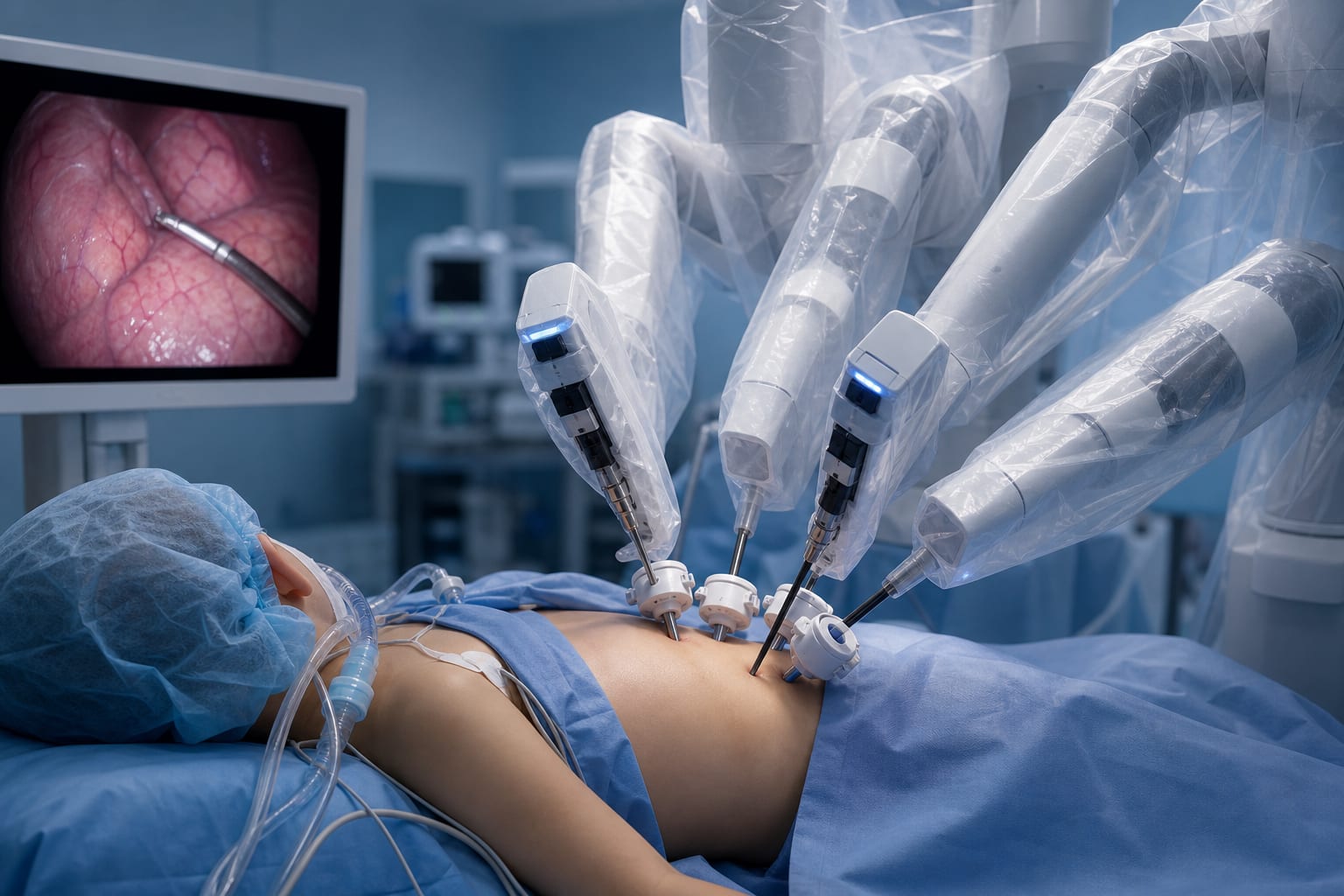
Robotic surgery offers enhanced precision and visualization, facilitating minimally invasive resection of thymic cysts with potential advantages over open and thoracoscopic approaches.
Guideline-Based Recommendations
Diagnosis
Use CT imaging for initial identification but recognize limitations in differentiating cysts from thymomas.
Consider clinical presentation including symptoms, myasthenia gravis status, cyst growth, and complexity for surgical indication.
Management
Indicate surgical resection for symptomatic cysts, presence of myasthenia gravis, cyst growth during follow-up, or suspicion of neoplasm.
Perform extended thymectomy in cases with suspected neoplastic lesions or myasthenia gravis; partial thymectomy or cystectomy may suffice otherwise.
Utilize robotic surgical systems (e.g., Da Vinci Xi) for improved dexterity and visualization in mediastinal surgery.
Monitoring & Follow-up
Follow-up imaging to monitor cyst growth, acknowledging that growth alone is not a definitive marker of malignancy.
Risks
Risk of unnecessary thymectomy exists due to diagnostic challenges.
Surgical risks inherent to mediastinal procedures must be considered.
Patient & Prescribing Data
57 patients with radiological thymic cysts treated robotically across three Italian thoracic surgery centers
Robotic surgery is feasible and effective for thymic cyst resection, with surgical approach tailored based on clinical and radiological suspicion of malignancy or myasthenia gravis.
Clinical Best Practices
Prefer left-sided robotic approach for better exposure of the left phrenic nerve and thymus anatomy; right-sided approach reserved for right-predominant lesions.
Use three-port robotic technique similar to robotic thymectomy protocols.
Aspiration of cyst content may be performed for large lesions to facilitate removal.
Extended thymectomy includes en bloc resection of thymus and surrounding mediastinal fat between phrenic nerves in cases with suspected neoplasm or myasthenia gravis.
Partial thymectomy or cystectomy may be adequate in absence of myasthenia gravis and neoplastic suspicion.
by Giacomo Cusumano, Elisa Meacci, Gaetano Romano, Marco Cavaleri, Maria Teresa Congedo, Federico Davini, Stefano Margaritora, Alberto Terminella, Franca Melfi