The blood glucose trajectories among non-diabetic patients with total joint arthroplasty: clinical characteristics and predictors
By
Peifang Li
Guihua Miao
Qin Wang
Liqun Wang
Ning Ning
Jiali Chen
June 25, 2026
Clinical Scorecard: Blood Glucose Patterns in Non-Diabetic Individuals Undergoing Total Joint Arthroplasty: Clinical Features and Predictive Factors
At a Glance
Category Detail
Condition Blood Glucose Variability in Total Joint Arthroplasty Key Mechanisms Blood glucose fluctuations due to metabolic stress and perioperative pharmacotherapy Target Population Non-diabetic patients aged 18 to 80 undergoing total joint arthroplasty Care Setting Prospective observational study in a hospital setting
Key Highlights
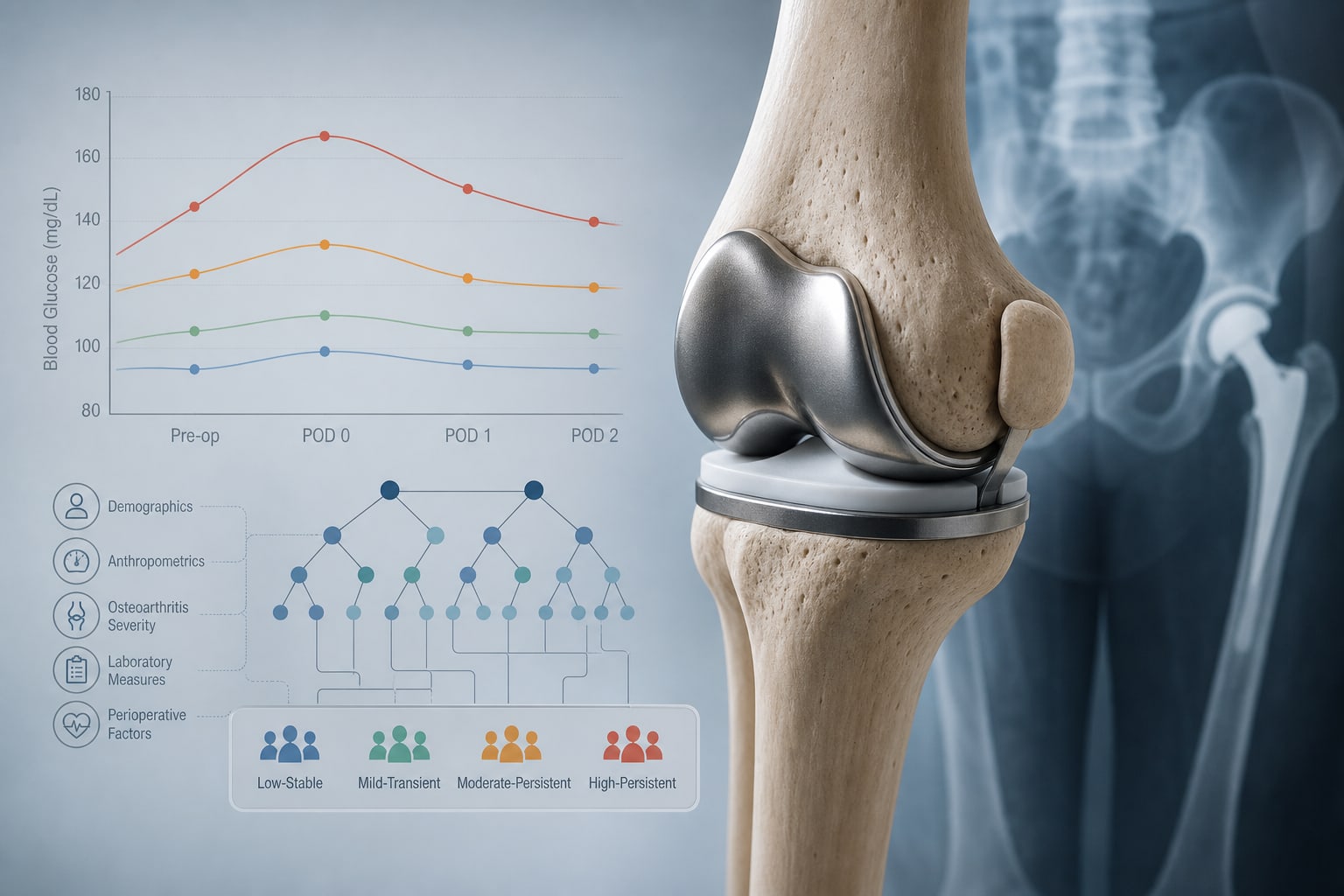
Three blood glucose trajectory groups identified: stable, slightly increased, and hyperglycemic with fluctuations Random forest model achieved 78.3% accuracy in predicting blood glucose trajectories Key predictors include age, RBC count post-surgery, hypertension, and intraoperative blood transfusion Guideline-Based Recommendations
Diagnosis
Utilize group-based trajectory models to classify blood glucose trajectories Management
Implement standardized clinical protocols for perioperative management Monitoring & Follow-up
Monitor blood glucose levels on preoperative day and postoperative days 0 to 2 Risks
Postoperative hyperglycemia associated with increased risk of complications such as infections and prolonged hospitalization Patient & Prescribing Data
Non-diabetic individuals undergoing unilateral elective primary TJA for end-stage osteoarthritis
Perioperative pharmacotherapy and physiological stress responses contribute to blood glucose variability
Clinical Best Practices
Anticipate blood glucose trajectories to provide precise dietary guidance and manage blood glucose levels Facilitate early rehabilitation during the perioperative period Related Resources & Content