Conexiant’s news site is now MDSpire News. Learn more
Advertisement
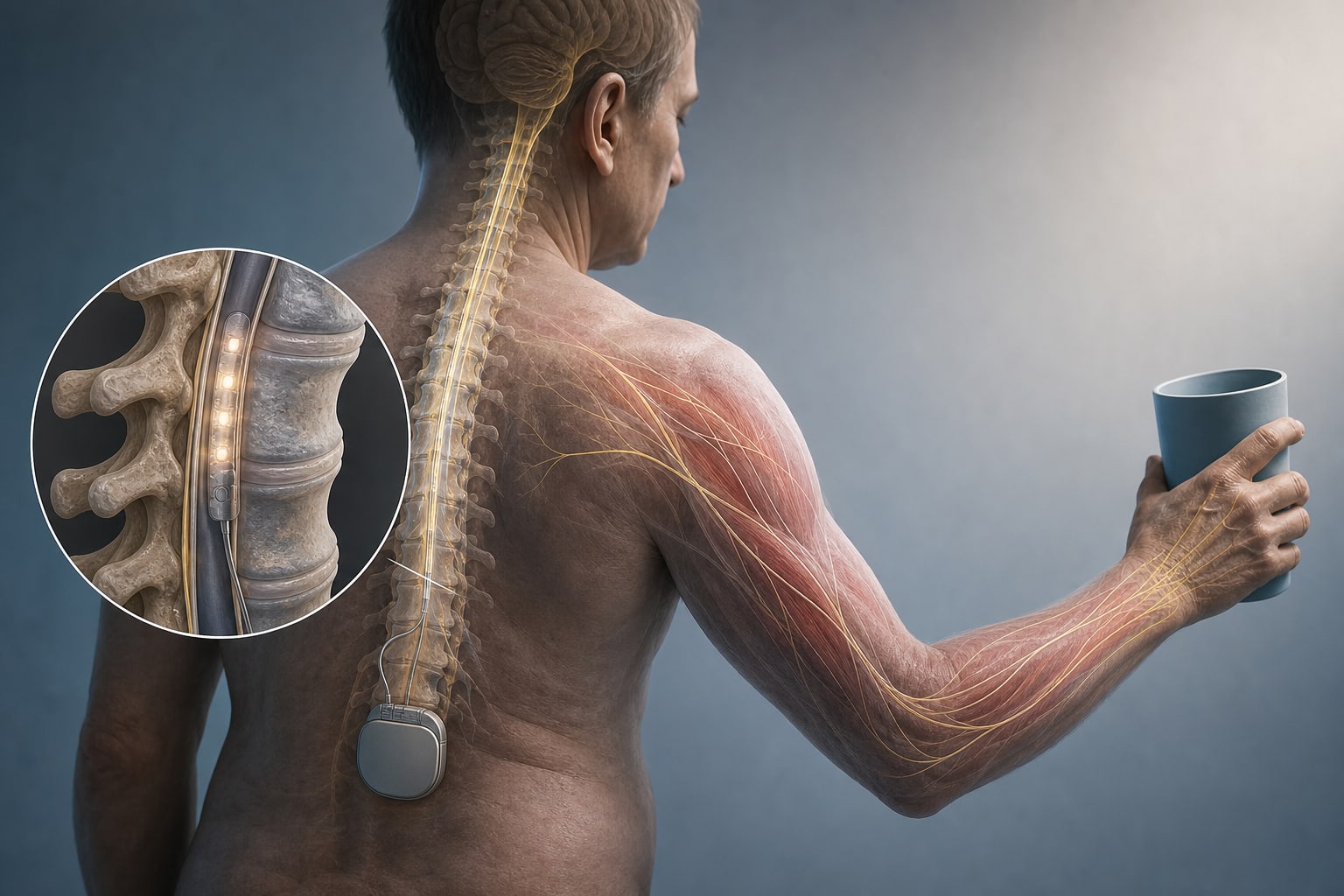
Evaluation of Spinal Cord Stimulation for Enhancing Upper Limb Motor Abilities in Individuals with Chronic Hemiparesis Following Stroke: A Feasibility Study
Clinical Scorecard: Evaluation of Spinal Cord Stimulation for Enhancing Upper Limb Motor Abilities in Individuals with Chronic Hemiparesis Following Stroke: A Feasibility Study
At a Glance
Category
Detail
Condition
Chronic hemiparesis following stroke
Key Mechanisms
Epidural spinal cord stimulation (SCS) activates dorsal root afferents to improve motor function, providing both immediate assistive effects and long-term therapeutic benefits.
Target Population
Individuals with chronic hemiparesis post-stroke
Care Setting
Rehabilitation centers
Key Highlights
SCS improved strength, dexterity, spasticity, and movement synergies, with maximal efficacy observed when stimulation was ON.
Retention of motor improvements depends on continued use of SCS, with milder sensory impairments correlating with greater motor function improvements.
Guideline-Based Recommendations
Diagnosis
Comprehensive neurological assessment to confirm chronic hemiparesis and evaluate the extent of motor deficits.
Utilization of imaging studies (e.g., MRI, CT) to assess brain injury and rule out other causes of motor impairment.
Management
Implementation of a multidisciplinary rehabilitation program including physical therapy, occupational therapy, and SCS.
Regular adjustments to SCS parameters based on patient response and tolerance.
Monitoring & Follow-up
Daily motor assessments using standardized tools during SCS implant period.
Risks
Potential for infection at the implantation site.
Risk of lead migration or malfunction of the SCS device.
Possible adverse effects such as pain, discomfort, or changes in sensory perception.
Patient & Prescribing Data
SCS provides immediate assistive effects and potential long-term therapeutic benefits across diverse stroke etiologies.
Clinical Best Practices
Follow FDA regulations for non-significant risk studies and evaluate long-term outcomes post-implantation.
by Roberto M. de Freitas, Shovan Bhatia, Erynn Sorensen, Nikhil Verma, Erick Carranza, Scott Ensel, Luigi Borda, Amy Boos, Jeff Goldsmith, Lee E. Fisher, Daryl P. Fields, Marc P. Powell, Shane Gordon, Jeffrey Balzer, Robert M. Friedlander, George F. Wittenberg, Peter C. Gerszten, John W. Krakauer, Elvira Pirondini, Douglas J. Weber, Marco Capogrosso