Potential role of maintaining physiological testosterone levels in improving glucose metabolism among normal-weight Japanese women: a pilot exploratory study - Scorecard - MDSpire
Clinical Scorecard: Exploring the Impact of Physiological Testosterone Levels on Glucose Metabolism in Normal-Weight Japanese Women: A Preliminary Study
At a Glance
Category
Detail
Condition
Glucose Metabolism Impairment
Key Mechanisms
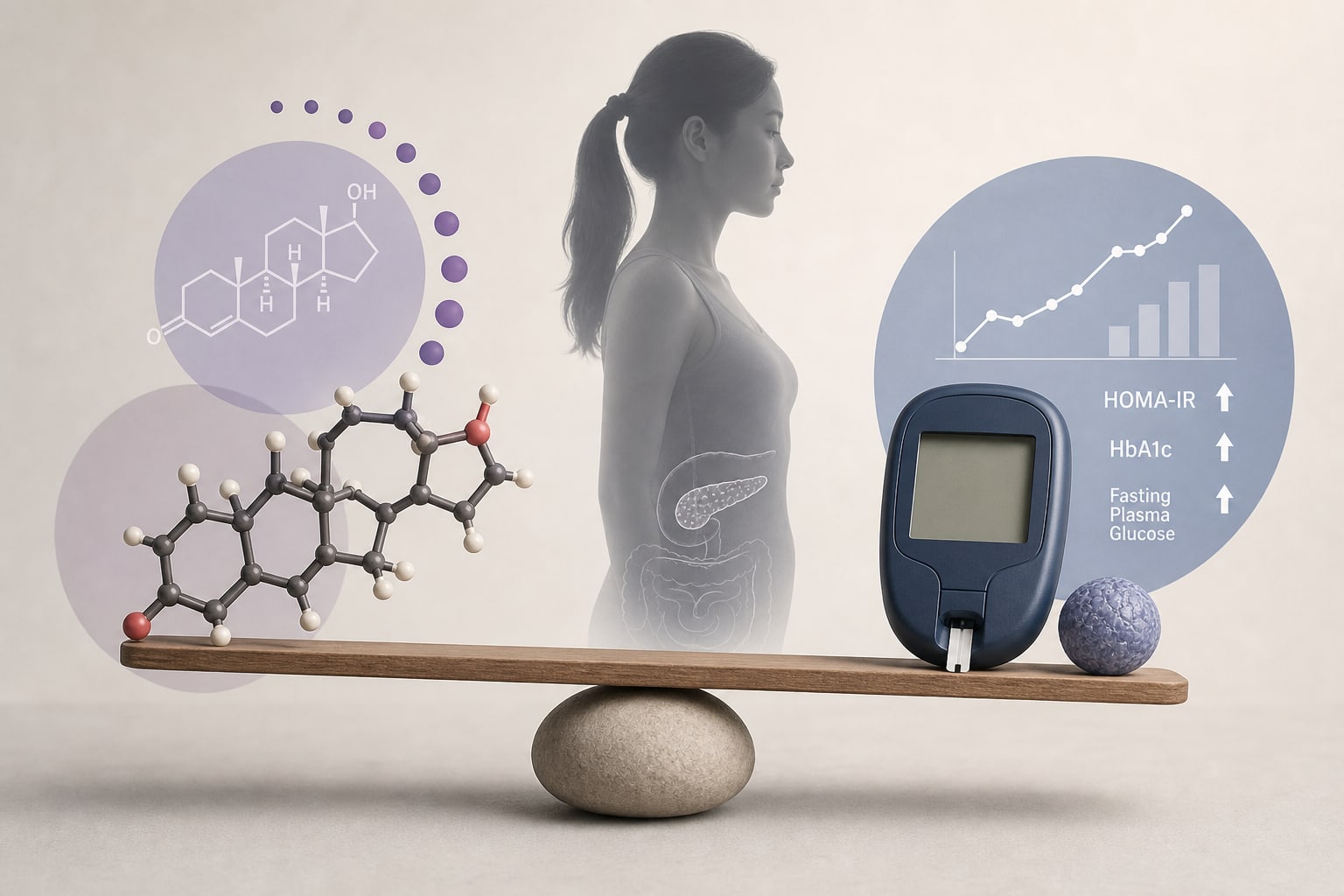
Inverse correlation between total testosterone levels and glucose metabolism indices (HbA1c, fasting plasma glucose, HOMA-IR).
Target Population
Normal-weight Japanese women (BMI 18.5–25 kg/m²).
Care Setting
Health screening facility.
Key Highlights
Total testosterone levels inversely correlated with HbA1c, fasting glucose, and HOMA-IR.
Significant associations remained after adjusting for BMI and lifestyle factors.
Inverse association between testosterone and HOMA-IR remained significant after adjusting for age and menopausal status.
Study suggests physiological testosterone levels may contribute to metabolic maintenance.
Focus on normal-weight women eliminates obesity-related metabolic biases.
Guideline-Based Recommendations
Diagnosis
Evaluate serum total testosterone levels in normal-weight women with glucose metabolism concerns.
Management
Consider monitoring testosterone levels as part of metabolic health assessments.
Monitoring & Follow-up
Regularly assess glucose metabolism indices in relation to testosterone levels.
Risks
Low testosterone levels may be associated with impaired glucose metabolism even in normal-weight women.
Patient & Prescribing Data
Normal-weight Japanese women.
Physiological testosterone levels may play a role in regulating glucose metabolism.
Clinical Best Practices
Incorporate testosterone level assessments in metabolic health evaluations for women.
Adjust for age and menopausal status when interpreting testosterone levels.