Efficacy of interventions in peripheral arterial and venous malformations of the limbs in children: protocol for a systematic review - Scorecard - MDSpire
Advertisement
Efficacy of interventions in peripheral arterial and venous malformations of the limbs in children: protocol for a systematic review
Clinical Scorecard: Effectiveness of Treatment Approaches for Limb Peripheral Arteriovenous Malformations in Pediatric Patients: A Systematic Review Protocol
At a Glance
Category
Detail
Condition
Key Mechanisms
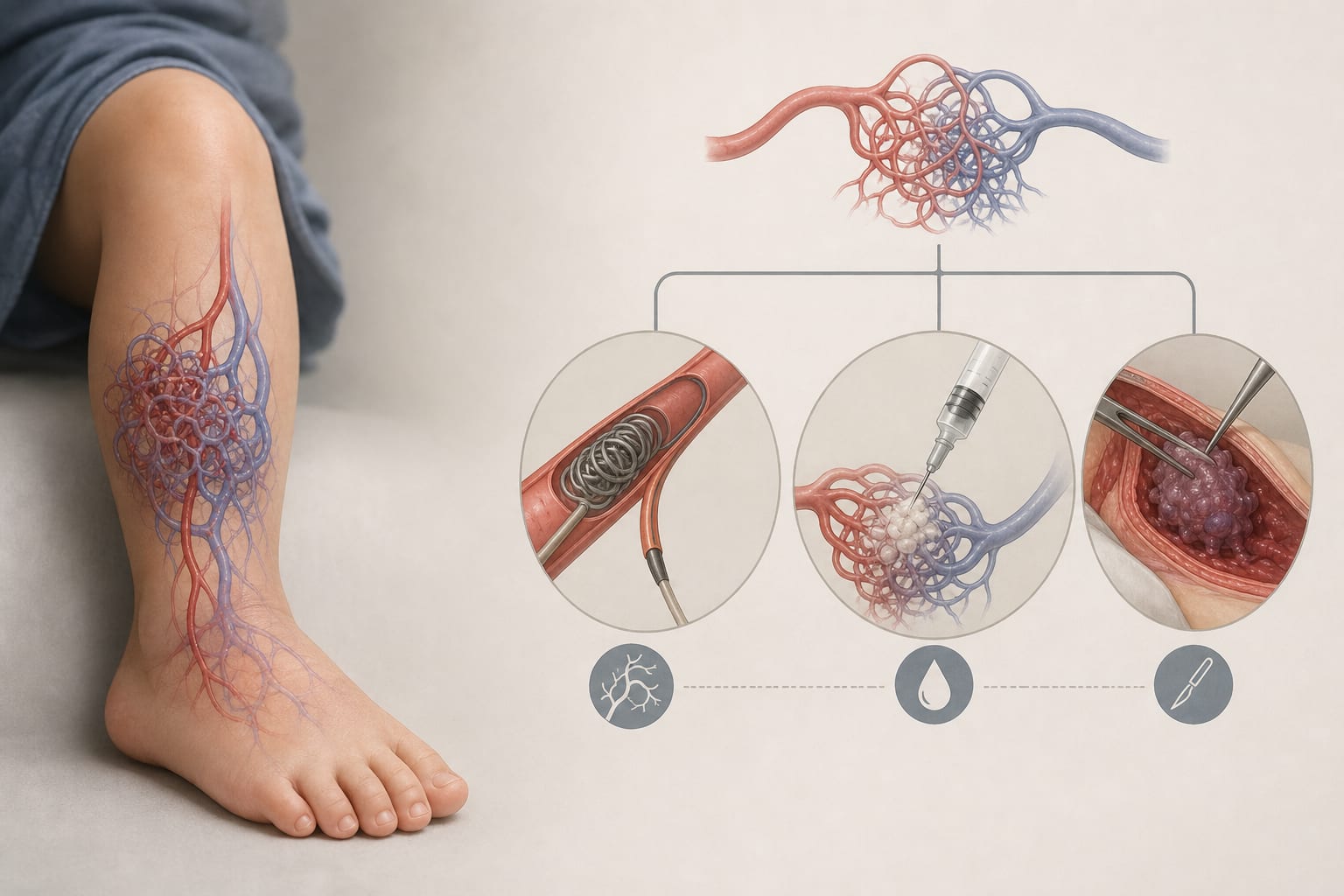
Abnormal direct communications between arteries and veins leading to hemodynamic disorders and impaired tissue perfusion, which can result in complications affecting growth and development.
Target Population
Care Setting
Key Highlights
pAVMs account for 35%-45% of all pediatric vascular anomalies in extremities, potentially leading to significant complications if untreated.
Endovascular embolization is the first-line intervention due to its minimal invasiveness and lower complication rates.
Guideline-Based Recommendations
Diagnosis
Management
Monitoring & Follow-up
Evaluate short-term symptom improvement within 3 months post-intervention.
Monitor for adverse events and quality of life changes, including long-term follow-up for growth and development impacts.
Risks
Patient & Prescribing Data
Pediatric patients with limb pAVMs
Individual treatment plans should consider the size, location, and hemodynamic characteristics of the malformation
Clinical Best Practices
Conduct systematic reviews to guide treatment decisions, such as the recent review on endovascular techniques.
Standardize criteria for intervention selection based on emerging evidence.
Older age, male sex, underweight status, reduced activities of daily living, and mild consciousness disturbance were associated with postextubation pneumonia in elective surgical patients.