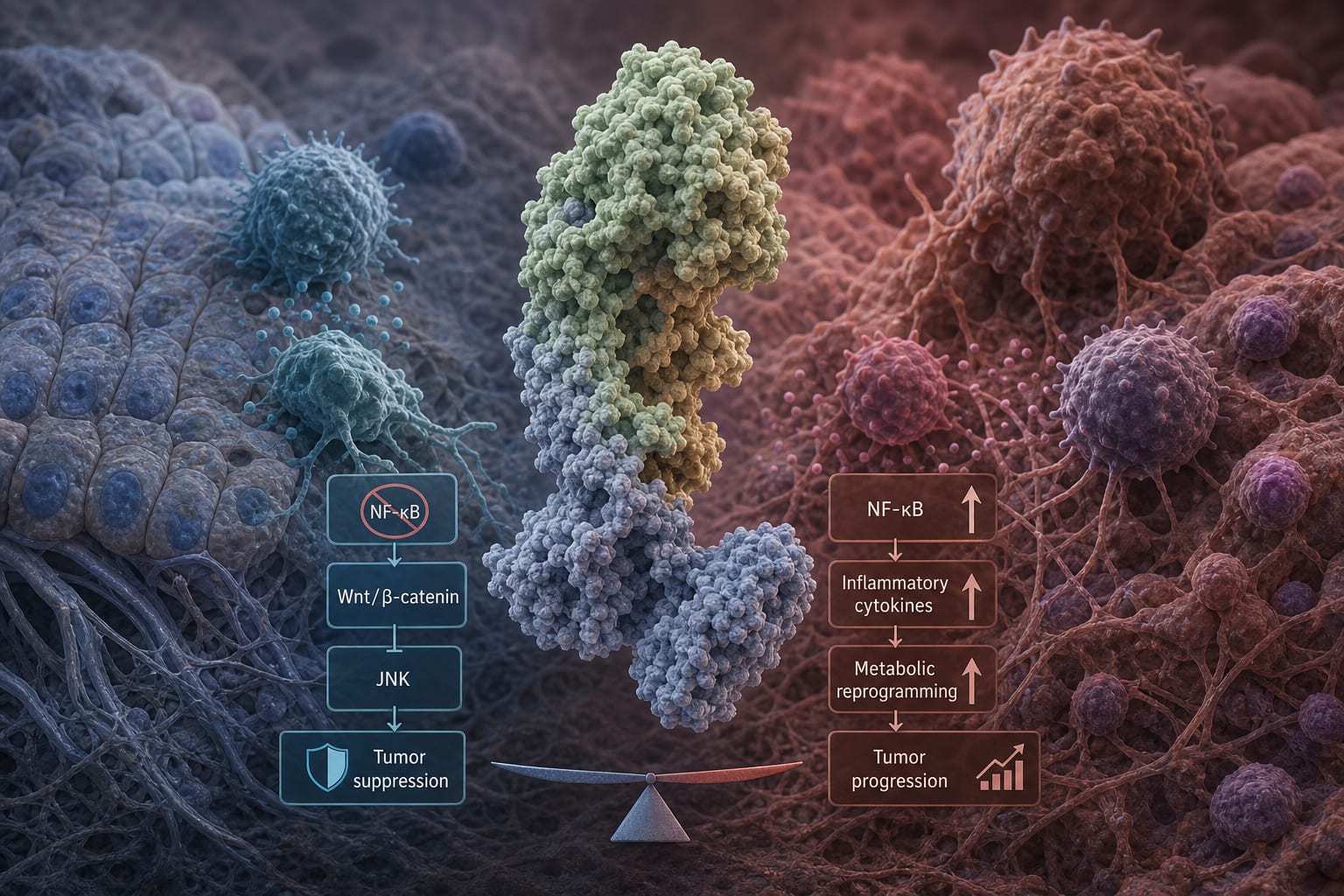
NLRP12 in cancer: a context-dependent regulator of tumor progression, immunity, and metabolism
-
By
-
Yuting Cen
-
Li Li
-
Xinyu Ding
-
Chenyang Wang
-
Hua Qiu
-
July 10, 2026
-
Clinical Scorecard: The Role of NLRP12 in Cancer: A Context-Sensitive Modulator of Tumor Development, Immune Response, and Metabolic Processes
At a Glance
| Category | Detail |
|---|
| Condition | Cancer |
| Key Mechanisms | NLRP12 modulates inflammatory signaling, oncogenic pathways, and metabolic processes. |
| Target Population | Patients with various malignancies, including colorectal, hepatocellular, triple-negative breast cancer, gastric, ovarian, and glioma. |
| Care Setting | Oncology and cancer research |
Key Highlights
- NLRP12 has context-dependent tumor-suppressive or tumor-promoting roles in cancer.
- It links inflammatory signaling with Wnt/JNK/NF-κB, metabolism, and immunity.
- NLRP12 is an emerging biomarker and therapeutic reference point in tumor ecosystems.
Guideline-Based Recommendations
Diagnosis
- Consider NLRP12 expression levels in the context of specific malignancies.
Management
- Target NLRP12 pathways for therapeutic interventions based on tumor type.
Monitoring & Follow-up
- Monitor NLRP12-related signaling pathways in cancer progression.
Risks
- Evaluate the dual roles of NLRP12 in tumor promotion and suppression.
Patient & Prescribing Data
Patients with inflammation-associated and epithelial malignancies.
NLRP12 may inform treatment strategies based on its role in tumor biology.
Clinical Best Practices
- Assess NLRP12's role in individual tumor types to guide treatment decisions.
- Incorporate NLRP12 as a potential biomarker in cancer diagnostics.
Related Resources & Content