Lysophosphatidylcholine and lysophosphatidic acid as key messengers in atherosclerosis: from a lipid-inflammation vicious cycle to therapeutic translation - Scorecard - MDSpire
Advertisement
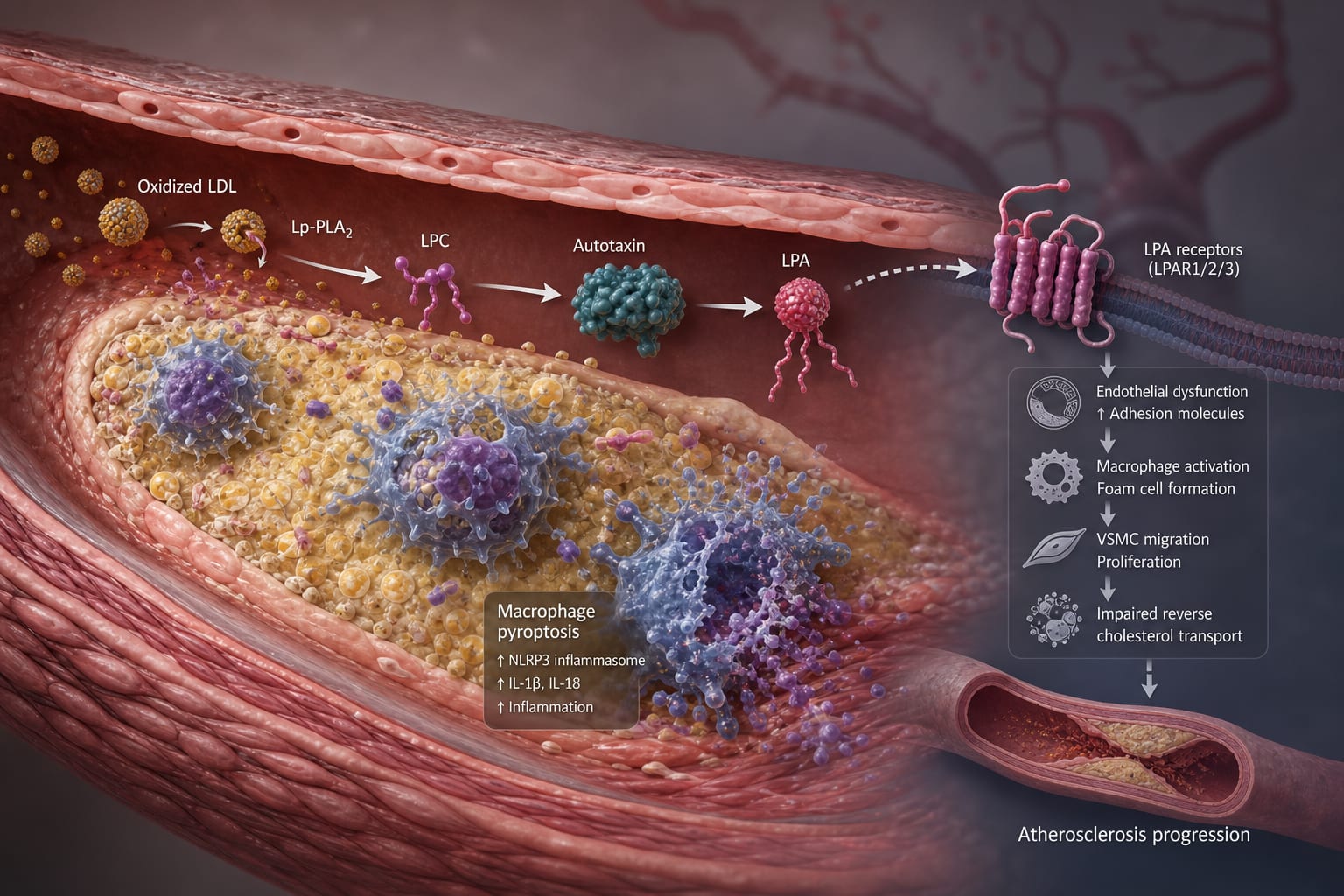
Lysophosphatidylcholine and lysophosphatidic acid: pivotal signaling molecules in atherosclerosis and their potential for therapeutic application
Clinical Scorecard: Lysophosphatidylcholine and lysophosphatidic acid: pivotal signaling molecules in atherosclerosis and their potential for therapeutic application
At a Glance
Category
Detail
Condition
Atherosclerosis
Key Mechanisms
Involves lysophosphatidylcholine (LPC) and lysophosphatidic acid (LPA) in lipid metabolism and inflammation.
Target Population
Patients with atherosclerosis and residual cardiovascular risk.
Care Setting
Clinical research and therapeutic development.
Key Highlights
LPC and LPA are central to the lipid-inflammation pathogenic cycle in atherosclerosis.
Hyperlipidemia leads to the production of LPC and LPA, driving inflammatory signaling.
Spatial metabolomics identifies LPC and LPA enrichment in macrophage-rich regions of plaques.
Current therapies targeting Lp-PLA2 and autotaxin have shown limited clinical success.
Emerging strategies include multi-node combination therapy targeting lipid metabolism and inflammation.
Guideline-Based Recommendations
Diagnosis
Assess lipid profiles and inflammatory markers in patients with atherosclerosis.
Management
Consider therapies targeting LPC and LPA signaling pathways.
Monitoring & Follow-up
Monitor plasma levels of LPC and LPA as potential biomarkers for cardiovascular risk.
Risks
Patients with atherosclerosis remain at risk for cardiovascular events despite lipid-lowering therapies.
Patient & Prescribing Data
Individuals with atherosclerosis and high residual cardiovascular risk.
Current therapies may need to be complemented with strategies targeting LPL signaling.
Clinical Best Practices
Integrate lipid and inflammatory assessments in managing atherosclerosis.
Utilize spatial metabolomics for understanding plaque composition and risk.
Explore combination therapies that address multiple pathways in atherosclerosis.