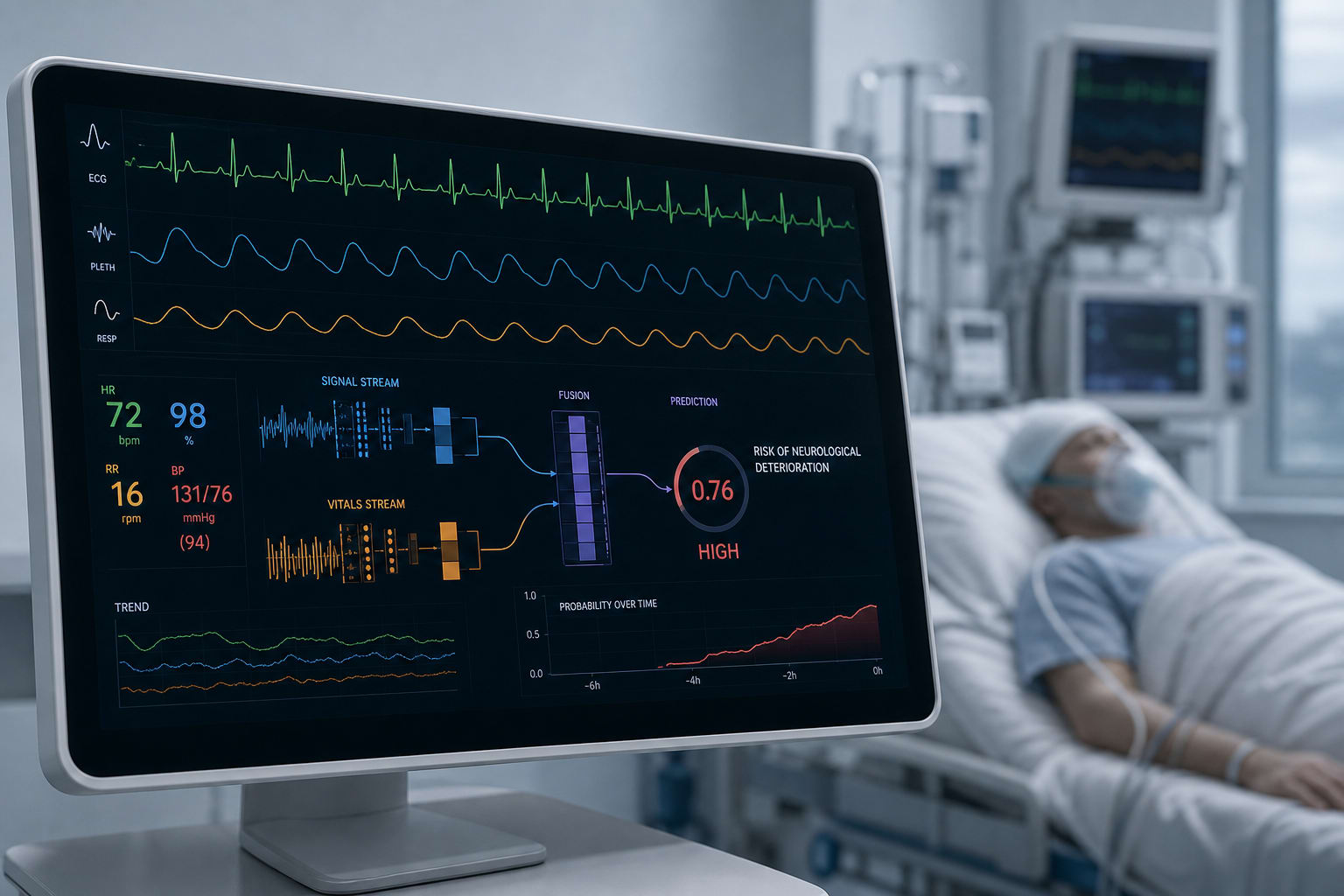
Automated DL risk stratification facilitates early identification of high-risk patients for targeted stroke prevention.
Guideline-Based Recommendations
Diagnosis
Use carotid ultrasound as first-line screening for carotid atherosclerotic plaques.
Apply deep learning models (e.g., ResNet-50) to ultrasound images for objective plaque vulnerability assessment and stroke risk prediction.
Management
Implement individualized prevention and treatment strategies based on DL-derived risk stratification to reduce ischemic stroke morbidity and mortality.
Monitoring & Follow-up
Regular ultrasound imaging and DL-based risk reassessment to monitor plaque progression and adjust management accordingly.
Risks
Subjective interpretation of ultrasound images may lead to inconsistent plaque vulnerability assessment.
Traditional ML models may underperform due to reliance on manual feature engineering and limited capture of complex plaque features.
Patient & Prescribing Data
Patients with carotid plaques identified by ultrasound imaging, including both stroke and non-stroke individuals.
DL models provide enhanced accuracy and sensitivity in stroke risk prediction, supporting clinical decision-making for preventive interventions.
Clinical Best Practices
Incorporate deep learning algorithms into carotid ultrasound workflows to improve diagnostic accuracy and reproducibility.
Prefer end-to-end DL models over traditional ML classifiers for automated plaque vulnerability assessment.
Use validated DL models like ResNet-50 trained on annotated plaque images for clinical stroke risk stratification.
Ensure standardized ultrasound image acquisition and annotation to optimize DL model performance.
For years, chronic stroke patients heard familiar feedback regarding their ability to regain strength and mobility after ischemic strokes caused upper-extremity deficits.