Acupuncture in Ischemic Stroke: From Local Neuromodulation to Metabolic Reprogramming
-
By
-
Kan, Shuhui
-
Li, pengcheng
-
Lu, Lina
-
Zhang, Chenshu
-
June 1, 2026
-
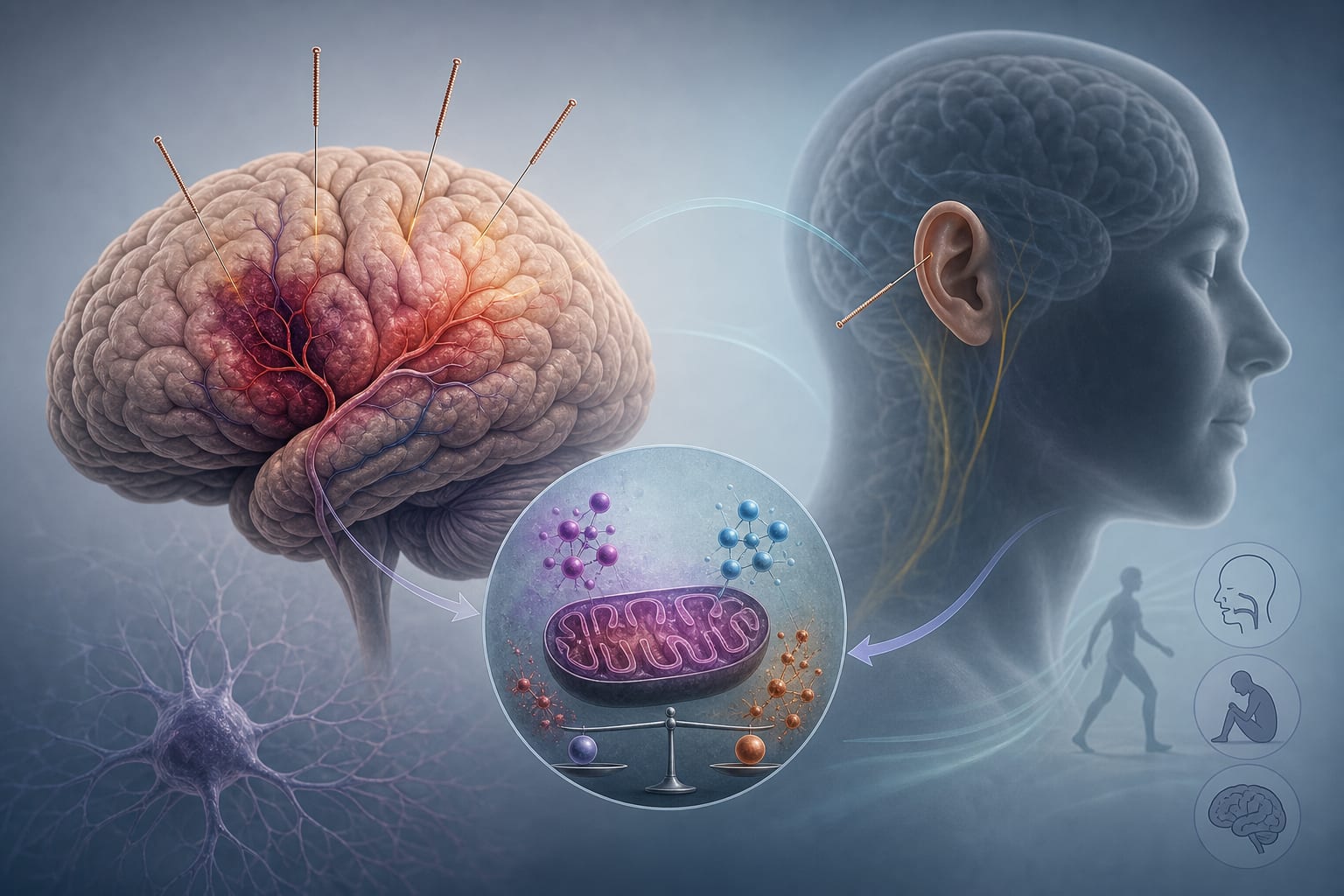
Clinical Scorecard: Acupuncture's Role in Ischemic Stroke: Exploring Local Neuromodulation and Metabolic Changes
At a Glance
| Category | Detail |
|---|
| Condition | Ischemic Stroke |
| Key Mechanisms | Metabolic reprogramming, mitochondrial dysfunction, altered glucose utilization, lactate imbalance, lipid peroxidation, ferroptosis |
| Target Population | Patients recovering from ischemic stroke |
| Care Setting | Stroke rehabilitation |
Key Highlights
- Acupuncture may improve dysphagia and depressive symptoms post-stroke.
- Clinical evidence for acupuncture's efficacy remains low to moderate.
- Metabolic profiling may aid in understanding stroke recovery and treatment outcomes.
- Acupuncture's neuroprotective effects are linked to mitochondrial integrity and oxidative balance.
- Guidelines show support for acupuncture in post-stroke dysphagia but inconsistency in other areas.
Guideline-Based Recommendations
Diagnosis
- Evaluate post-stroke dysphagia as a target for acupuncture.
Management
- Consider acupuncture as an adjunctive therapy in stroke rehabilitation.
Monitoring & Follow-up
- Monitor neurological function and quality of life in patients receiving acupuncture.
Risks
- Address unresolved issues regarding needling depth, acupuncture type, and sham-control methodology.
Patient & Prescribing Data
Patients with ischemic stroke undergoing rehabilitation
Acupuncture may be integrated with conventional therapies.
Clinical Best Practices
- Adopt biomarker-anchored and phenotype-specific trial designs for future research.
- Utilize metabolic profiling for mechanistic stratification and outcome prediction.
Related Resources & Content