Perceived benefits and barriers to health behaviors after transarterial chemoembolization in patients with hepatocellular carcinoma: a qualitative study based on the health belief model - Scorecard - MDSpire
Advertisement
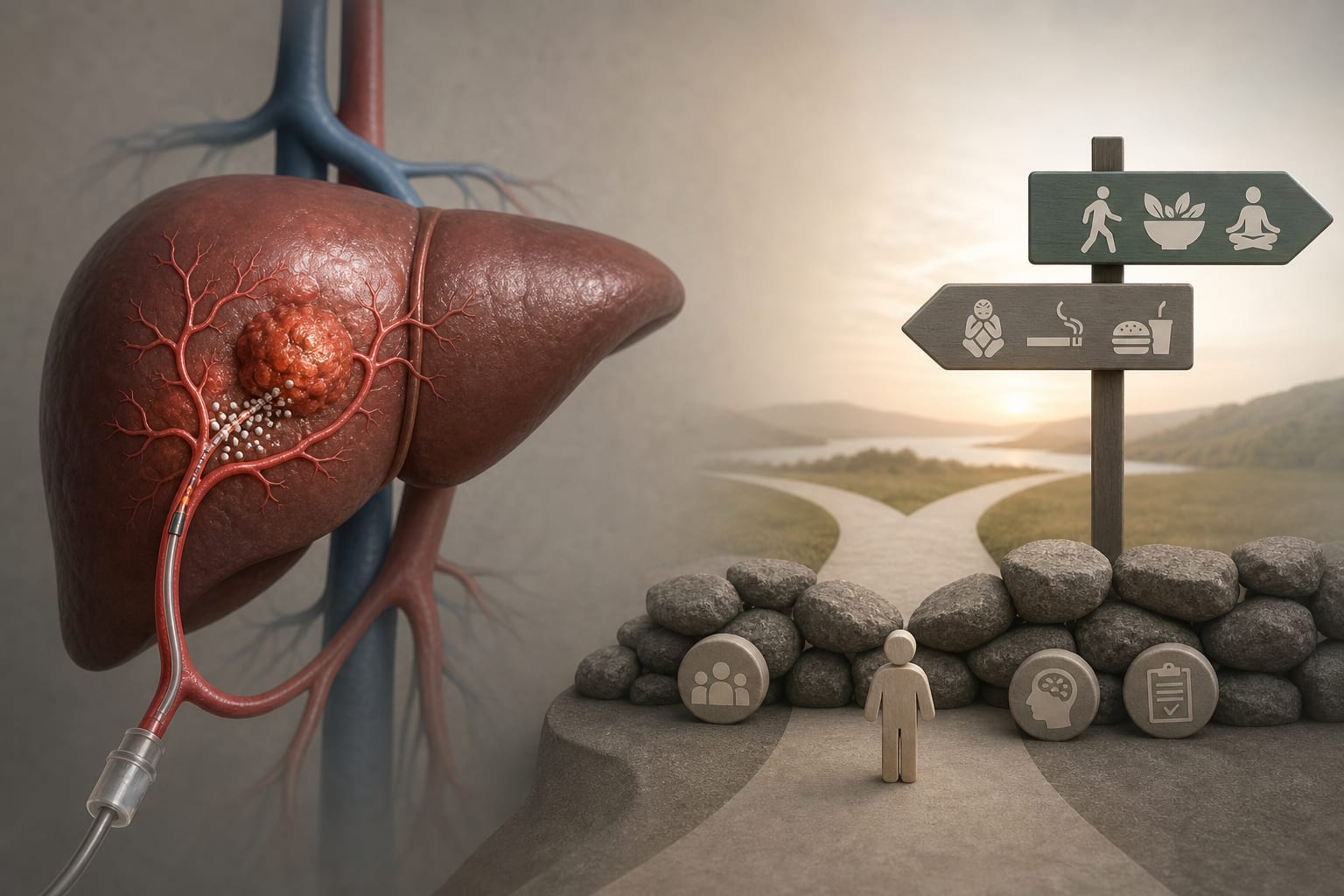
Perceived benefits and barriers to health behaviors after transarterial chemoembolization in patients with hepatocellular carcinoma: a qualitative study based on the health belief model
Clinical Scorecard: Exploring Health Behavior Perceptions Among Hepatocellular Carcinoma Patients Post-Transarterial Chemoembolization: Insights from a Qualitative Study Utilizing the Health Belief Model
At a Glance
Category
Detail
Condition
Hepatocellular Carcinoma
Key Mechanisms
Health Belief Model (HBM) focusing on perceived benefits and barriers to health behavior adherence.
Target Population
Liver cancer patients post-transarterial chemoembolization (TACE).
Care Setting
Tertiary A-Grade hospital
Key Highlights
Identified five main topics and 13 subtopics related to health behavior perceptions.
Physical, psychological, social support, informational-cognitive barriers, and rehabilitation benefits were key themes.
Patients exhibited multidimensional trade-offs in health behavior perceptions post-TACE.
Guideline-Based Recommendations
Diagnosis
Clinical or pathological diagnosis meeting the Guidelines for the Diagnosis and Treatment of Primary Liver Cancer (2024 Edition).
Management
Develop targeted health-behavior intervention strategies based on patients’ perceived characteristics.
Monitoring & Follow-up
Assess patients' adherence to health behaviors and their perceived barriers and benefits.