Case Report: The revelation of a new pathogenic variant in the POT1 gene in a patient with a pediatric high-grade glioma and a renal cell carcinoma - Scorecard - MDSpire

Case Report: The revelation of a new pathogenic variant in the POT1 gene in a patient with a pediatric high-grade glioma and a renal cell carcinoma

  • By

  • Selene Cipri

  • Antonella Cacchione

  • Annalisa Serra

  • Giada Del Baldo

  • Evelina Miele

  • Lucia Pedace

  • Sara Patrizi

  • Federica D’Antonio

  • Emanuele Agolini

  • Antonio Novelli

  • Alessandro Crocoli

  • Arianna Bertocchini

  • Andrea Carai

  • Sabina Barresi

  • Sabrina Rossi

  • Rita Alaggio

  • Francesca Diomedi Camassei

  • Giovanna Stefania Colafati

  • Luigi Boccuto

  • Angela Mastronuzzi

  • May 18, 2026

  • 0 min

Share

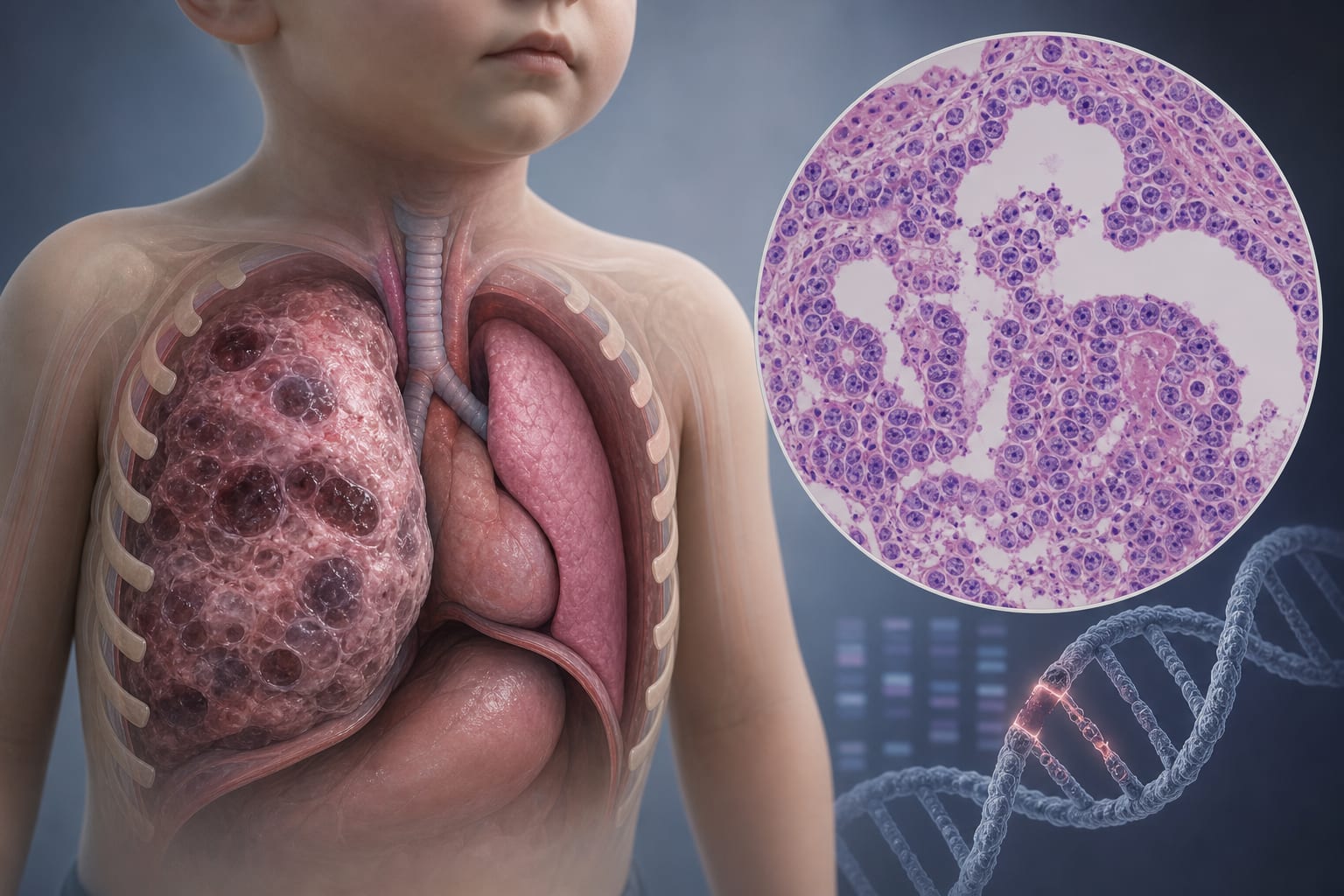
Clinical Scorecard: Case Study: Identification of a Novel Pathogenic Variant in the POT1 Gene in a Patient with Pediatric High-Grade Glioma and Renal Cell Carcinoma

At a Glance

CategoryDetail
ConditionPOT1 Tumor Predisposition Syndrome (POT1-TPD)
Key MechanismsPathogenic variants in the POT1 gene affecting telomere protection and stability.
Target PopulationIndividuals with germline POT1 variants, particularly in pediatric populations.
Care SettingOncology and genetic counseling settings.

Key Highlights

  • First reported case of a novel pathogenic POT1 variant associated with early-onset multiple primary tumors.
  • Patient developed diffuse glioma at age 12 and renal cell carcinoma at age 18.
  • Genetic testing revealed a heterozygous pathogenic variant in the POT1 gene.
  • Molecular profiling identified a ROS1 fusion in the glioma.
  • Family members underwent clinical screening due to the identified genetic risk.

Guideline-Based Recommendations

Diagnosis

  • Utilize clinical exome panels for genetic testing in suspected cases of POT1-TPD.
  • Perform comprehensive molecular profiling of tumors for accurate diagnosis.

Management

  • Consider multidisciplinary approaches including surgery, radiotherapy, and chemotherapy for tumor management.
  • Implement regular surveillance for associated malignancies in patients with POT1 variants.

Monitoring & Follow-up

  • Conduct routine imaging and clinical evaluations for early detection of secondary tumors.
  • Monitor family members for potential hereditary cancer risks.

Risks

  • Increased lifetime risk for gliomas, multiple cutaneous melanomas, chronic lymphocytic leukemia, and angiosarcoma.

Patient & Prescribing Data

Young adults and children with identified POT1 pathogenic variants.

Treatment may include radiotherapy and chemotherapy, tailored based on tumor type and genetic findings.

Clinical Best Practices

  • Incorporate genetic counseling for patients and families regarding POT1-TPD.
  • Ensure comprehensive genetic screening for family members of affected individuals.

Related Resources & Content

Original Source(s)

Related Content