Redefining ARDS for Global Reach and Personalized Care: Part 2
-
By
-
Elisabeth D. Riviello
-
Lorraine B. Ware
-
Michael A. Matthay
-
November 2, 2026
Clinical Scorecard: Redefining ARDS for Global Reach and Personalized Care: Part 2
At a Glance
| Category | Detail |
|---|---|
| Condition | ARDS is a frequent, morbid syndrome associated with substantial mortality and persistent impairments among some survivors. LUNG SAFE reported 40% hospital mortality; a single-center Rwanda study reported 50%. |
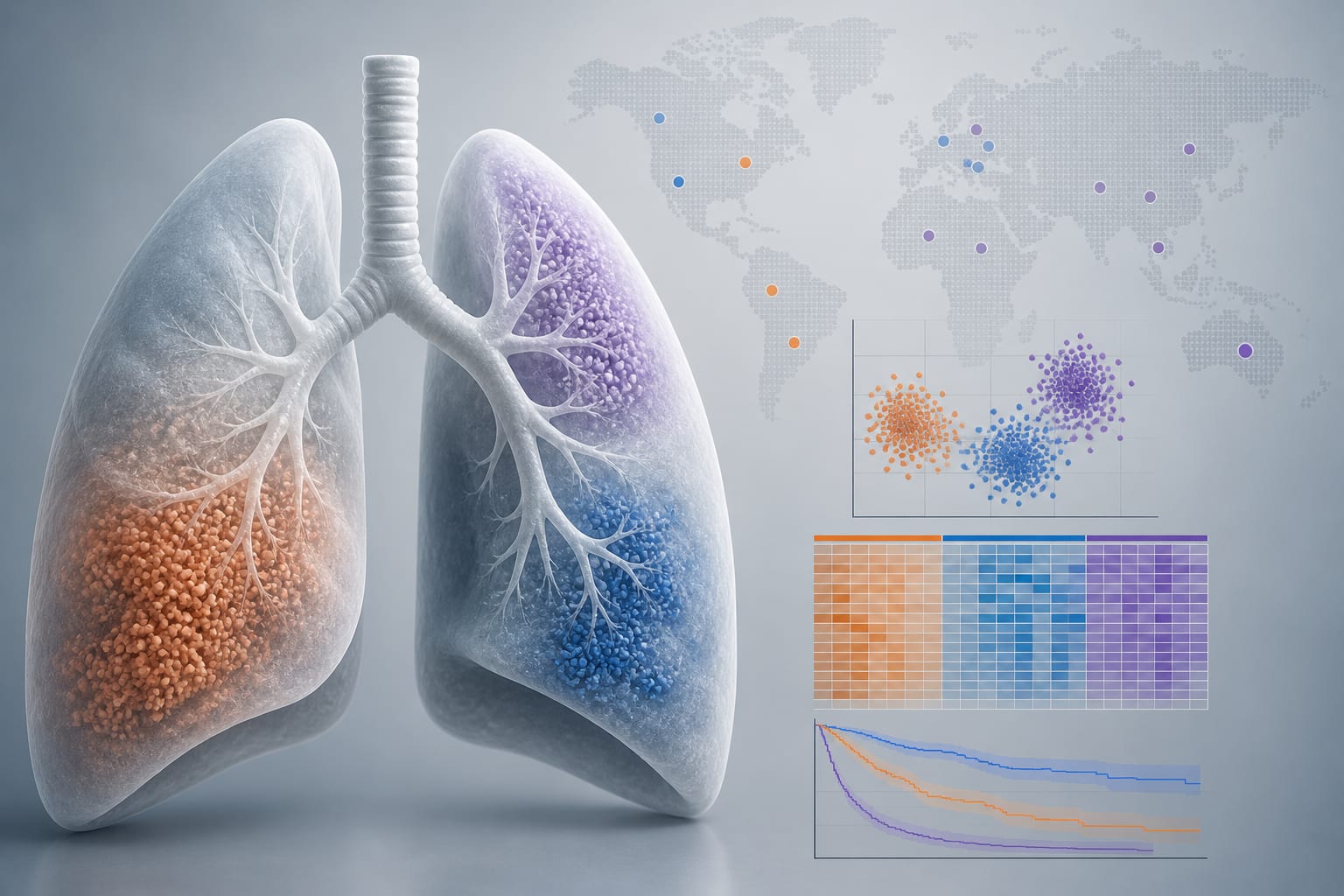
| Key Mechanisms | ARDS remains a syndromic clinical construct without a clear link to underlying biology or treatable traits. Potential subphenotype features discussed include hypoxemia severity, shock, protein biomarkers, routine laboratory values, vital signs, and physiologic traits. |
| Target Population | People with ARDS across global settings, including low- and lower-middle-income countries and resource-constrained settings. |
| Care Setting | The source discusses ICU and hospital populations worldwide, including patients in resource-constrained settings; in the Rwanda study, 70% of affected patients received care entirely outside the ICU. |
Key Highlights
- LUNG SAFE, spanning 50 countries, found ARDS in 10% of ICU patients and 23% of ventilated patients; hospital mortality was 40%.
- In a single-center Rwanda study, ARDS occurred in 4% of adult hospital admissions; 70% of affected patients received care entirely outside the ICU, and hospital mortality was 50%.
- The article reports that low tidal volume ventilation, conservative fluid management, and proning in severe ARDS have each demonstrated improved outcomes among ARDS patients.
- The authors argue that accessible ARDS definitions can enable research involving diverse global populations and investigation of treatable traits.
- The authors describe the Global Definition as an actionable framework applicable worldwide, while noting that ARDS remains a syndromic construct without a clear link to biology or treatable traits.
Guideline-Based Recommendations
Diagnosis
- The authors describe an accessible ARDS definition as important for diagnosis and for research inclusion across global settings.
- The authors state that further investigation is needed to establish the reliability and necessity of requiring bilateral opacities in the ARDS definition.
Management
- The article reports that low tidal volume ventilation, conservative fluid management, and proning in severe ARDS have demonstrated improved outcomes among ARDS patients.
- The article reports that conservative fluid management is consistently feasible in resource-constrained settings, while proning and low tidal volume ventilation are frequently feasible.
Monitoring & Follow-up
- The article discusses potential subphenotype features including hypoxemia severity, shock, protein biomarkers, routine laboratory values, vital signs, and physiologic traits; it does not establish these as routine monitoring recommendations.
- Physiologic traits discussed include recruitability, chest wall and pleural pressures, right ventricular dysfunction, dead space fraction, and spontaneous effort.
Risks
- Hospital mortality was 40% in LUNG SAFE and 50% in the single-center Rwanda study.
- The article reports that ARDS survivors may experience long-term, occasionally severe deficits.
- The authors describe higher risks from advanced noninvasive respiratory support in resource-constrained settings as a hypothesis being examined in ongoing trials.
Patient & Prescribing Data
The article discusses patients with ARDS worldwide, including those treated outside ICUs and in resource-constrained settings.
The article reports outcome benefits for low tidal volume ventilation, conservative fluid management, and proning in severe ARDS. Corticosteroids, statins, furosemide, and noninvasive respiratory support are described as interventions under evaluation for distinct subphenotypes; the article does not provide prescribing guidance.
Clinical Best Practices
- The authors describe accessible ARDS definitions and implementation of proven interventions as important for care and research across settings.
- The authors argue that ARDS research should include diverse global populations rather than rely solely on findings from high-income countries.
- The article identifies low tidal volume ventilation, conservative fluid management, and proning in severe ARDS as interventions demonstrated to improve outcomes.
- The authors call for progress linking ARDS subphenotypes and treatable traits with personalized mechanistic targets.
Related Resources & Content
Based on findings from:
Defining ARDS: globalization and personalization to better serve the world—part 2
Elisabeth D. Riviello, Lorraine B. Ware, Michael A. Matthay. Intensive Care Medicine, 2026.
https://link.springer.com/article/10.1007/s00134-026-08652-7
This content is an AI-generated, fully rewritten summary based on a published scholarly article. It does not reproduce the original text and is not a substitute for the original publication. Readers are encouraged to consult the source for full context, data, and methodology.