Comparison of SOFA score alone versus SOFA score with interleukin-6 for outcome prediction in ICU patients with sepsis: a prospective observational study - Scorecard - MDSpire
Advertisement
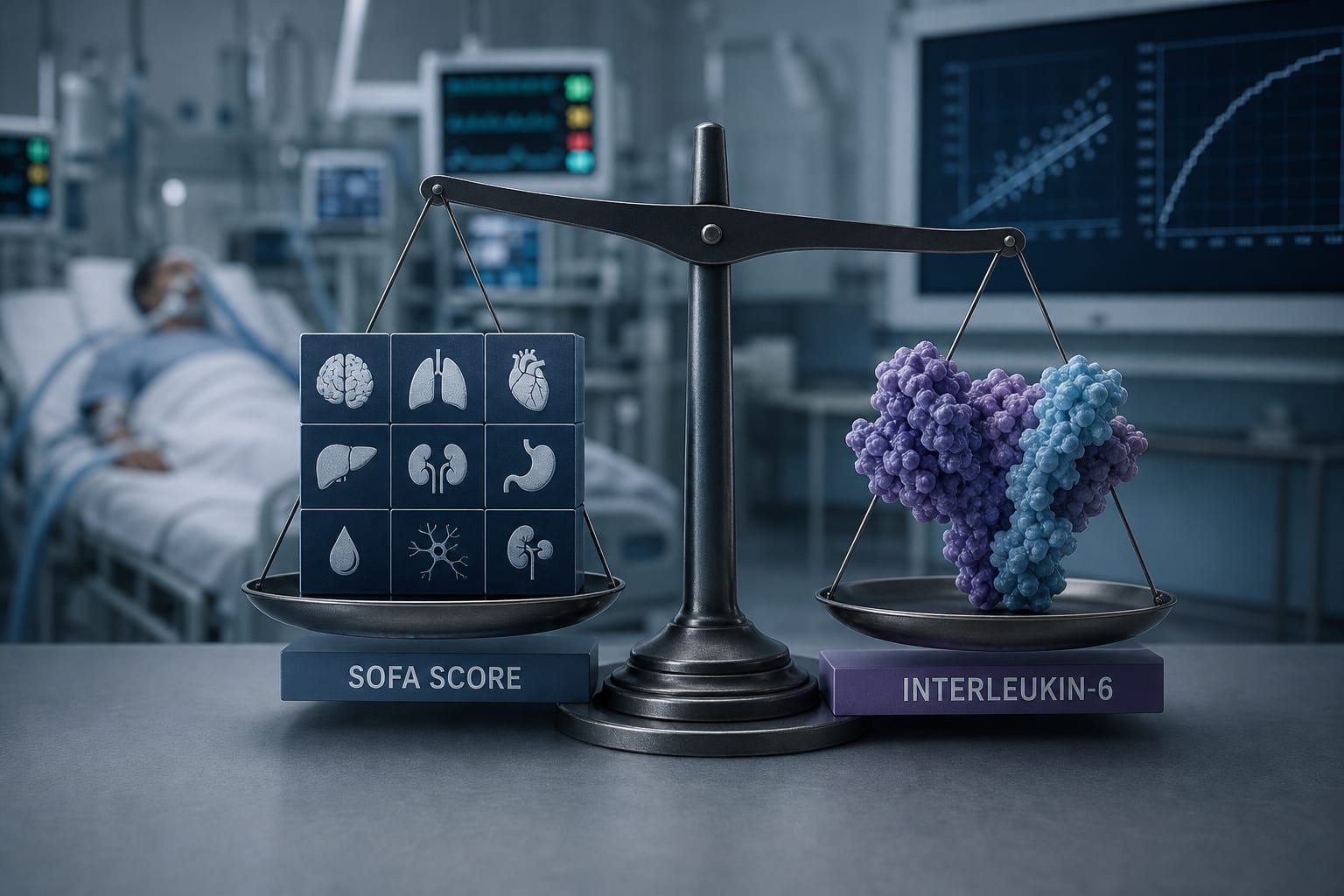
Comparison of SOFA score alone versus SOFA score with interleukin-6 for outcome prediction in ICU patients with sepsis: a prospective observational study
Clinical Scorecard: Evaluation of SOFA Score Alone Versus Combined SOFA Score and Interleukin-6 for Predicting Outcomes in ICU Patients with Sepsis: A Prospective Observational Analysis
At a Glance
Category
Detail
Condition
Sepsis
Key Mechanisms
Sequential Organ Failure Assessment (SOFA) score and interleukin-6 (IL-6) levels reflect organ dysfunction and inflammatory response.
Target Population
Adult patients (18–50 years) with sepsis admitted to ICU.
Care Setting
Tertiary care ICU
Key Highlights
60% of patients survived; non-survivors had higher SOFA scores at admission.
IL-6 levels were consistently higher in non-survivors across Days 0–3.
Combined SOFA-IL-6 score showed modest improvements in prognostic performance on Days 0–2.
Guideline-Based Recommendations
Diagnosis
Utilize SOFA score for quantifying organ dysfunction in sepsis.
Management
Consider integrating IL-6 levels with SOFA for improved prognostication.
Monitoring & Follow-up
Monitor SOFA scores and IL-6 levels at admission and 24-hour intervals.
Risks
Higher SOFA scores and IL-6 levels correlate with increased mortality risk.
Patient & Prescribing Data
Adult ICU patients with sepsis meeting Sepsis-3 criteria.
Early identification of high-risk patients is crucial for timely intervention.
Clinical Best Practices
Use SOFA score as a standard assessment tool for organ dysfunction.
Incorporate IL-6 as a biomarker for early prognostic assessment.