Multidimensional Effects of Telemedicine on Patients With Spinal Cord Injury: Systematic Review and Meta-Analysis of Randomized Controlled Trials - Scorecard - MDSpire
Advertisement
Multidimensional Effects of Telemedicine on Patients With Spinal Cord Injury: Systematic Review and Meta-Analysis of Randomized Controlled Trials
Clinical Scorecard: Comprehensive Assessment of Telemedicine's Impact on Patients With Spinal Cord Injury: A Systematic Review and Meta-Analysis of Randomized Controlled Trials
At a Glance
Category
Detail
Condition
Spinal Cord Injury (SCI)
Key Mechanisms
Telemedicine interventions for management and rehabilitation
Target Population
Patients diagnosed with SCI, regardless of sex, age, injury level, or severity
Care Setting
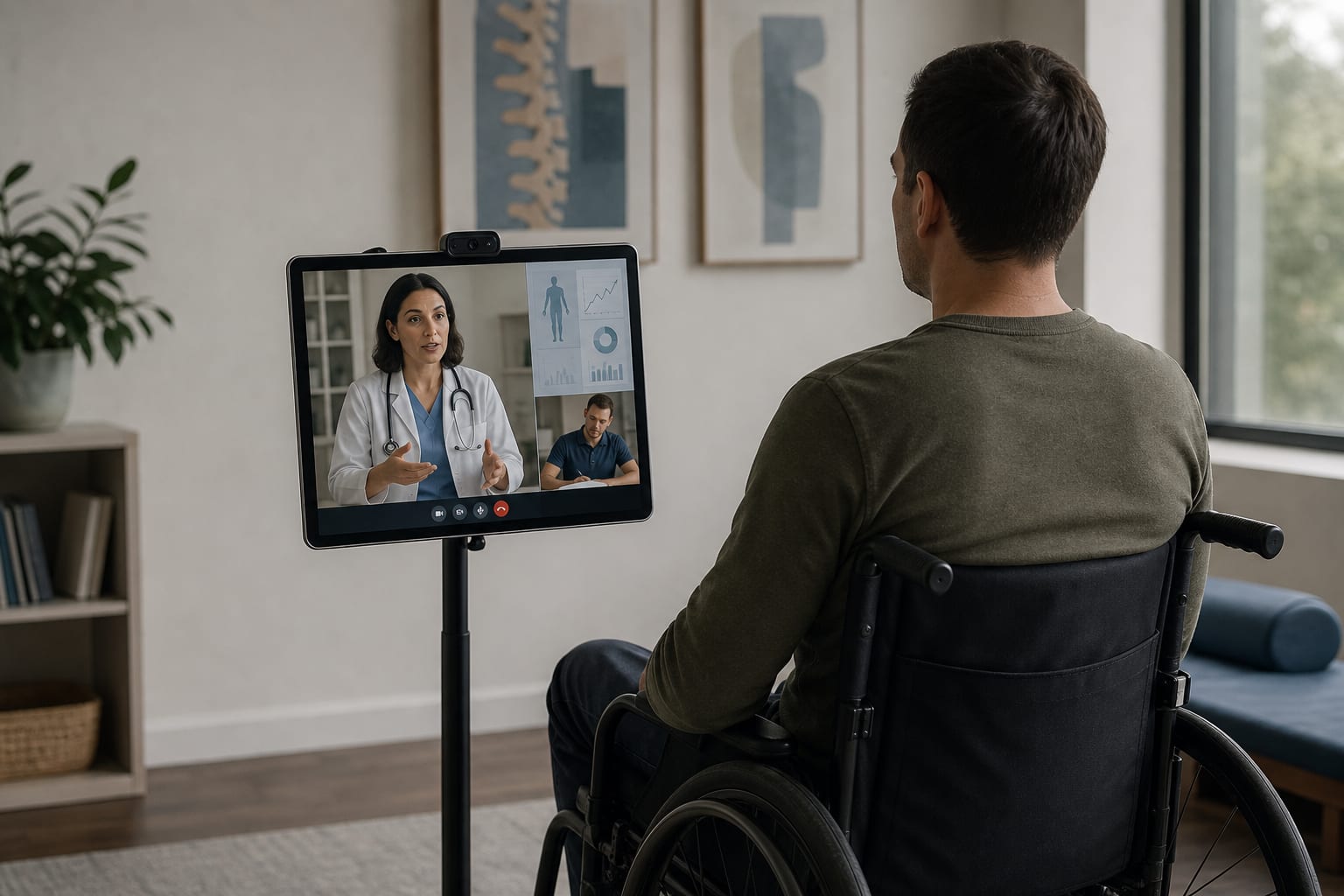
Telemedicine services including video consultations, mobile health apps, and remote monitoring
Key Highlights
Telemedicine significantly reduces the incidence of pressure injuries in SCI patients
Hybrid telemedicine interventions are more effective than single-modality approaches
Telemedicine improves quality of life and reduces depressive symptoms in SCI patients
Challenges include heterogeneity in study designs and outcome measures
Robust evidence is needed to optimize tele-rehabilitation strategies
Guideline-Based Recommendations
Diagnosis
Utilize telemedicine for ongoing assessment and management of SCI-related complications
Management
Implement telemedicine interventions to enhance self-management and psychological well-being
Monitoring & Follow-up
Employ remote monitoring tools to track health-related quality of life and functional recovery
Risks
Be aware of potential biases in study designs and outcome reporting in telemedicine research
Patient & Prescribing Data
Community-dwelling patients with SCI
Telemedicine can facilitate better access to care and improve health outcomes
Clinical Best Practices
Incorporate telemedicine as a standard part of SCI management protocols
Ensure comprehensive training for healthcare providers in telemedicine modalities
Regularly evaluate the effectiveness of telemedicine interventions through structured feedback
The agency outlined early regulatory actions supporting nonanimal methods, including draft guidance, artificial intelligence tools, and expanded use of human-relevant data models.