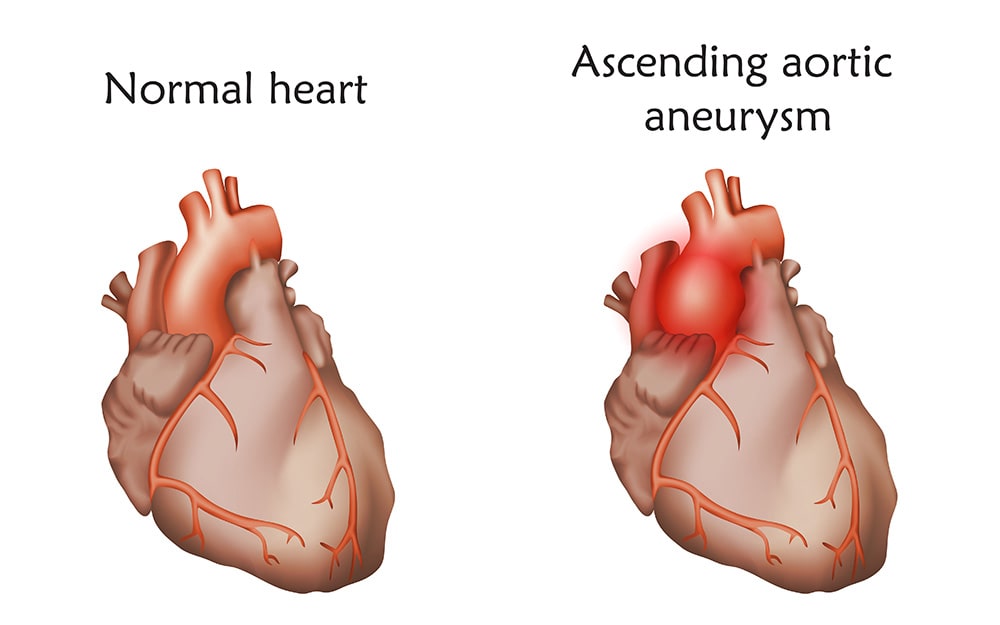
Aortic Aneurysm Risk: When Is the Right Time to Refer to a Specialist?
-
By
-
October 20, 2026
-
5 min
Clinical Scorecard: Aortic Aneurysm Risk: When Is the Right Time to Refer to a Specialist?
At a Glance
| Category | Detail |
|---|---|
| Condition | Aortic aneurysm |
| Key Mechanisms | Aneurysm growth can increase the risk of tearing or rupture; shape and location help inform specialist assessment and surgical approach. |
| Target Population | Patients with a detected or growing aortic aneurysm, particularly those with relevant family history or other risk factors. |
| Care Setting | Coordinated care between local providers and a cardiothoracic or aortic specialist, including surveillance, procedural care, and follow-up. |
Key Highlights
- The interviewed specialist recommends referral for any patient with a detected aortic aneurysm.
- Referral is especially important when an aneurysm measures 4.5 cm or larger or grows by 0.5 cm over 6–12 months.
- Providers should share the actual imaging with the referral; the specialist identifies CT as the gold standard for aortic pathology.
- Family history, including sudden deaths in relatives of uncertain cause, can prompt earlier specialist assessment.
- The article describes open surgery for some root or arch aneurysms and endovascular stenting as typical treatment for descending aortic aneurysms.
Guideline-Based Recommendations
Diagnosis
- Obtain a thorough family history, including sudden deaths in relatives when the cause is unknown.
- When referring, provide the actual images rather than only the imaging report; the interviewed specialist describes CT as the gold standard for aortic pathology.
- Specialist assessment considers whether the aneurysm is fusiform or saccular and its location on the aorta.
Management
- Refer patients with a detected aortic aneurysm for specialist assessment and surveillance, according to the interviewed specialist.
- Refer if the aneurysm is 4.5 cm or larger or grows by 0.5 cm over 6–12 months.
- The article describes open-heart surgery with graft replacement as a possible approach for root or arch aneurysms, and minimally invasive endovascular stenting as typical for descending aortic aneurysms.
- Coordinate care: local providers handle preoperative steps and resume care after hospital discharge, while the specialist team leads surgery and immediate recovery.
Monitoring & Follow-up
- Closely monitor aneurysms through a specialist surveillance program.
- The interviewed specialist states that aneurysms require lifelong follow-up.
- Monitor patients with a family history of aortic aneurysm, particularly when they smoke or have high blood pressure, high cholesterol, obesity, or are over age 65.
Risks
- A ruptured aortic aneurysm is a life-threatening emergency.
- The interviewed specialist says saccular aneurysms are more likely to rupture sooner than fusiform aneurysms.
- Genetic conditions and family history can increase aortic aneurysm risk; sudden death in a relative may warrant earlier specialist assessment when the cause is uncertain.
Patient & Prescribing Data
Patients with detected or growing aortic aneurysms; the article also highlights patients with family history, smoking, high blood pressure, high cholesterol, obesity, or age over 65.
The article discusses surveillance and lifestyle choices for small aneurysms, and specialist-selected surgery based on aneurysm shape and location. It does not provide medication dosing or specific lifestyle instructions.
Clinical Best Practices
- Refer patients with a detected aneurysm early and coordinate ongoing surveillance with the specialist.
- Include actual imaging in referrals rather than relying on the report alone.
- Ask about family history and sudden deaths of uncertain cause.
- Maintain coordinated local-provider and specialist care before and after procedures.
- Continue aneurysm follow-up after treatment; the interviewed specialist describes surveillance as lifelong.
Related Resources & Content
Based on findings from:
Aortic Aneurysm Risk: When Is the Right Time to Refer to a Specialist?
Keck Medicine of USC, 2026.
https://medresources.keckmedicine.org/news/aortic-aneurysm-risk-when-is-the-right-time-to-refer-to-a-specialist
This content is an AI-generated, fully rewritten summary based on a published scholarly article. It does not reproduce the original text and is not a substitute for the original publication. Readers are encouraged to consult the source for full context, data, and methodology.