Clinical Scorecard: One Day Jaw Reconstruction
At a Glance
| Category | Detail |
|---|---|
| Condition | Jaw defects due to cancer requiring tumor removal and reconstruction |
| Key Mechanisms | Simultaneous tumor removal, fibula bone implant placement, and dental prosthetic implantation using virtual 3D planning and 3D printed prosthetics |
| Target Population | Patients with jaw tumors requiring surgical resection and reconstruction |
| Care Setting | Specialized surgical center with multidisciplinary team, e.g., Roswell Park Comprehensive Cancer Center |
Key Highlights
- Complete jaw reconstruction including tumor removal, bone implant, and dental prosthetics performed in a single 8-12 hour surgery.
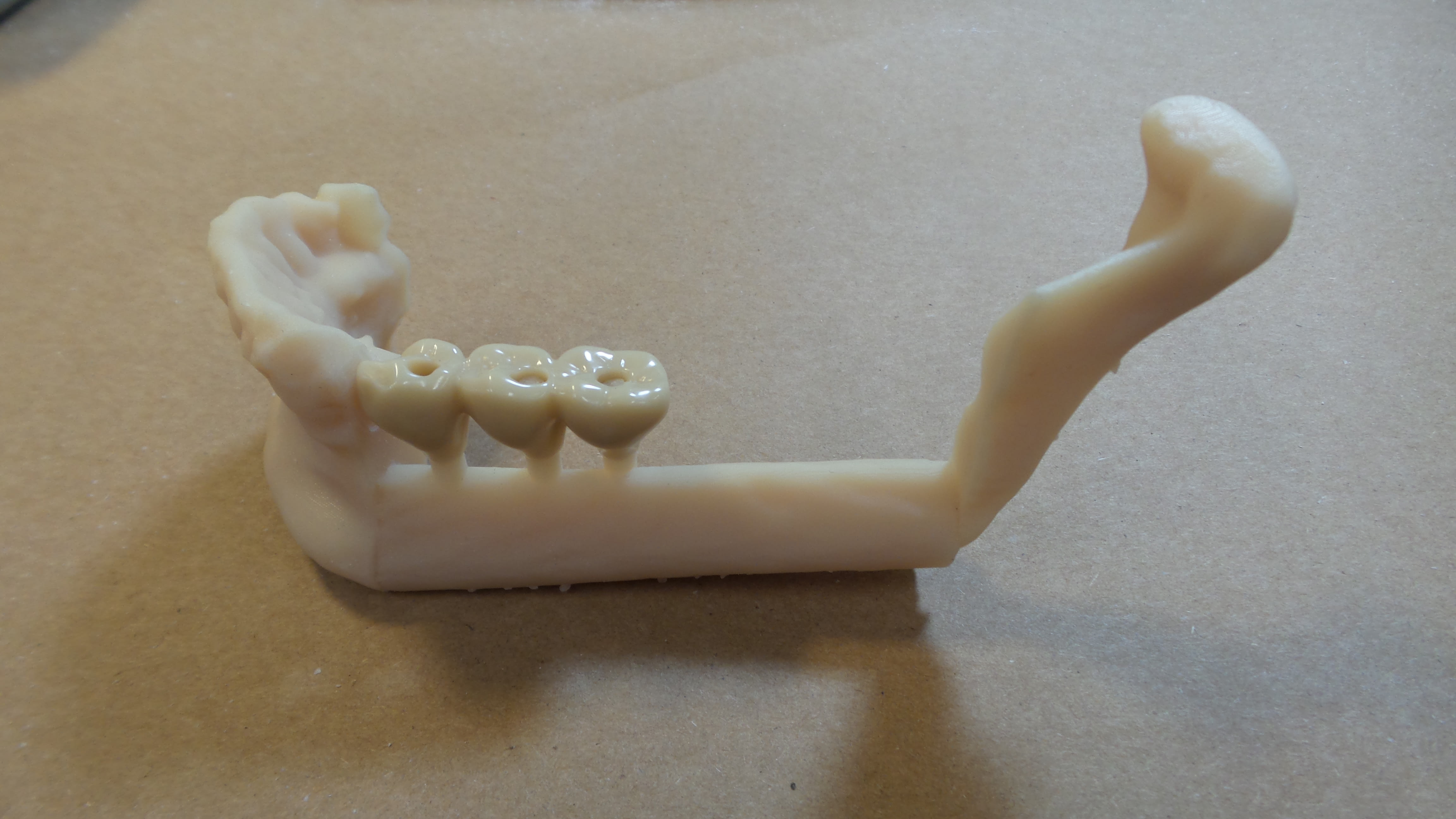
- Use of virtual scans and 3D planning to map surgery and fabricate sterile, custom 3D printed dental prosthetics preoperatively.
- Post-radiation patients receive temporary prosthetics with permanent zirconium prosthetics placed within three months after radiation completion.
Guideline-Based Recommendations
Diagnosis
- Perform virtual scans and 3D imaging to plan tumor removal and reconstruction.
Management
- Coordinate multidisciplinary surgical team for simultaneous tumor resection, fibula bone grafting, and dental prosthetic placement.
- Use 3D printed dental resin prosthetics prepared in sterile lab conditions for implantation.
- For patients requiring radiation, delay permanent prosthetic placement until 3 months post-radiation.
Monitoring & Follow-up
- Conduct preoperative visits for final surgical planning and patient preparation.
- Monitor healing post-surgery and post-radiation before permanent prosthetic placement.
Risks
- Potential delayed healing in patients undergoing radiation therapy.
Patient & Prescribing Data
Patients undergoing jaw tumor resection and reconstruction, including those requiring radiation therapy.
One Day Jaw Reconstruction reduces overall treatment time from years to a single day surgery with rapid recovery and early prosthetic function.
Clinical Best Practices
- Employ comprehensive virtual surgical planning with 3D modeling to optimize surgical accuracy.
- Assemble dental prosthetics in sterile lab environments prior to surgery to minimize contamination risk.
- Implement multidisciplinary collaboration between maxillofacial prosthetics and reconstructive surgery teams.
- Provide temporary prosthetics for patients undergoing radiation with timely transition to permanent prosthetics post-radiation.
Related Resources & Content
Based on findings from:
One Day Jaw Reconstruction
Roswell Park Comprehensive Cancer Center, 2023.
https://physicianresources.roswellpark.org/videos/one-day-jaw-reconstruction
This content is an AI-generated, fully rewritten summary based on a published scholarly article. It does not reproduce the original text and is not a substitute for the original publication. Readers are encouraged to consult the source for full context, data, and methodology.