Integrative single-cell and bulk transcriptomic analyses identify DRAM1 as a candidate gene from fibroblast-associated transcriptional programs in colorectal cancer - Scorecard - MDSpire
Advertisement
Integrative single-cell and bulk transcriptomic analyses identify DRAM1 as a candidate gene from fibroblast-associated transcriptional programs in colorectal cancer
Clinical Scorecard: Combined Single-Cell and Bulk Transcriptomic Approaches Reveal DRAM1 as a Potential Gene Linked to Fibroblast-Related Transcriptional Networks in Colorectal Cancer
At a Glance
Category
Detail
Condition
Key Mechanisms
Fibroblast-associated transcriptional programs, intercellular interactions, and the role of DRAM1.
Target Population
Care Setting
Key Highlights
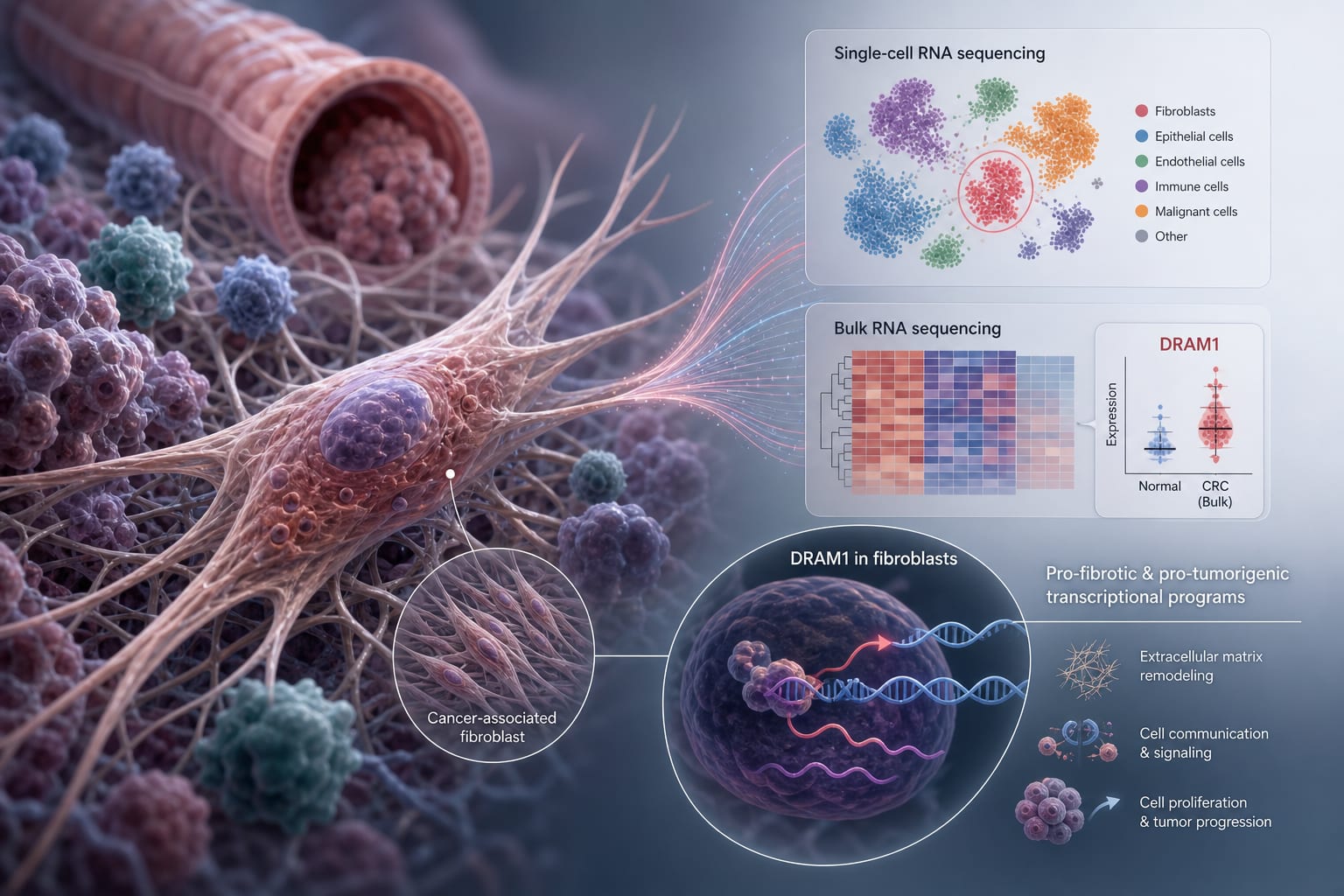
Identification of 17 cell clusters in CRC and adjacent normal tissues, highlighting the role of DRAM1.
DRAM1 selected for validation due to elevated expression in CRC tissues and its potential role in tumor progression.
Loss-of-function assays indicate DRAM1 silencing enhances CRC cell proliferation and invasion, suggesting its tumor-restraining role.
Integration of scRNA-seq and bulk transcriptomic data to characterize fibroblast roles, emphasizing the importance of DRAM1.
Machine learning prioritization identified five core genes linked to fibroblast functions, with DRAM1 being a key candidate.
Guideline-Based Recommendations
Diagnosis
Management
Consider the role of fibroblast-associated genes, particularly DRAM1, in CRC progression and treatment response.
Monitoring & Follow-up
Risks
Patient & Prescribing Data
Further investigation needed on the role of DRAM1 in therapeutic responses, including potential targeted therapies.
Clinical Best Practices
Incorporate high-dimensional gene co-expression analysis in CRC research, focusing on DRAM1.
Utilize integrative approaches combining single-cell and bulk transcriptomic data, with specific methodologies outlined.