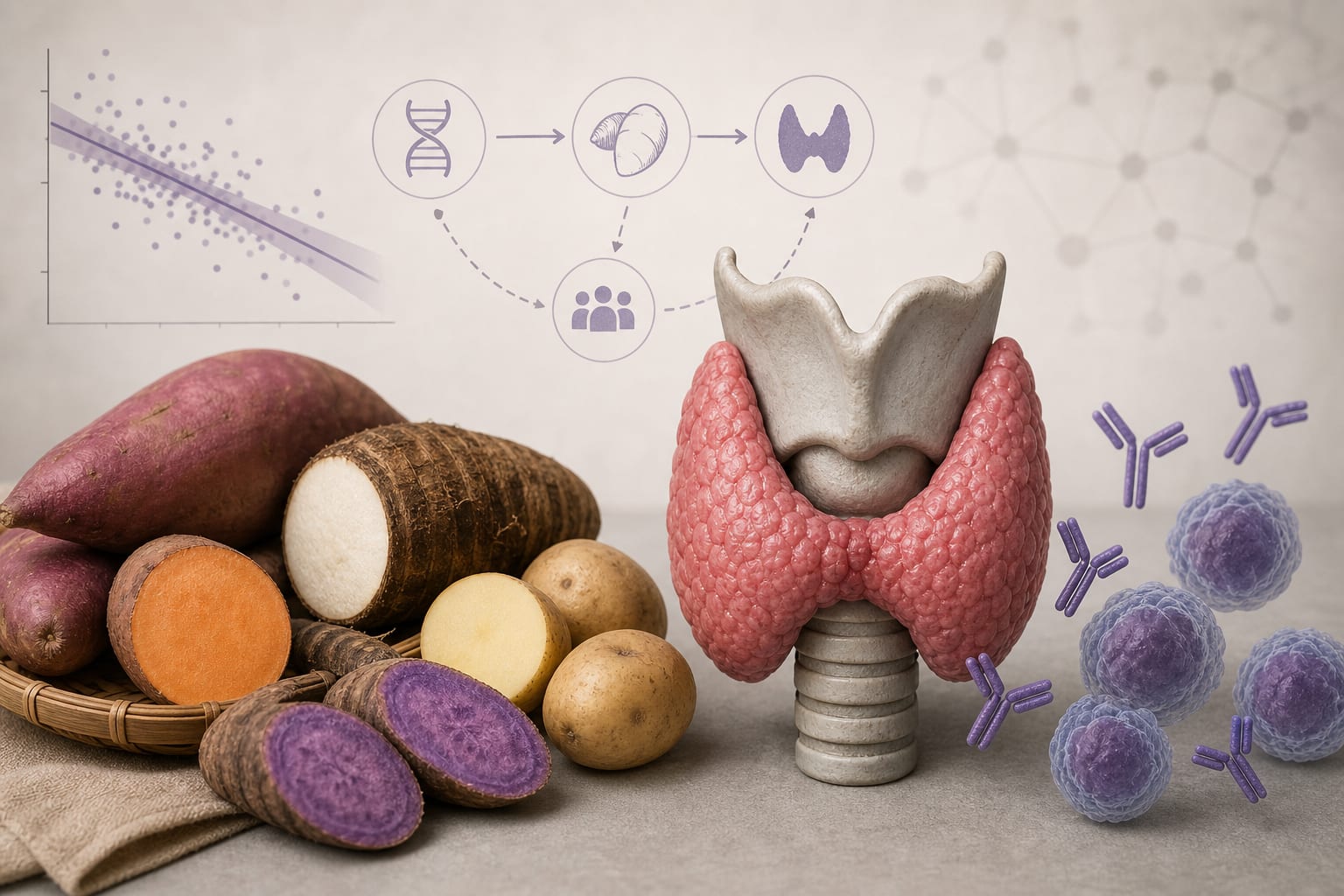
Clinical Scorecard: Consumption of tubers is linked to a lower likelihood of developing Hashimoto’s thyroiditis: findings from a community-based cross-sectional analysis
At a Glance
Category
Detail
Condition
Hashimoto’s thyroiditis
Key Mechanisms
Immune and metabolic pathways involving aberrant Th17/Treg balance and NF-κB-driven inflammation.
Target Population
Community-dwelling adults aged ≥40 years.
Care Setting
Community health centres.
Key Highlights
HT prevalence was 29.3% in the studied cohort.
Adequate tuber intake (50–100 g/day) was associated with a lower risk of HT.
Folic acid supplementation was identified as a causal risk factor for HT.
The study utilized Mendelian randomization to assess dietary influences on HT risk.
A U-shaped dose-response relationship was observed for tuber intake.
Guideline-Based Recommendations
Diagnosis
HT is defined by thyroid autoantibody seropositivity (anti-TPO ≥5.61 IU/mL or anti-Tg ≥4.11 IU/mL).
Management
Moderate tuber and vegetable consumption is suggested as a preventive strategy for HT.
Monitoring & Follow-up
Monitor dietary intake of tubers and folic acid supplementation in at-risk populations.
Risks
Excessive tuber intake (>100 g/day) may increase HT risk.
Patient & Prescribing Data
Adults aged ≥40 years from a community cohort.
Caution is advised regarding high-dose folic acid supplementation in HT-susceptible individuals.
Clinical Best Practices
Encourage adequate intake of tubers and vegetables.
Assess dietary habits in patients with a family history of HT.
Armed with ever-more practical and powerful sampling devices, omics workflows, and wearable tech, could elite athletes pioneer a more precise approach to sport – and health?