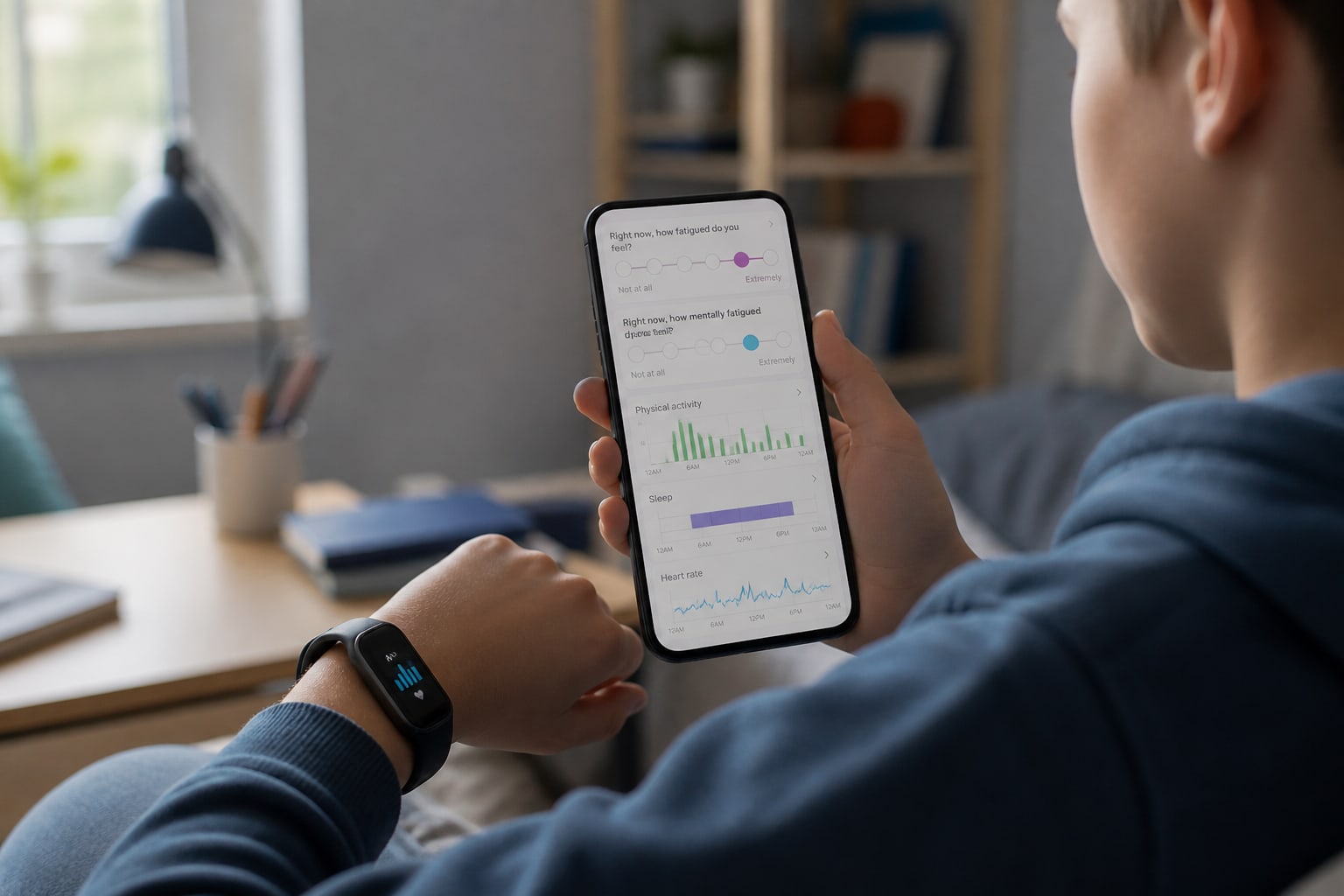
Clinical Scorecard: Daily patterns of general and cognitive fatigue among childhood cancer survivors: An experience-sampling and wearable-device study
At a Glance
Category
Detail
Condition
General and cognitive fatigue in childhood cancer survivors
Key Mechanisms
The study examines fatigue carry-over over time, prior emotional tension, nightly sleep quantity, recent physical activity, and possible moderation by cardiorespiratory fitness (VO2peak).
Target Population
Childhood cancer survivors (CCS); participant eligibility and sample characteristics are not provided in the supplied text.
Care Setting
Daily-life monitoring in participants’ usual environments using experience sampling and wearable devices.
Key Highlights
Fatigue can persist for years after childhood cancer treatment and is associated with impaired quality of life, everyday functioning, and psychosocial well-being.
General fatigue and cognitive fatigue are distinct dimensions; prior research in CCS has reported partly different correlates.
The study assessed moment-to-moment fatigue alongside emotional tension, nightly sleep quantity, and recent physical activity.
Wearable-device monitoring was paired with experience sampling to assess subjective experiences and behaviors in daily life.
The study also examined fatigue inertia and whether VO2peak moderated the association between recent physical activity and fatigue.
Guideline-Based Recommendations
Diagnosis
Management
The supplied text does not report management recommendations or study results.
Monitoring & Follow-up
Risks
Fatigue can continue for years after treatment and substantially impair quality of life, everyday functioning, and psychosocial well-being.
Patient & Prescribing Data
Childhood cancer survivors; the supplied excerpt does not provide sample size, age range, diagnoses, or treatment characteristics.
No treatment or prescribing data are provided. The study investigates daily fatigue patterns and potential correlates rather than a therapeutic intervention.
Clinical Best Practices
The source supports assessing general and cognitive fatigue separately; it does not provide clinical best-practice recommendations.
by Deveny Vanrusselt, Charlotte Sleurs, Nicolas Leenaerts, Stefan Kirsch, Nel Van Ermengem, Jurgen Lemiere, Inez Myin-Germeys, Anne Uyttebroeck, Sabine Verschueren
Harold Burstein, MD, PhD, and Laura S. Dominici, MD, FACS, discuss highlights from the SENOMAC trial which sheds light on whether some patients with early breast cancer and limited lymph node involvement can safely avoid additional axillary surgery.