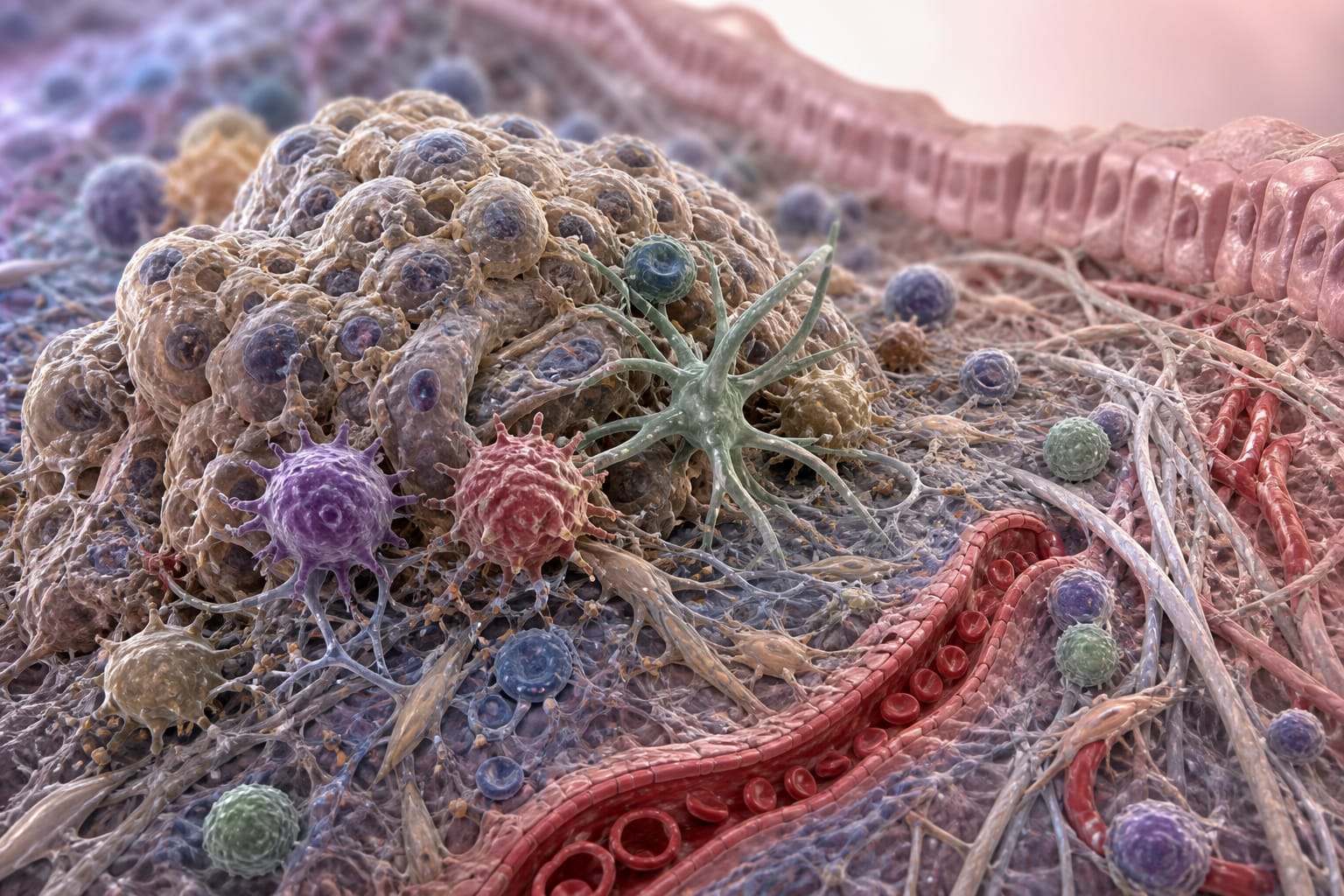
Editorial: The Role of Tumor Microenvironment in Tailored Treatments for Gastrointestinal Cancer II
By
Xinxin Wang
Jianming James Tang
Shuang Yang
Shuo Li
September 8, 2026
Clinical Scorecard: Editorial: The Role of Tumor Microenvironment in Tailored Treatments for Gastrointestinal Cancer II
At a Glance
Category Detail
Condition Gastrointestinal Cancer Key Mechanisms Tumor microenvironment interactions and systemic host status influence treatment outcomes. Target Population Patients with gastric, colorectal, rectal, and esophageal cancers. Care Setting Personalized cancer therapy and risk stratification.
Key Highlights
Integration of systemic inflammatory, nutritional, and body-composition parameters for risk assessment. Postoperative C-reactive protein-to-albumin ratio (CAR) as a biomarker for complications. Pan-immune-inflammation value (PIV) associated with survival outcomes in gastric cancer. C-reactive protein-albumin-lymphocyte (CALLY) index shows improved prognostic performance in colorectal cancer. Pathological subtyping strategy for esophageal squamous cell carcinoma enhances individualized risk assessment. Guideline-Based Recommendations
Diagnosis
Utilize preoperative nomograms incorporating clinical and inflammatory parameters. Management
Consider postoperative CAR levels for early risk stratification. Monitoring & Follow-up
Assess recurrence patterns for individualized surveillance in rectal cancer. Risks
Higher PIV values correlate with advanced disease and poorer survival. Patient & Prescribing Data
Patients undergoing surgery for gastrointestinal cancers.
Personalized management based on tumor characteristics and systemic conditions.
Clinical Best Practices
Employ multidimensional approaches for risk assessment. Incorporate immune microenvironment analysis in treatment decisions. Utilize prognostic nomograms for tailored postoperative management. Related Resources & Content