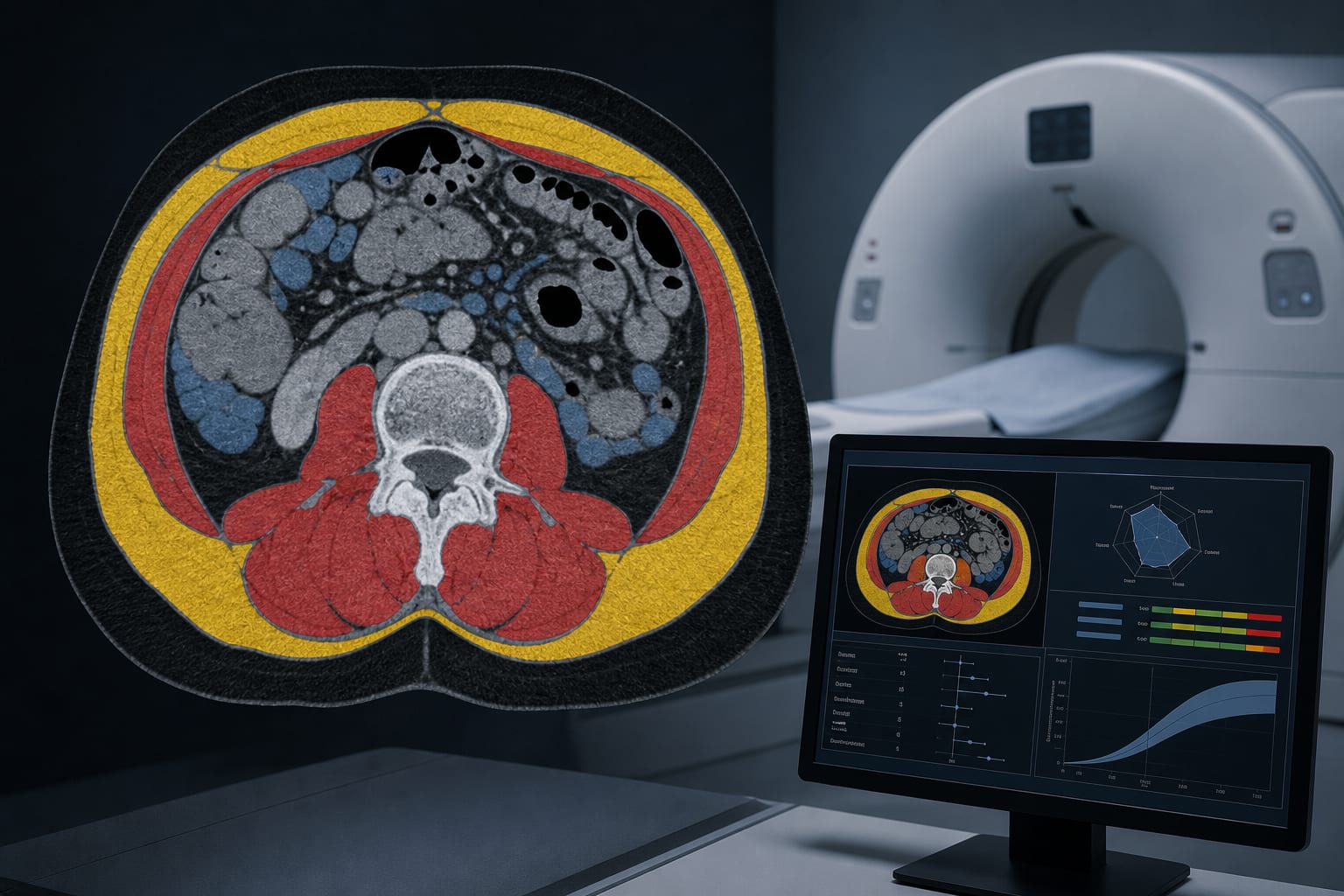
Development and validation of a CT-based body composition model for predicting adverse outcomes in small bowel obstruction
-
By
-
Yanan Shi
-
Zhendong Wang
-
Xiaojuan Tian
-
Feng Wu
-
Xiaole Ma
-
Kai Jia
-
Jiansheng Guo
-
Tian Yao
-
He Huang
-
Yuntong Guo
-
June 1, 2026
-
Clinical Scorecard: Creation and assessment of a CT-derived body composition framework for forecasting negative outcomes in small bowel obstruction
At a Glance
| Category | Detail |
|---|
| Condition | Small Bowel Obstruction (SBO) |
| Key Mechanisms | Integration of body composition, systemic inflammation, nutrition, and intraoperative factors. |
| Target Population | Adult patients (≥18 years) undergoing emergency surgery for SBO. |
| Care Setting | Single-center, retrospective cohort study. |
Key Highlights
- Low skeletal muscle density (SMD) is a strong predictor of postoperative sepsis, ICU admission, and complications.
- Prolonged time from symptom onset to surgery and longer operative duration are significant risk factors.
- The predictive model demonstrated strong discriminative ability with AUC values between 0.72 and 0.84.
Guideline-Based Recommendations
Diagnosis
- Utilize CT imaging to assess body composition parameters in SBO patients.
Management
- Implement a multidimensional nomogram for predicting postoperative outcomes.
Monitoring & Follow-up
- Intensify postoperative monitoring based on risk stratification from the predictive model.
Risks
- Consider low SMD, prolonged symptom duration, and elevated D-dimer as risk factors for adverse outcomes.
Patient & Prescribing Data
270 patients diagnosed with SBO.
Focus on early surgical intervention and monitoring based on identified risk factors.
Clinical Best Practices
- Incorporate body composition and inflammatory markers into risk assessment for SBO patients.
- Utilize intraoperative factors in predictive models for better outcome forecasting.
Related Resources & Content