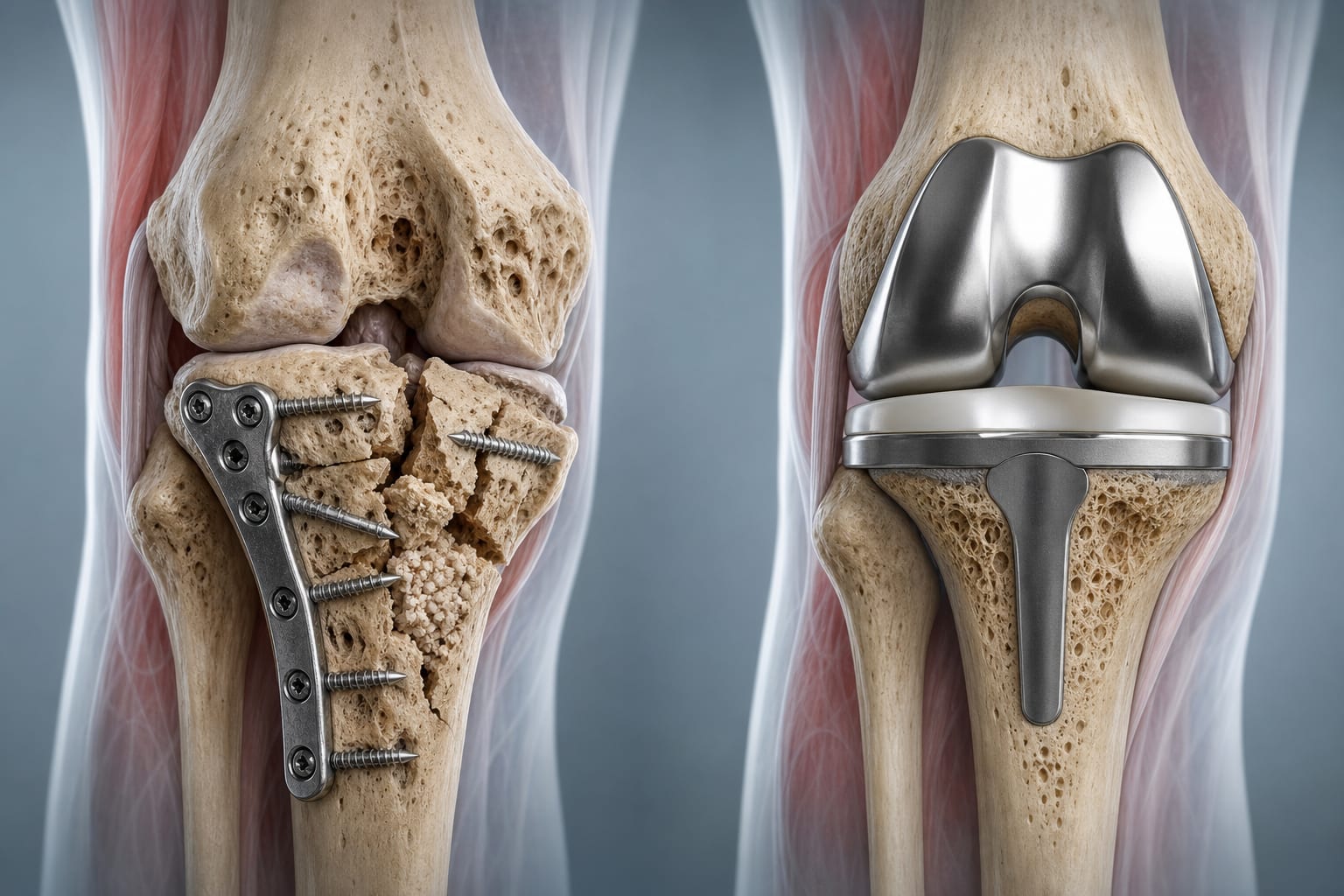
Case Series: Tibial Plateau Fractures in Charcot Neuroarthropathy - Two Patients with Different Outcomes
-
By
-
Weikun Li
-
Yan Zhang
-
Hui Wang
-
May 28, 2026
Clinical Scorecard: Case Series: Tibial Plateau Fractures in Charcot Neuroarthropathy - Two Patients with Different Outcomes
At a Glance
| Category | Detail |
|---|
| Condition | Charcot Neuroarthropathy (CNA) |
| Key Mechanisms | Autonomic dysregulation, hyperemia, osteopenia, repetitive microtrauma, and aberrant inflammatory responses. |
| Target Population | Patients with type 2 diabetes mellitus, particularly those with peripheral neuropathy. |
| Care Setting | Hospital setting, particularly for orthopedic evaluation and management. |
Key Highlights
- CNA can lead to tibial plateau fractures that are misdiagnosed as traumatic injuries.
- Early recognition of CNA is crucial to avoid inappropriate surgical interventions.
- Total knee arthroplasty can yield favorable long-term outcomes when CNA is diagnosed early.
Guideline-Based Recommendations
Diagnosis
- Maintain a high index of suspicion for CNA in diabetic patients with fractures.
- Consider clinical and radiographic findings to differentiate CNA from other conditions.
Management
- Conservative management should be prioritized in early stages of CNA.
- Total knee arthroplasty may be indicated in advanced cases of joint destruction.
Monitoring & Follow-up
- Regular assessment of glycemic control and neuropathy status is essential.
Risks
- Inappropriate surgical interventions can lead to high failure rates due to poor bone quality.
Patient & Prescribing Data
Patients with type 2 diabetes mellitus and Charcot neuroarthropathy.
Conservative management followed by surgical intervention when necessary can improve outcomes.
Clinical Best Practices
- Recognize the clinical-radiographic dissociation in CNA.
- Avoid weight-bearing on compromised constructs post-surgery.
Related Resources & Content