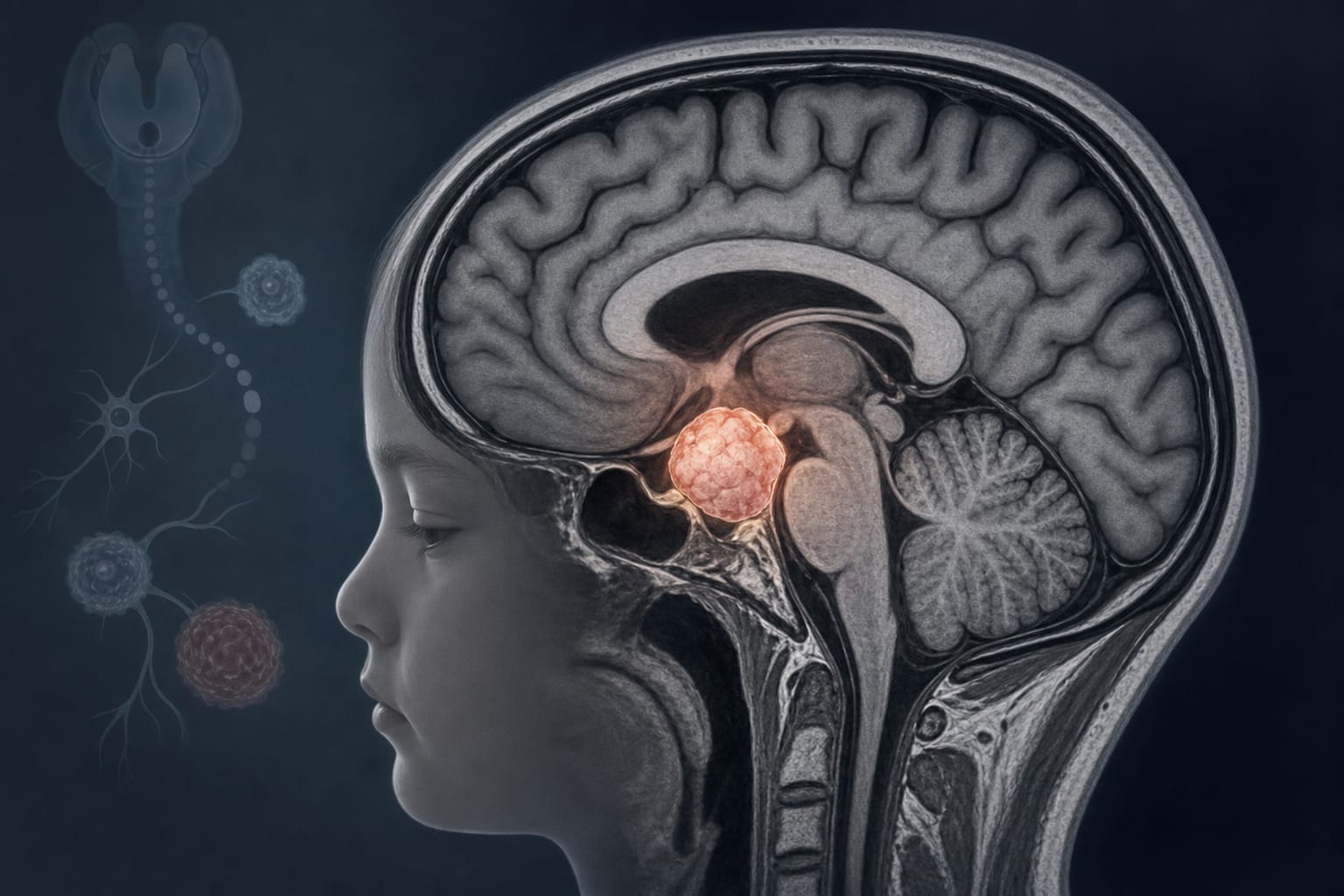
Clinical Scorecard: First Report of an Intracranial Neuroendocrine Tumor in ROHHAD Syndrome: Should We Consider Renaming It to ROHHAD-NeCT Syndrome?
At a Glance
Category
Detail
Condition
Key Mechanisms
Hypothalamic dysfunction leading to hyperphagia and decreased energy expenditure; associated with ganglioneuroblastoma, neuroblastoma, or ganglioneuroma.
Target Population
Care Setting
Key Highlights
40-50% of ROHHAD patients may have associated neuro-endocrine tumors, as reported in the source.
Guideline-Based Recommendations
Diagnosis
Management
Management may include monitoring for respiratory failure and potential tumor treatment, as indicated in the source.
Monitoring & Follow-up
Risks
Patient & Prescribing Data
Prednisone treatment was initiated for suspected lymphoma, reflecting the diagnostic process.
Clinical Best Practices
Consider ROHHAD syndrome in children with rapid weight gain and respiratory issues, as per clinical criteria.
by Nathalie J. Doelman-Oldenburger, Antoinette Y. N. Schouten-van Meeteren, Mariette E. G. Kranendonk, Kim Boshuisen, Michiel A. G. E. Bannier, Hanneke M. van Santen