Conexiant’s news site is now MDSpire News. Learn more
Advertisement
Assessing the L4–L5 Visceral-to-Subcutaneous Fat Ratio via CT as a Predictor of Wound Healing Complications Post-Posterior Lumbar Fusion: A Retrospective Analysis
Clinical Scorecard: Assessing the L4–L5 Visceral-to-Subcutaneous Fat Ratio via CT as a Predictor of Wound Healing Complications Post-Posterior Lumbar Fusion: A Retrospective Analysis
At a Glance
Category
Detail
Condition
Key Mechanisms
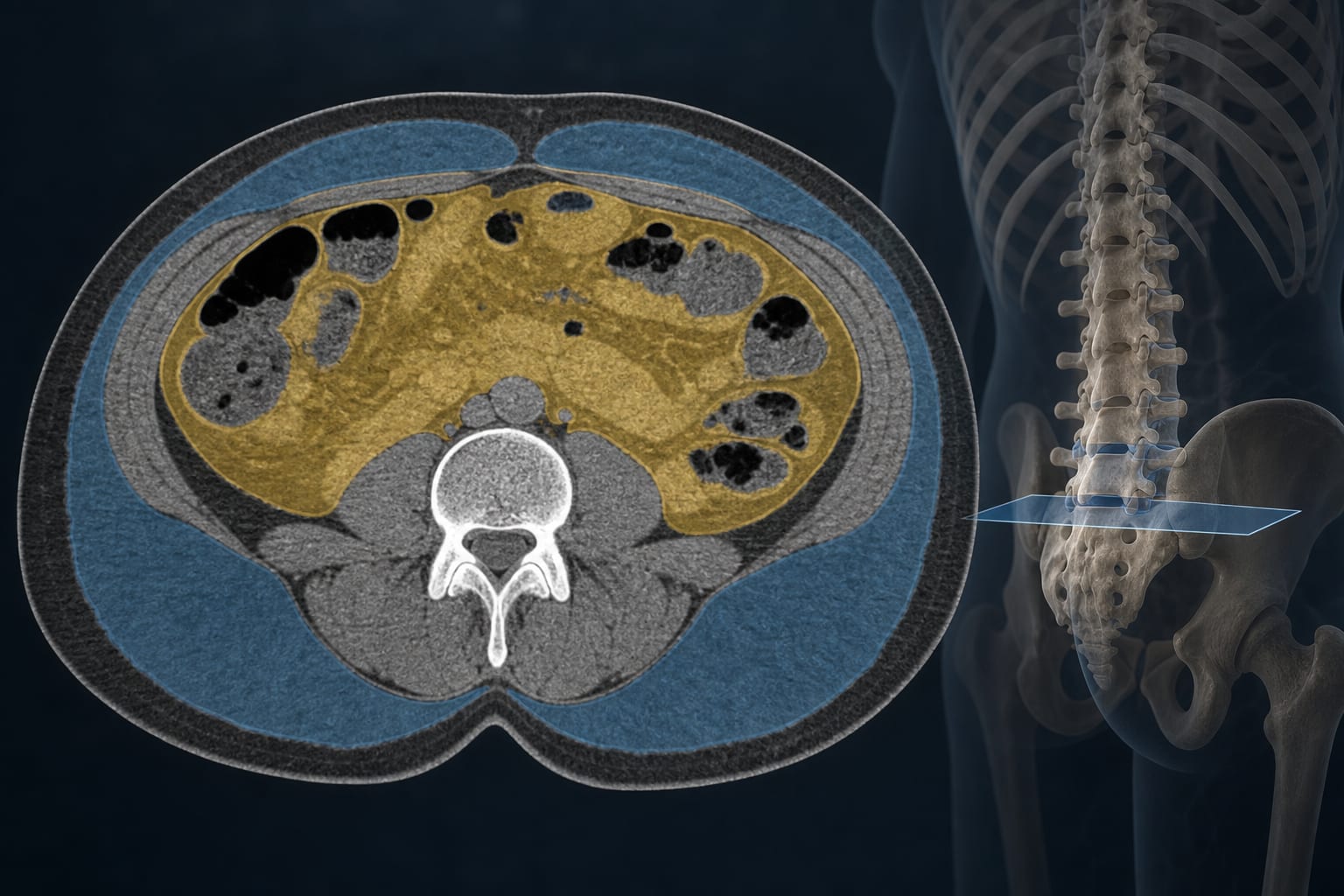
Visceral-to-subcutaneous fat area (VFA/SFA) ratio as a predictor of wound healing complications (source needed).
Target Population
Care Setting
Key Highlights
Impaired wound healing occurred in 11.2% of patients studied (source needed).
Higher BMI and VFA/SFA ratio were associated with impaired wound healing (source needed).
Each 0.1 increase in VFA/SFA ratio was linked to an adjusted odds ratio of 1.32 for impaired wound healing (source needed).
Study included 526 patients with a minimum follow-up of 30 days (source needed).
Guideline-Based Recommendations
Diagnosis
Assess VFA/SFA ratio via preoperative CT at L4–L5 for risk stratification (source needed).
Management
Consider VFA/SFA ratio in preoperative planning and patient counseling (source needed).
Monitoring & Follow-up
Monitor wound healing closely in patients with higher VFA/SFA ratios (source needed).
Risks
Increased risk of impaired wound healing associated with higher VFA/SFA ratios (source needed).
Patient & Prescribing Data
Adults aged 18 and older undergoing PLF for degenerative conditions.
Preoperative assessment of VFA/SFA ratio may guide surgical decision-making.
Clinical Best Practices
Utilize CT imaging to measure VFA and SFA in preoperative assessments (source needed).
Incorporate VFA/SFA ratio into clinical risk models for better prediction of wound healing outcomes (source needed).