Blood-activating, depression-relieving formula alleviates post-stroke depression: mechanistic insights from network pharmacology and microglial validation - Scorecard - MDSpire
Advertisement
Blood-activating, depression-relieving formula alleviates post-stroke depression: mechanistic insights from network pharmacology and microglial validation
Clinical Scorecard: Herbal Formula for Enhancing Blood Flow and Alleviating Depression Shows Promise in Treating Post-Stroke Depression: Insights from Network Pharmacology and Microglial Studies
At a Glance
Category
Detail
Condition
Post-Stroke Depression (PSD)
Key Mechanisms
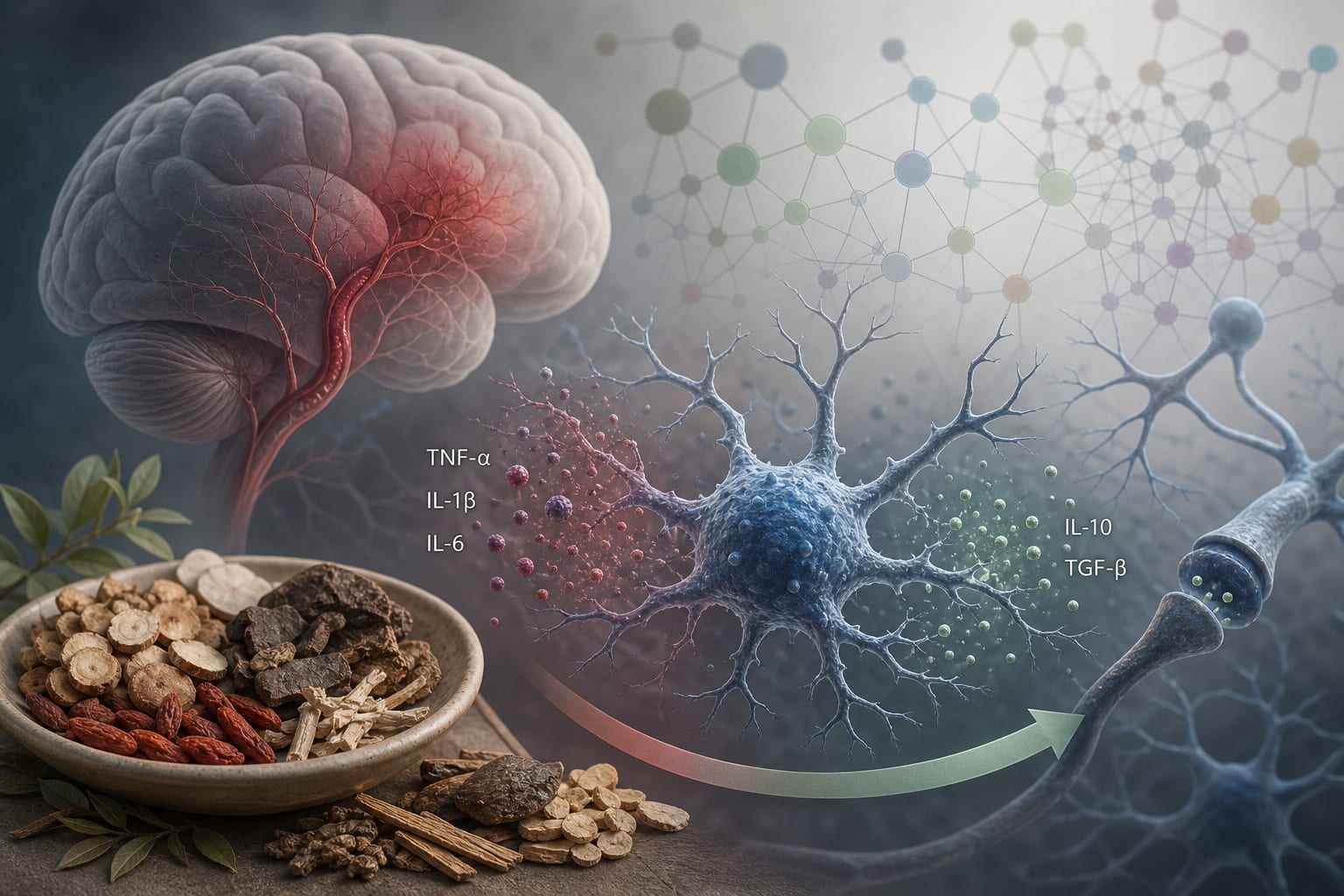
Neuroinflammation, microglial activation, and multi-target pharmacology
Target Population
Patients with post-stroke depression
Care Setting
Neuropsychiatric treatment and rehabilitation
Key Highlights
BADR herbal formula shows promise in treating post-stroke depression.
Mechanistic insights reveal the role of EGFR, STAT3, and PI3K in PSD.
BADR attenuates inflammatory cytokines and improves microglial viability.
Multi-target strategies are essential for effective PSD management.
Traditional Chinese Medicine approaches may provide new therapeutic avenues.
Guideline-Based Recommendations
Diagnosis
Assess for depressive symptoms following stroke using standardized scales.
Management
Consider multi-target therapies that address neuroinflammation and cell survival.
Monitoring & Follow-up
Regularly evaluate mood and cognitive function in post-stroke patients.
Risks
Be aware of potential drug-drug interactions with existing stroke prevention regimens.
Patient & Prescribing Data
Individuals recovering from stroke with depressive symptoms.
BADR may offer a complementary approach to conventional antidepressants.
Clinical Best Practices
Integrate traditional and modern therapeutic approaches for PSD.
Utilize network pharmacology to identify effective multi-target treatments.
Monitor inflammatory markers and microglial activity in treatment response.