Venoarterial extracorporeal membrane oxygenation in adults with cardiogenic shock
-
By
-
Jamel Ortoleva
-
Patrick M. Wieruszewski
-
Amy French
-
Jerome C. Crowley
-
Eriberto Michel
-
William Riley
-
David Convissar
-
Dominic V. Pisano
-
June 25, 2026
-
Clinical Scorecard: Venoarterial Extracorporeal Membrane Oxygenation for Adult Patients Experiencing Cardiogenic Shock
At a Glance
| Category | Detail |
|---|
| Condition | Cardiogenic Shock |
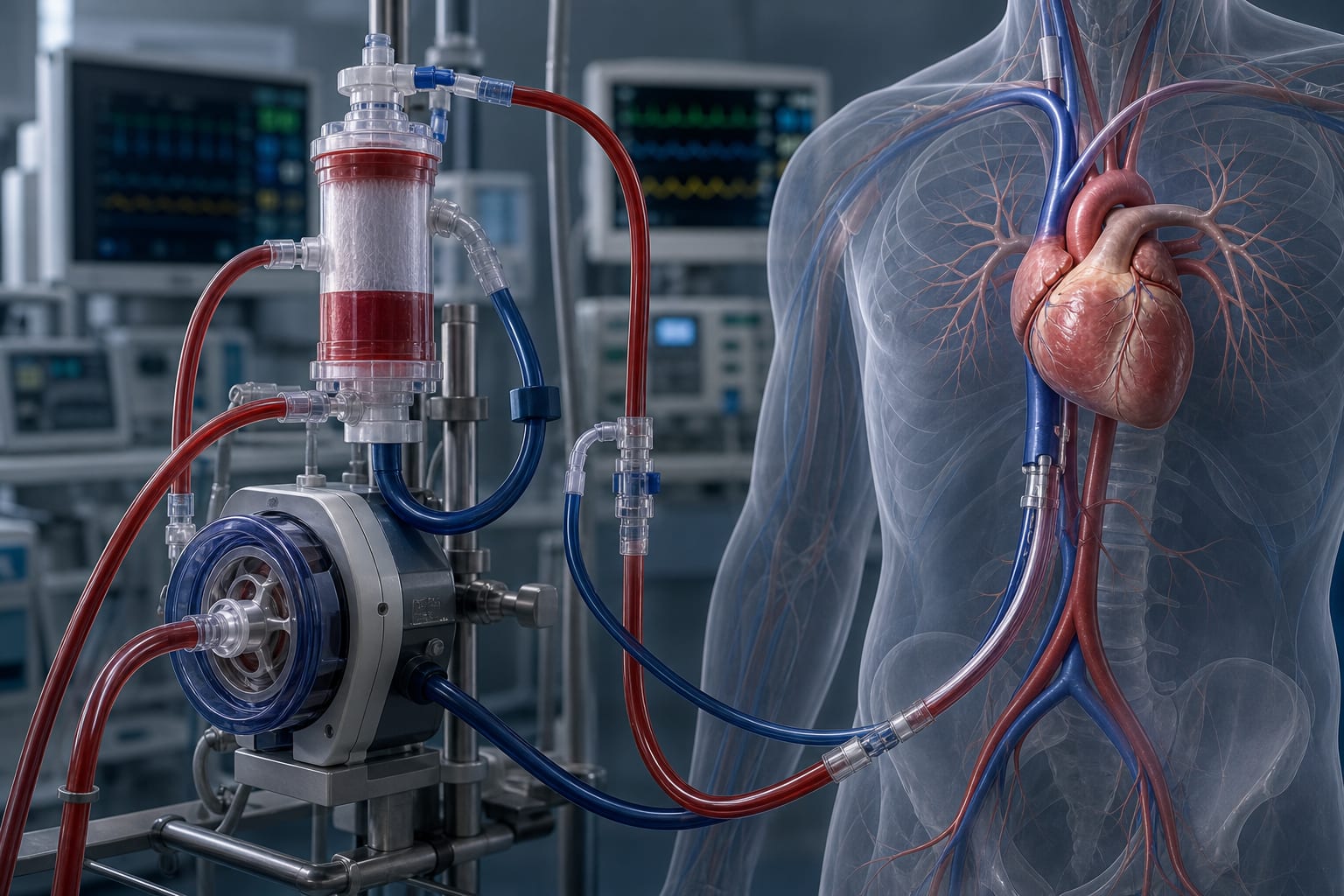
| Key Mechanisms | Temporary mechanical circulatory support using venoarterial extracorporeal membrane oxygenation (VA ECMO) to provide biventricular support. |
| Target Population | Adults experiencing cardiogenic shock, particularly those unresponsive to less invasive treatments. |
| Care Setting | Critical care and advanced cardiac support environments. |
Key Highlights
- VA ECMO is resource intensive and requires multi-disciplinary expertise.
- Complications include bleeding, acute kidney injury, stroke, and limb ischemia.
- VA ECMO can be deployed peripherally or centrally, affecting management strategies.
- Physiologic changes during VA ECMO include reduced pulmonary blood flow and coagulopathy.
- Weaning from VA ECMO is complex and may involve surgical or percutaneous approaches.
Guideline-Based Recommendations
Diagnosis
- Cardiogenic shock is characterized by insufficient oxygen delivery due to cardiac compromise.
Management
- Initial management includes hemodynamic stabilization, volume optimization, and consideration of advanced therapies.
Monitoring & Follow-up
- Continuous monitoring for complications and hemodynamic status is essential during VA ECMO support.
Risks
- High morbidity and mortality associated with VA ECMO; careful patient selection is critical.
Patient & Prescribing Data
Adults with cardiogenic shock, particularly those with ischemic and non-ischemic etiologies.
VA ECMO serves as a bridge to recovery, durable therapy, or transplant.
Clinical Best Practices
- Utilize a multi-disciplinary team for VA ECMO management.
- Anticipate and manage physiologic changes during VA ECMO initiation.
- Assess underlying causes of cardiogenic shock to tailor management strategies.
Related Resources & Content