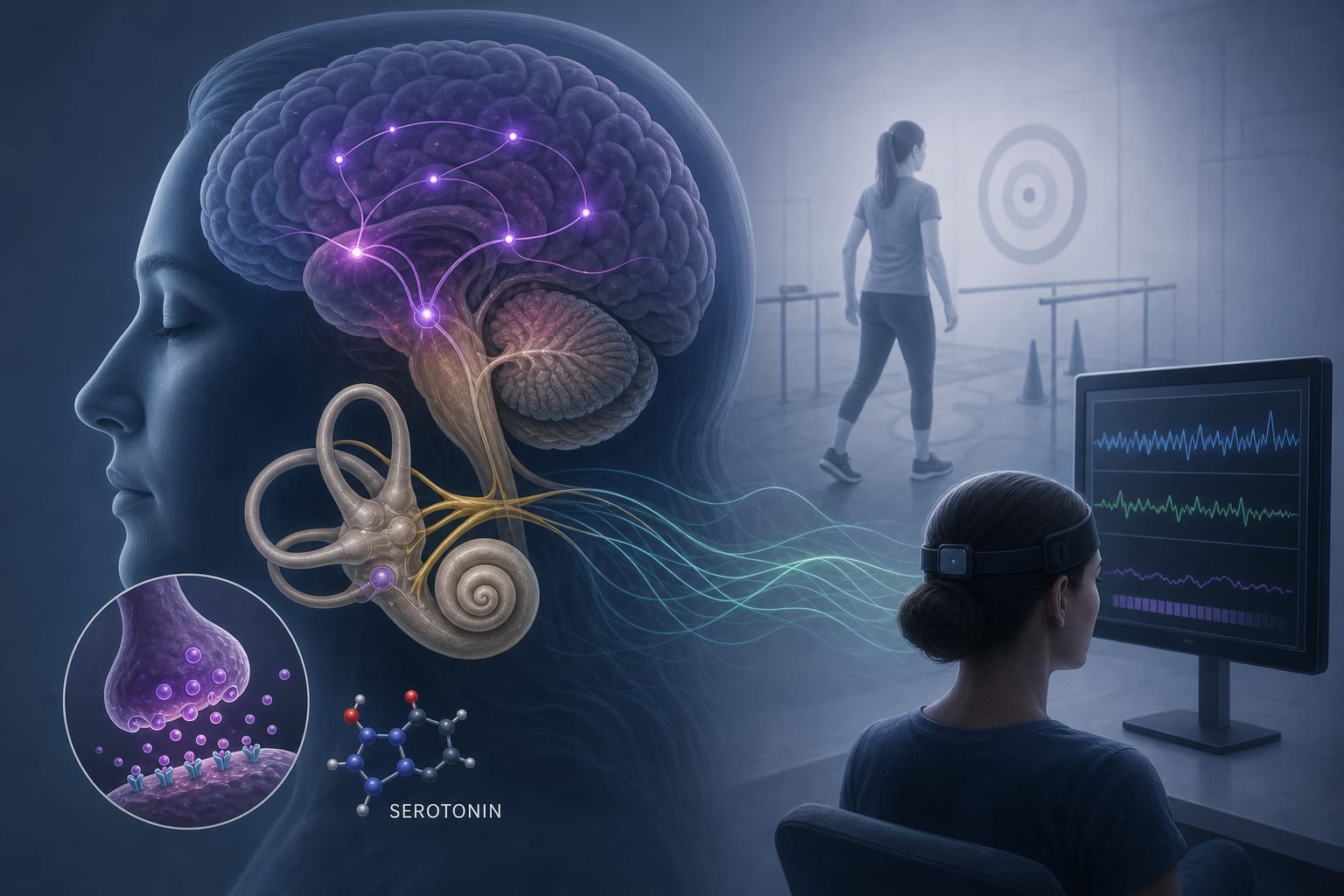
Integrating Biofeedback with Vestibular Rehabilitation for Managing Vestibular Migraine: Clinical Outcomes and Neurobiochemical Insights
By
Tengteng Zhang
Ying Zhang
Jinghui Sun
Luting Lv
Hongwei Wang
He Zhang
Jie Li
Jiandong Wang
Zhidan Yu
Shuqin Wu
June 23, 2026
Clinical Scorecard: Integrating Biofeedback with Vestibular Rehabilitation for Managing Vestibular Migraine: Clinical Outcomes and Neurobiochemical Insights
At a Glance
Category Detail
Condition Vestibular Migraine Key Mechanisms Involves dysfunction in sensory processing networks, neurotransmitter imbalance, and altered central vestibular processing. Target Population Patients with vestibular migraine (VM) Care Setting Tertiary care center
Key Highlights
Combined therapy achieved a total effective rate of 94.59%. Significant improvements in anxiety, depression, vertigo disability, and balance function were observed. Neurobiochemical modulation included increased serotonin and GABA levels, and decreased CGRP and acetylcholine levels. Guideline-Based Recommendations
Diagnosis
Diagnosis of VM should consider recurrent vertigo episodes and associated migraine symptoms. Management
Non-pharmacological strategies, including vestibular rehabilitation and biofeedback, are recommended. Monitoring & Follow-up
Monitor changes in psychological outcomes and vestibular function parameters. Risks
Consider potential side effects of pharmacological treatments for patients who may not tolerate them. Patient & Prescribing Data
148 patients with vestibular migraine enrolled in a prospective study.
Combined biofeedback and vestibular rehabilitation therapy showed superior efficacy compared to individual treatments.
Clinical Best Practices
Integrate biofeedback with vestibular rehabilitation for enhanced treatment outcomes. Assess neurobiochemical markers to evaluate treatment efficacy. Related Resources & Content