The Importance of an Expanded Understanding of the Diametaphyseal Junction Zone in Pediatric Distal Radius Fractures
Clinical Scorecard: The Importance of an Expanded Understanding of the Diametaphyseal Junction Zone in Pediatric Distal Radius Fractures
At a Glance
Category Detail
Condition Diametaphyseal radius fractures (DMRF) in children Key Mechanisms Defined by the forearm fracture index (FFI) and surgical stabilization techniques Target Population Children aged 16 years or younger with distal radius fractures Care Setting Pediatric orthopedic surgery
Key Highlights
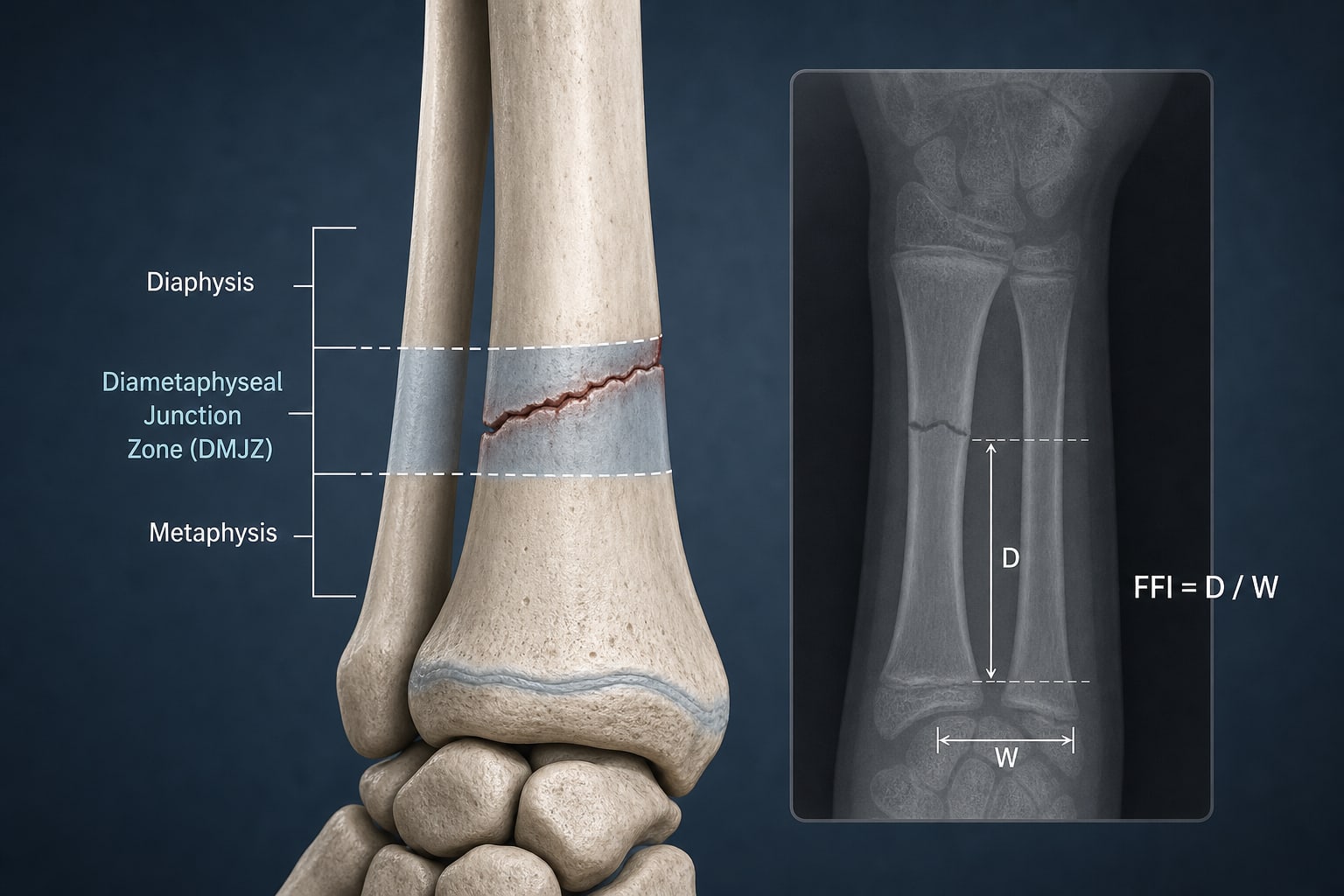
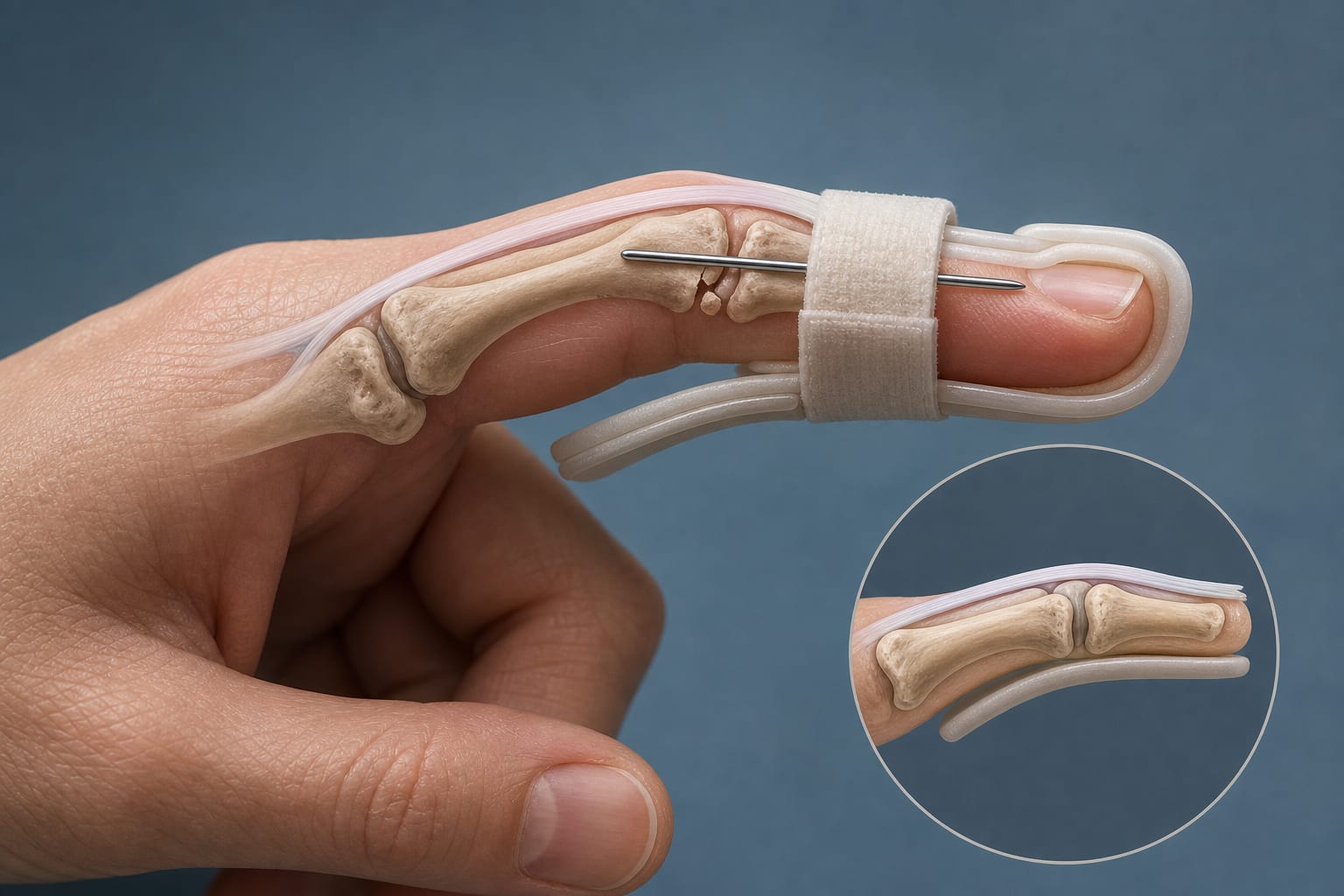
Definitions of the diametaphyseal junction zone (DMJZ) vary among studies. The forearm fracture index (FFI) offers a new approach to defining DMRF. DMRF categorized with an FFI between 1 and 2 can be treated with conventional ESIN. Radiographic outcomes show significant improvements post-surgery. One case of pseudarthrosis was reported in a patient treated with ESIN. Guideline-Based Recommendations
Diagnosis
Use the forearm fracture index (FFI) to categorize DMRF. Management
Consider ESIN or TEPIK for stabilization of DMRF+. Monitoring & Follow-up
Assess radiographic outcomes post-surgery for angulation and translation. Risks
Monitor for complications such as pseudarthrosis. Patient & Prescribing Data
Children with DMRF+ aged 16 years or younger
Surgical stabilization is indicated for severely displaced or unstable fractures.
Clinical Best Practices
Utilize the FFI for objective comparison of DMRF studies. Evaluate the choice of osteosynthesis based on fracture characteristics. Related Resources & Content