Bifidobacterium infantis-mediated HSV-TK/GCV therapy modulates the tumor microenvironment through site-specific phosphorylation of HIF-1α, mTOR, and PD-L1 - Scorecard - MDSpire
Advertisement
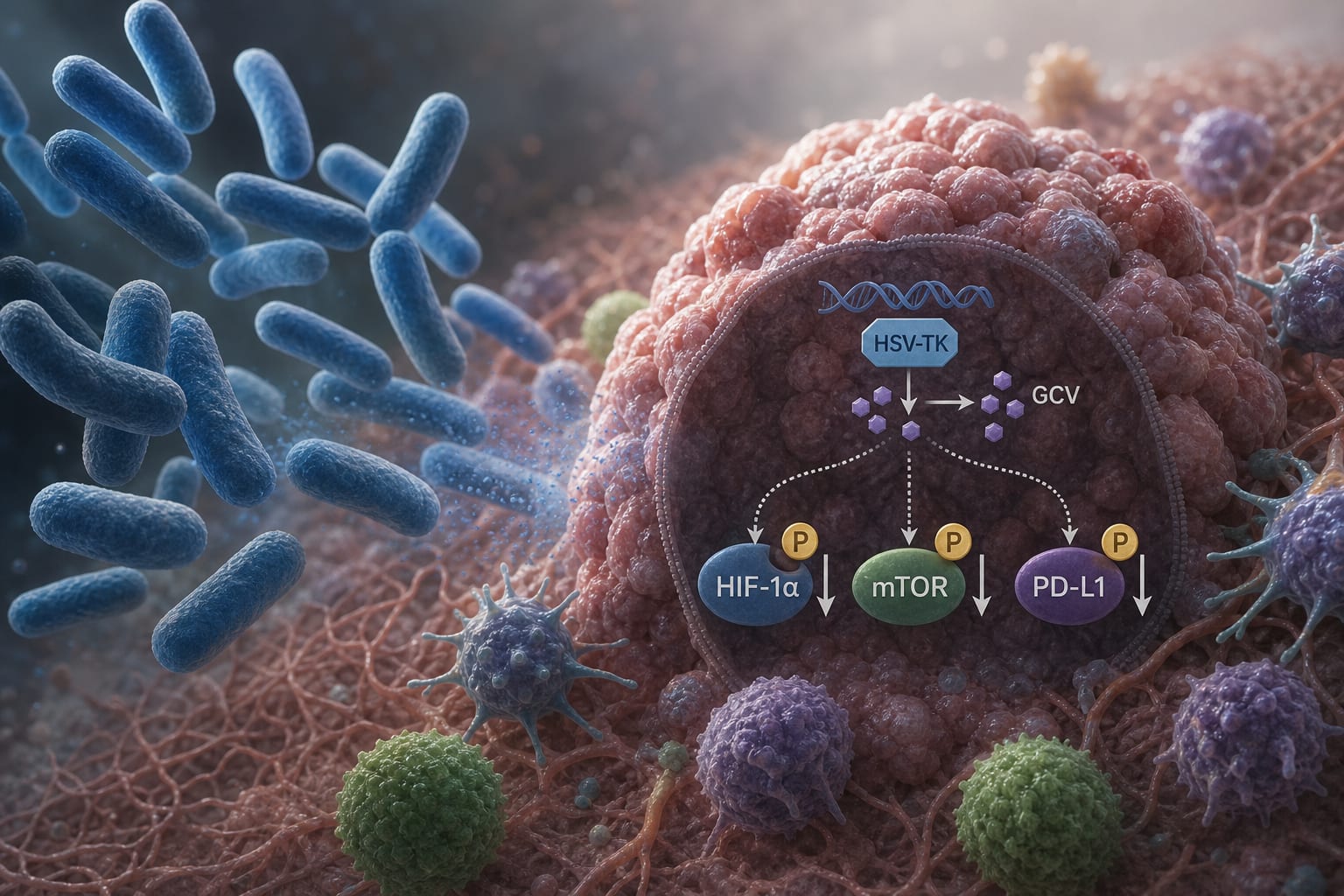
Bifidobacterium infantis-mediated HSV-TK/GCV therapy modulates the tumor microenvironment through site-specific phosphorylation of HIF-1α, mTOR, and PD-L1
Clinical Scorecard: Bifidobacterium infantis-driven HSV-TK/GCV treatment influences the tumor microenvironment via targeted phosphorylation of HIF-1α, mTOR, and PD-L1
At a Glance
Category
Detail
Condition
Cancer
Key Mechanisms
Targeted phosphorylation of proteins involved in tumor growth and immune response.
Target Population
Patients with solid tumors, particularly colorectal cancer.
Care Setting
Oncology
Key Highlights
BF-TK/GCV treatment resulted in 337 differentially abundant phosphopeptides.
Significant alterations in phosphorylation of HIF-1α, mTOR, PKM2, and PD-L1.
BF-TK/GCV suppressed tumor growth and prolonged survival in tumor-bearing mice.
The therapy reprograms the phosphoproteome in a site- and pathway-specific manner.
GO and KEGG analyses revealed enrichment in protein kinase activity and cell cycle regulation.
Guideline-Based Recommendations
Diagnosis
Utilize quantitative phosphoproteomic analysis to assess treatment effects.
Management
Consider BF-TK/GCV as a therapeutic strategy for solid tumors.
Monitoring & Follow-up
Monitor phosphorylation changes in key proteins post-treatment.
Risks
Potential for dysregulation of phosphorylation pathways leading to adverse effects.
Patient & Prescribing Data
Patients with advanced solid tumors.
BF-TK/GCV may enhance immune responses and tumor targeting.
Clinical Best Practices
Incorporate phosphoproteomic analysis in treatment evaluation.
Assess immune-related pathways in response to BF-TK/GCV therapy.