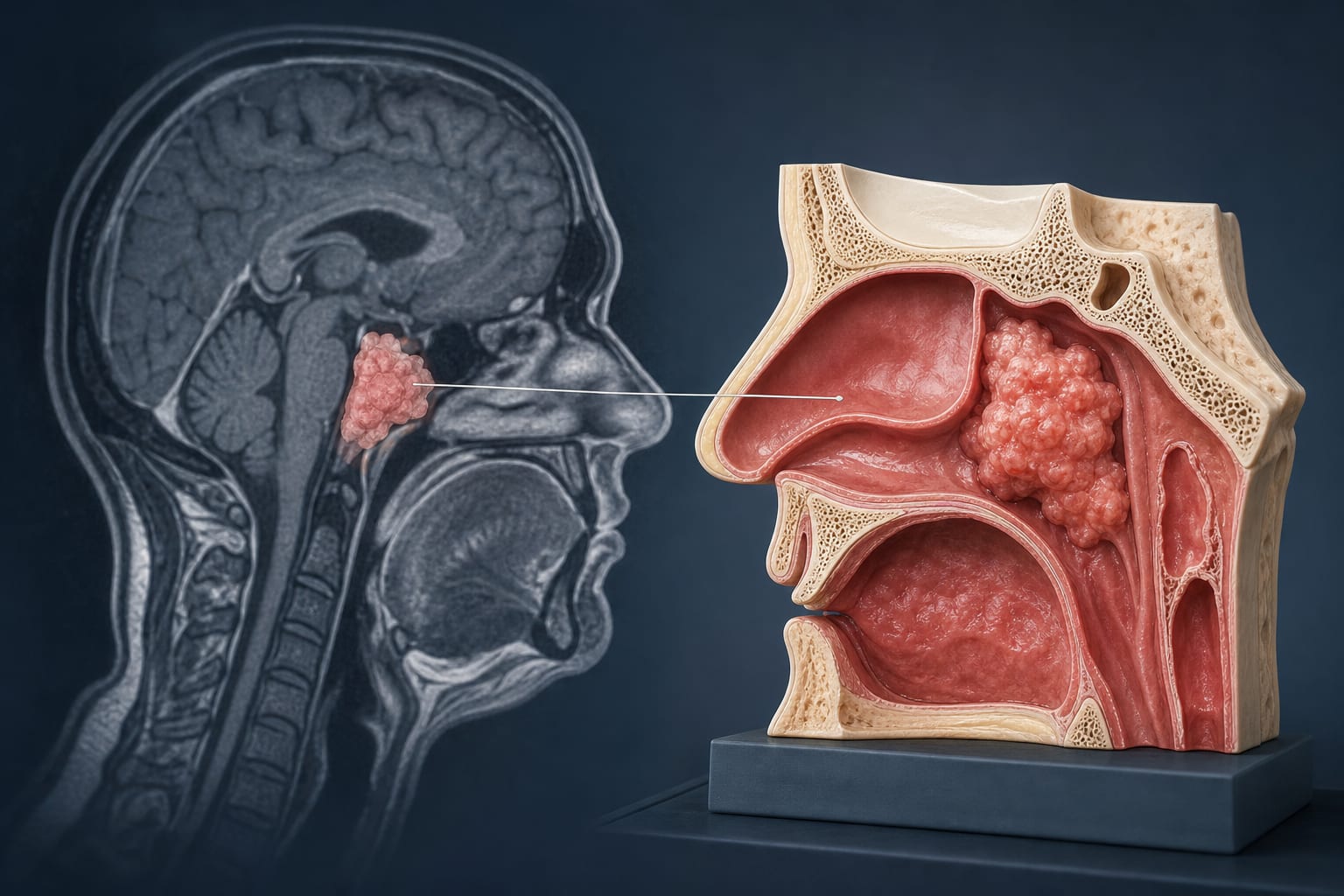
Results of applying the 9th edition TNM classification in the staging assessment of nasopharyngeal carcinoma: first data in Vietnam
By
Dang Nguyen Van
Phan Nguyen Huy
Hoa Le Thi
Viet Hoang Thanh
July 15, 2026
Clinical Scorecard: Evaluation of the 9th Edition TNM Classification for Staging Nasopharyngeal Carcinoma: Initial Findings from Vietnam
At a Glance
Category Detail
Condition Nasopharyngeal carcinoma Key Mechanisms Changes in staging classification from the 8th to the 9th edition of the TNM system. Target Population Newly diagnosed patients with nasopharyngeal carcinoma in Vietnam. Care Setting Department of Head and Neck Radiation Oncology, K Hospital
Key Highlights
Study included 555 patients with a mean age of 51.8 years. 99.3% of patients had non-keratinizing squamous cell carcinoma, undifferentiated subtype. 88.3% of patients experienced changes in overall stage when reassessed using the 9th edition. The 9th edition TNM classification introduced significant changes in prognostic stratification. The study highlights the impact of staging changes on treatment decisions. Guideline-Based Recommendations
Diagnosis
Histologically confirm nasopharyngeal carcinoma. Management
Consider the 9th edition TNM classification for treatment planning. Monitoring & Follow-up
Regular follow-up and imaging to assess disease progression. Risks
Potential for misclassification of disease stage impacting treatment outcomes. Patient & Prescribing Data
Newly diagnosed nasopharyngeal carcinoma patients treated at K Hospital.
Treatment decisions may be influenced by changes in staging classification.
Clinical Best Practices
Utilize the 9th edition TNM classification for accurate staging. Ensure comprehensive imaging evaluation for staging assessment. Maintain updated treatment protocols in line with the latest TNM classification. Related Resources & Content