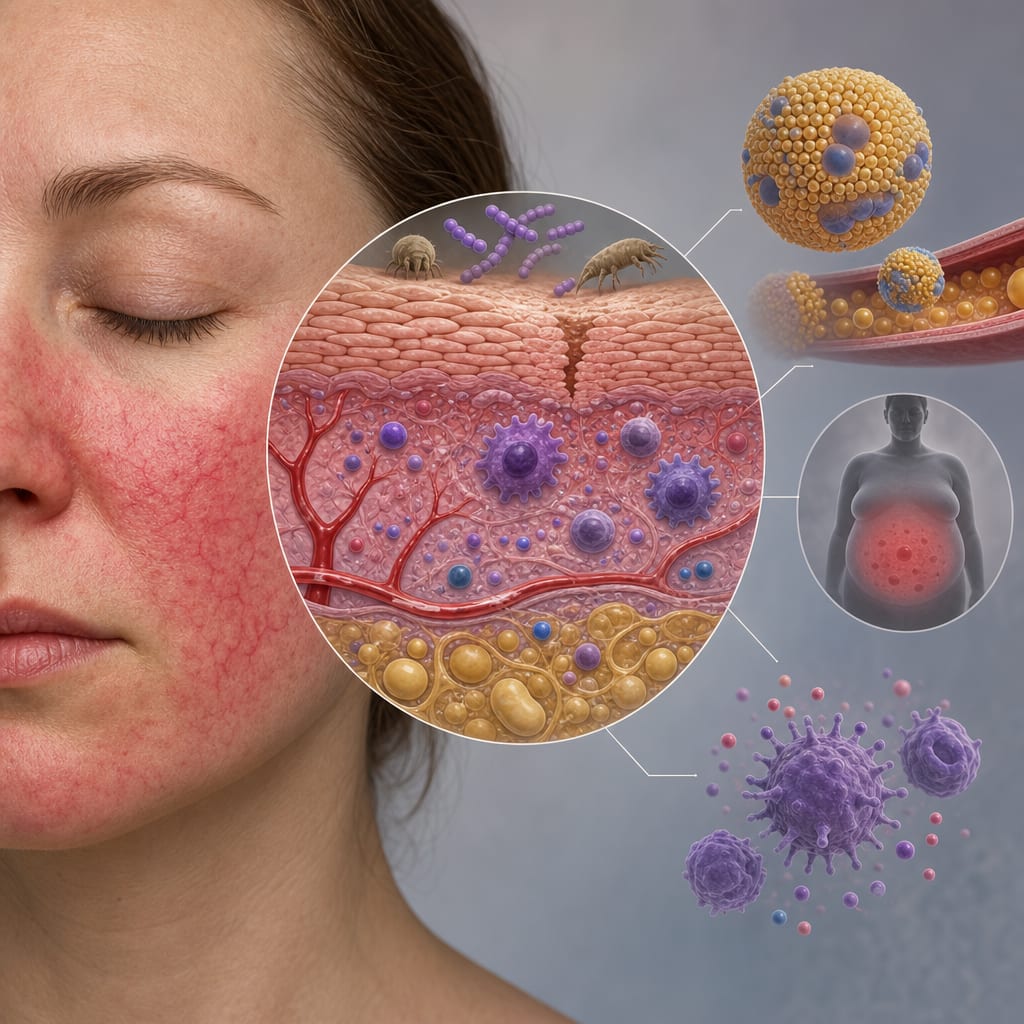
The Role of Lipids and Inflammation in Rosacea: Insights into Mechanisms and Treatment Options
By
Xiaoyu Zhang
Tao Ning
Yanyan Feng
May 4, 2026
Clinical Scorecard: The Role of Lipids and Inflammation in Rosacea: Insights into Mechanisms and Treatment Options
At a Glance
Category Detail
Condition Rosacea Key Mechanisms Genetic predisposition, immune dysfunction, skin barrier impairment, microbial dysbiosis, metabolic irregularities, neurovascular anomalies. Target Population Individuals aged 25–39 years, with a higher prevalence in women. Care Setting Dermatology clinics and primary care settings.
Key Highlights
Rosacea is characterized by facial erythema, flushing, and papular/pustular lesions. Metabolic comorbidities such as dyslipidemia and obesity are common in rosacea patients. Changes in facial sebum lipid composition may contribute to skin barrier dysfunction. Increased levels of Malassezia species are associated with rosacea. Ceramide-containing moisturizers may help restore skin barrier function. Guideline-Based Recommendations
Diagnosis
Clinical evaluation based on characteristic symptoms and signs. Consideration of patient history and potential comorbidities. Management
Topical treatments including anti-inflammatory agents and moisturizers. Systemic therapies for severe cases, including antibiotics and isotretinoin. Monitoring & Follow-up
Regular assessment of skin condition and response to treatment. Monitoring for associated metabolic disorders. Risks
Increased risk of cardiovascular diseases. Potential for psychological impact due to visible symptoms. Patient & Prescribing Data
Patients with rosacea, particularly those with metabolic comorbidities.
Focus on restoring skin barrier function and addressing underlying metabolic issues.
Clinical Best Practices
Educate patients about triggers and management strategies. Encourage the use of gentle skin care products. Monitor lipid profiles and metabolic health in rosacea patients. Related Resources & Content