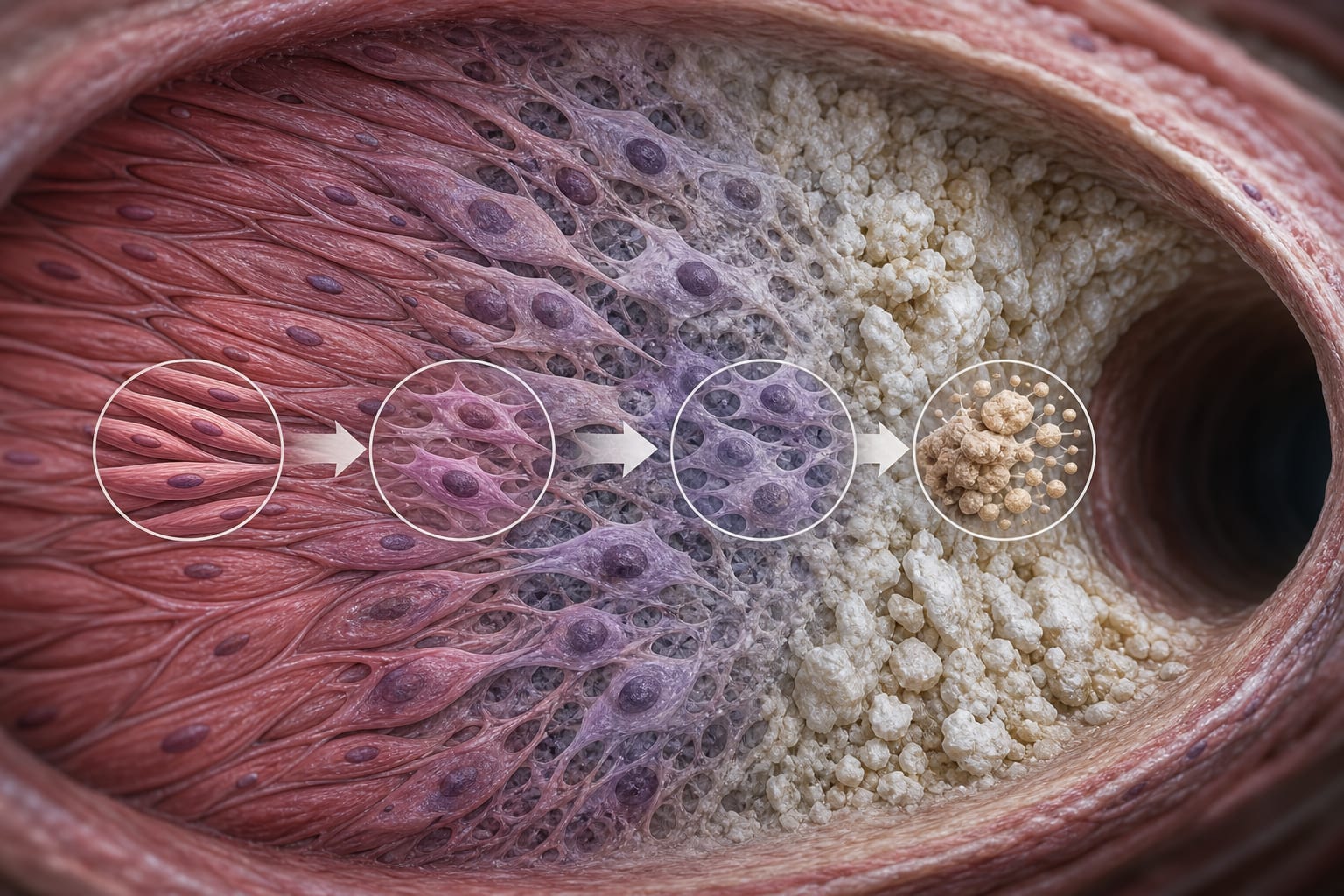
Mechanisms of vascular calcification: cellular phenotype switching drives matrix remodeling and mineralized microenvironment formation
By
Wen, Haoyu
Chen, Weiwei
He, Yuquan
June 2, 2026
Clinical Scorecard: Cellular Phenotype Transition in Vascular Calcification: Driving Matrix Remodeling and the Development of a Mineralized Environment
At a Glance
Category Detail
Condition Vascular Calcification (VC) Key Mechanisms Vascular smooth muscle cell (VSMC) phenotypic switching, matrix remodeling, mineralization processes. Target Population Patients with chronic renal disease, diabetes, atherosclerosis, and other cardiovascular conditions. Care Setting Clinical settings addressing cardiovascular diseases.
Key Highlights
Vascular calcification is an active mineralization process, not merely passive accumulation. VSMCs transition from a contractile to an osteogenic/chondrogenic-like phenotype under metabolic disturbances. Matrix metalloproteinases (MMPs) play a crucial role in extracellular matrix degradation. Endothelial-mesenchymal transition (EndoMT) and macrophage polarization contribute to calcification. Targeting metabolic checkpoints may offer new therapeutic avenues for VC. Guideline-Based Recommendations
Diagnosis
Assess cardiovascular risk factors associated with vascular calcification. Management
Consider targeting metabolic checkpoints and preventing VSMC phenotypic switching. Monitoring & Follow-up
Monitor for signs of chronic inflammation and oxidative stress in patients. Risks
Increased risk of cardiovascular events linked to vascular calcification. Patient & Prescribing Data
Individuals with cardiovascular diseases and associated metabolic disorders.
Potential treatments may involve targeting metabolic pathways and epigenetic reprogramming.
Clinical Best Practices
Evaluate and manage calcium-phosphate balance in at-risk patients. Monitor VSMC phenotype changes in patients with chronic diseases. Implement strategies to reduce oxidative stress and inflammation. Related Resources & Content