Development and validation of a clinical prediction model for postoperative atrial fibrillation after lung cancer surgery: a machine-learning–based study - Scorecard - MDSpire

Development and validation of a clinical prediction model for postoperative atrial fibrillation after lung cancer surgery: a machine-learning–based study

  • By

  • Yi Xu

  • Ting Lu

  • Ke Xu

  • Xiaoyan Feng

  • Rongsheng Xiong

  • June 4, 2026

  • 0 min

Share

Clinical Scorecard: Creation and assessment of a predictive model for postoperative atrial fibrillation following lung cancer surgery: a study utilizing machine learning techniques

At a Glance

CategoryDetail
ConditionPostoperative Atrial Fibrillation (POAF)
Key MechanismsMultifactorial nature involving demographic factors, perioperative variables, and surgical stress.
Target PopulationPatients undergoing lung cancer surgery.
Care SettingTertiary referral center.

Key Highlights

  • 19.8% of patients developed POAF post-surgery.
  • Six predictors identified: age, education level, hypertension, marital status, postoperative pain score, surgical approach.
  • Logistic regression model showed the highest AUC of 0.855 in the test cohort.
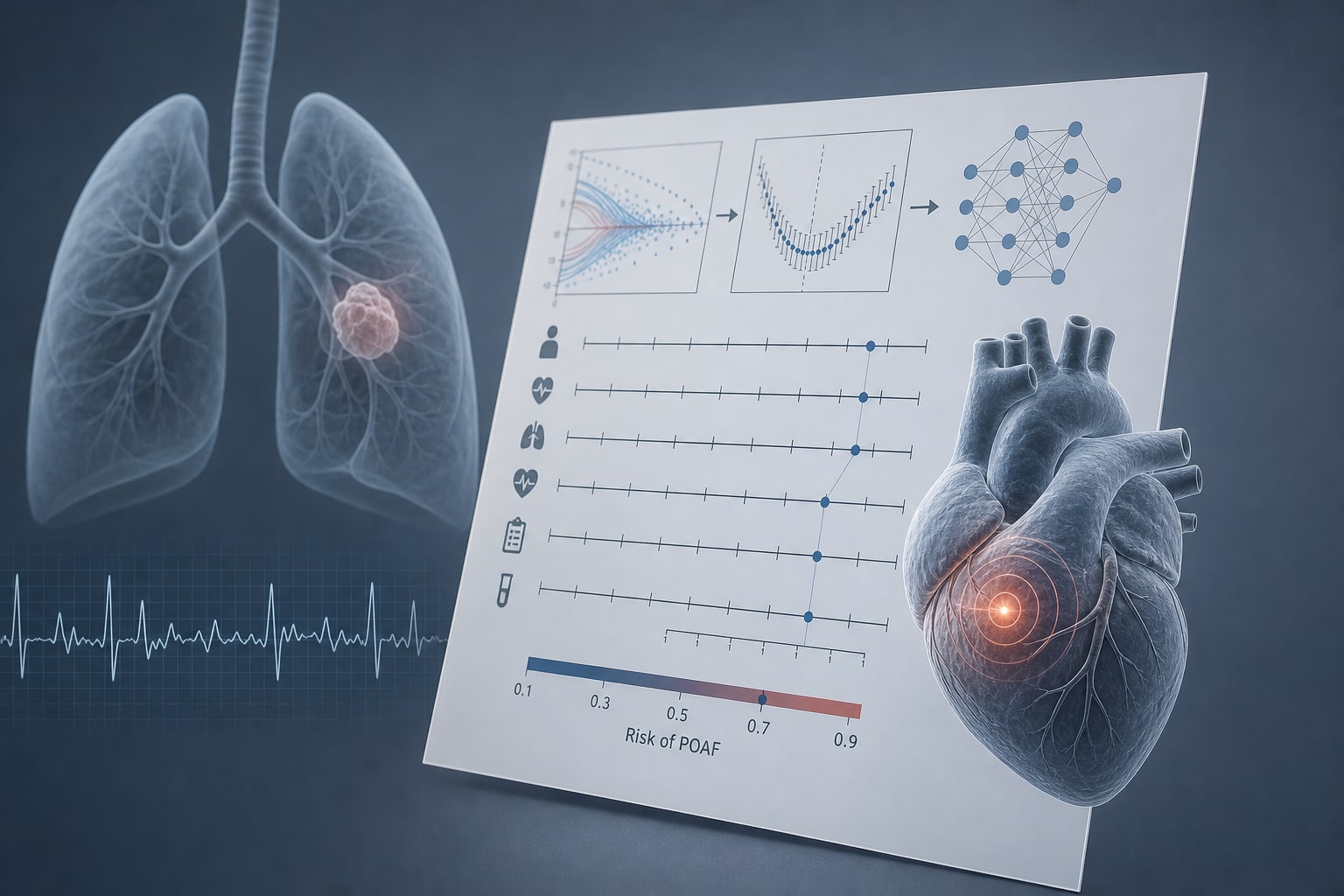
  • A nomogram was developed for individualised POAF risk prediction.
  • Machine learning techniques improved risk stratification for lung cancer surgery patients.

Guideline-Based Recommendations

Diagnosis

  • POAF defined as newly diagnosed atrial fibrillation during postoperative hospital stay.

Management

  • Utilize the developed nomogram for individualised risk assessment.

Monitoring & Follow-up

  • Implement perioperative monitoring based on identified risk factors.

Risks

  • POAF is associated with haemodynamic instability, thromboembolic events, stroke, heart failure, prolonged hospitalisation, and increased postoperative mortality.

Patient & Prescribing Data

540 patients undergoing lung cancer surgery.

Machine learning models can outperform traditional methods in predicting postoperative complications.

Clinical Best Practices

  • Incorporate identified predictors into preoperative risk assessment.
  • Utilize machine learning techniques for improved predictive accuracy.
  • Ensure patients are in sinus rhythm before surgery to accurately assess POAF.

Related Resources & Content

Original Source(s)

Related Content