Clinical Scorecard: Complications from Systemic Treatment in a Urothelial Bladder Cancer Patient with Chronic Kidney Disease: A Case Study
At a Glance
Category
Detail
Condition
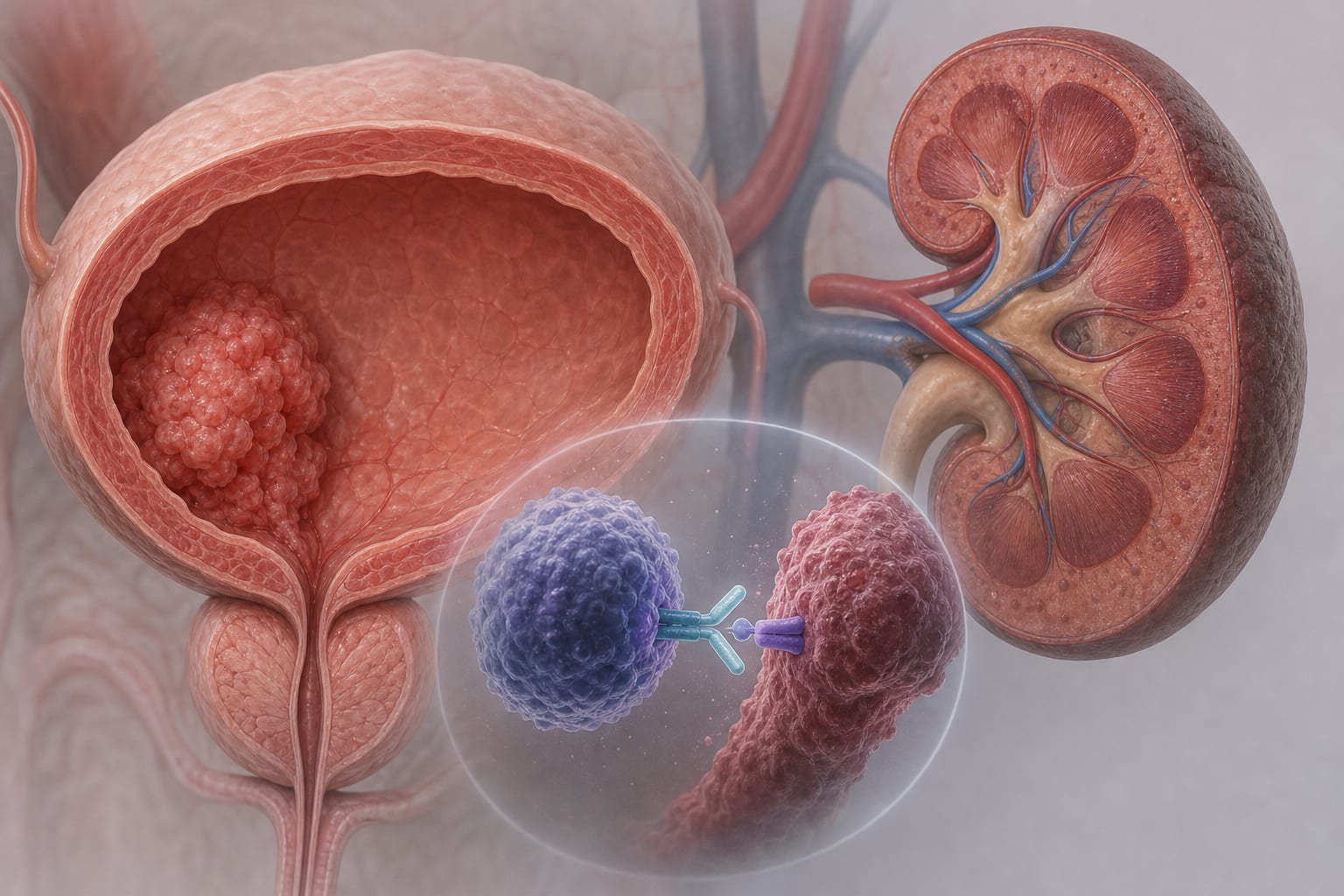
Urothelial Bladder Cancer
Key Mechanisms
Immune checkpoint inhibitors (ICIs) may cause immune-related adverse events (irAEs) that complicate management in patients with chronic kidney disease (CKD).
Target Population
Patients with locally advanced urothelial carcinoma ineligible for cisplatin-based chemotherapy, particularly those with CKD.
Care Setting
Multidisciplinary management in oncology, nephrology, endocrinology, neurology, and cardiology.
Key Highlights
Nivolumab is an effective adjuvant therapy for cisplatin-ineligible urothelial carcinoma patients.
Immune-related adverse events can mimic CKD progression, complicating diagnosis.
High-dose glucocorticosteroids can lead to clinical improvement in irAEs.
Chronic corticosteroid toxicity and testosterone deficiency were identified in the patient.
Multidisciplinary evaluation is crucial for managing complex cases.
Guideline-Based Recommendations
Diagnosis
Monitor for immune-related adverse events in patients receiving ICIs.
Management
Initiate glucocorticosteroids for severe irAEs.
Monitoring & Follow-up
Vigilant monitoring of renal function and symptoms during ICI therapy.
Risks
Risk of misdiagnosing irAEs as CKD progression.
Patient & Prescribing Data
72-year-old male with type 2 diabetes and CKD Stage 3.
Nivolumab was administered at 240 mg every two weeks, with subsequent management of irAEs through glucocorticosteroids and testosterone replacement.
Clinical Best Practices
Ensure coordinated care among multiple specialties for patients with complex comorbidities.
Implement gradual tapering of glucocorticosteroids to manage side effects.