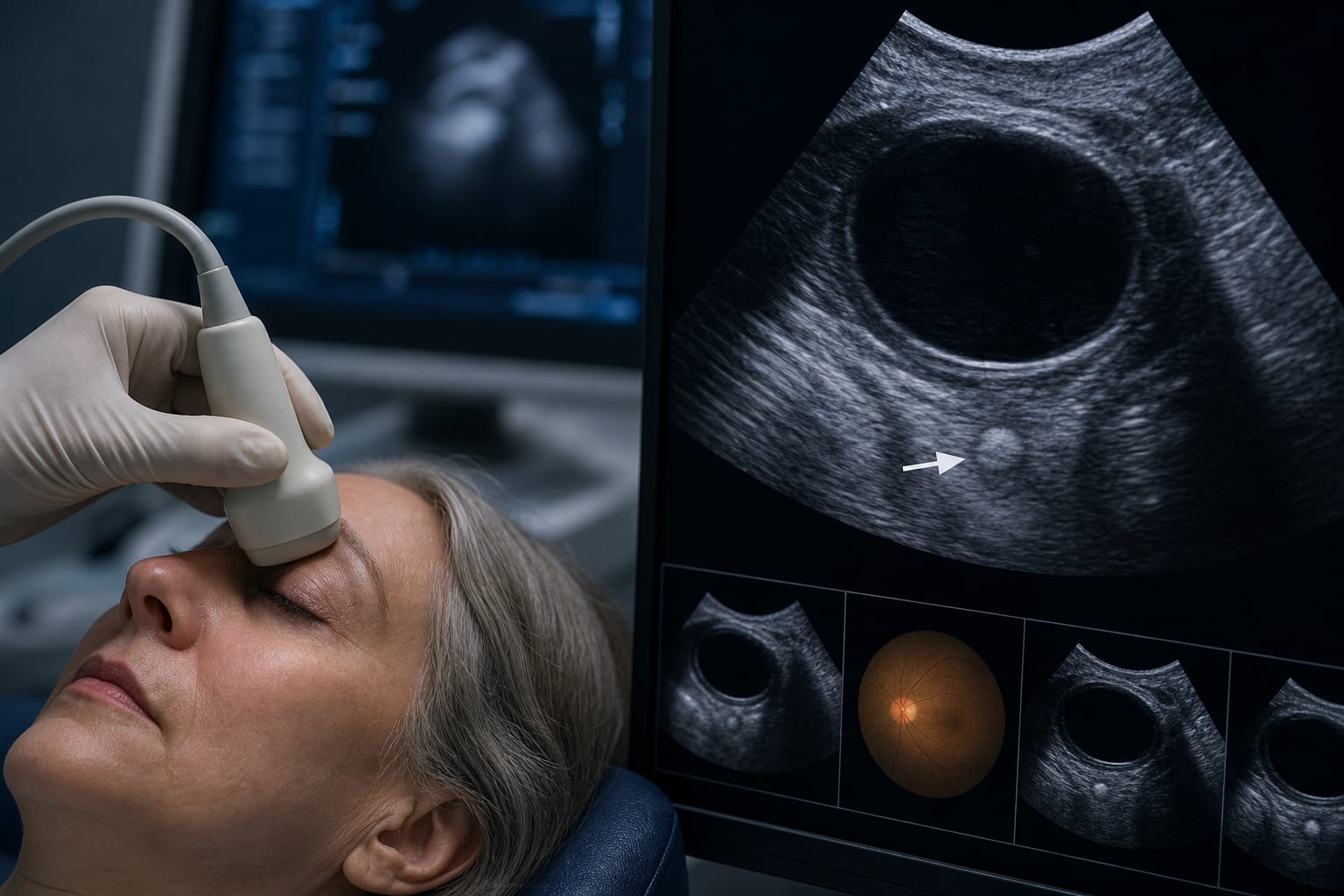
Optical coherence tomography (OCT) metrics such as global circumpapillary retinal nerve fiber layer (g-cpRNFL) and ganglion cell layer plus inner plexiform layer (g-GCL+) thickness
Target Population
Patients undergoing glaucoma screening or diagnosis
Care Setting
Ophthalmology and optometry clinical practice
Key Highlights
Larger real-world OCT reference databases improve sensitivity for glaucoma detection while maintaining specificity.
Smaller databases are more susceptible to sampling error, especially at extreme percentiles, affecting cutoff stability.
Discrepancies in classification mainly affect glaucomatous eyes, with minimal impact on healthy eyes.
Guideline-Based Recommendations
Diagnosis
Interpret OCT color-coded outputs as statistical constructs dependent on the reference database.
Consider using larger, real-world normative databases to improve glaucoma detection accuracy.
Management
Use improved OCT flagging from expanded databases to support earlier and more reliable glaucoma identification.
Monitoring & Follow-up
Be aware that sensitivity and specificity may vary with changes in percentile thresholds related to age and anatomical variation.
Risks
Relying on smaller normative databases may increase sampling error and reduce detection accuracy.
Do not interpret OCT flags as absolute truths without considering the underlying reference population.
Patient & Prescribing Data
Patients screened or monitored for glaucoma using OCT imaging
Enhanced OCT database size may lead to earlier glaucoma detection, potentially improving clinical decision-making and patient outcomes.
Clinical Best Practices
Expand and refine normative OCT databases using real-world data to improve diagnostic reliability.
Interpret OCT metrics within the context of the reference database characteristics rather than as fixed thresholds.
Use larger databases to reduce sampling variability and improve stability of cutoff values for glaucoma detection.